
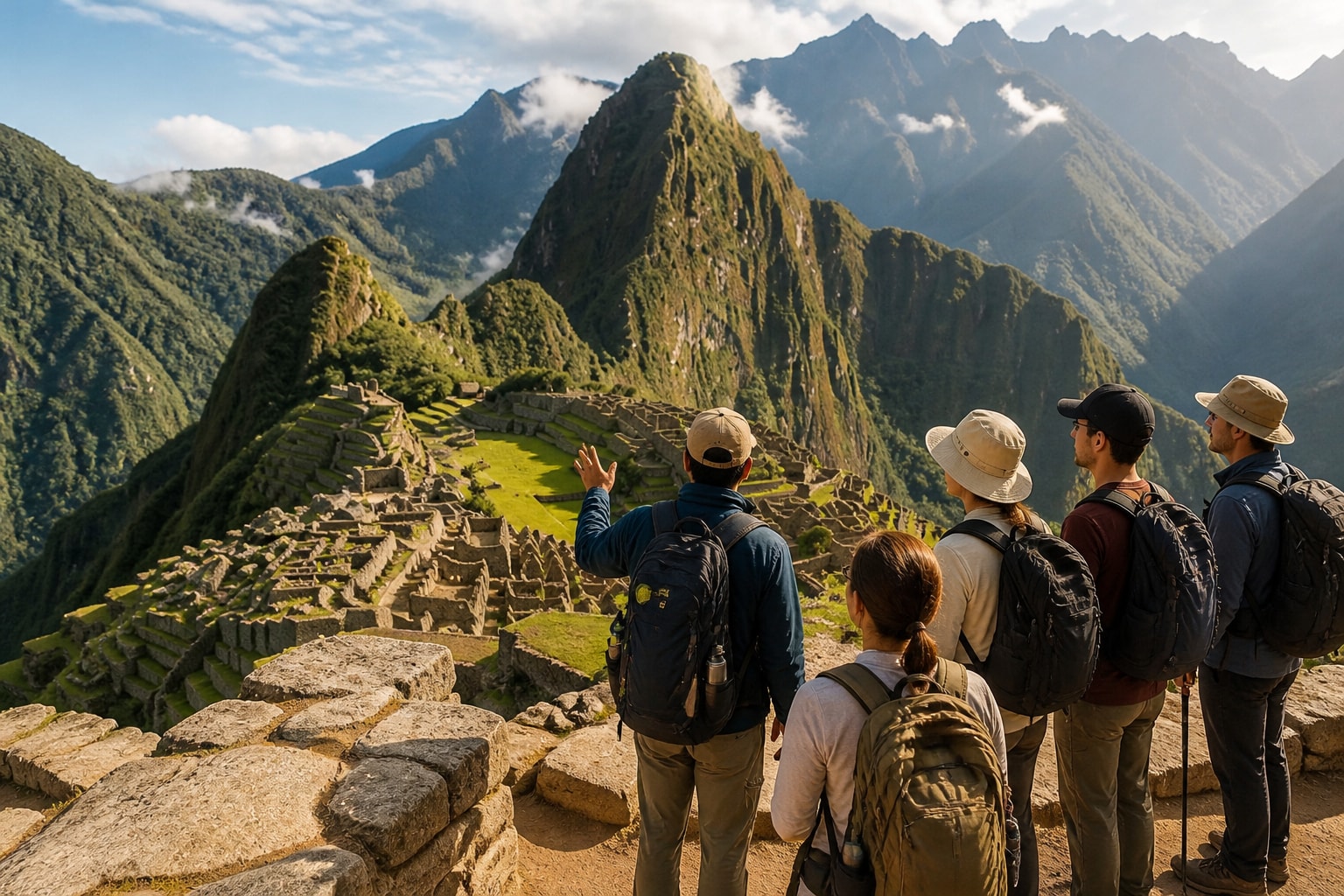
The best Machu Picchu travel packages bundle your entrance ticket, train seats, hotels, transfers and a local guide into one itinerary, so the right choice depends on how many days you have, how active you want to be and how much logistics you want handled for you. Most first-time visitors are well served by a 5 to 7 day plan built around Cusco, the Sacred Valley and one full day at the citadel. Trekkers should look for packages that secure hiking permits before anything else.
This guide explains what a package should include, how to compare durations and styles, when to travel, what to wear and how to judge whether an itinerary is realistic.
What Machu Picchu Travel Packages Usually Include
A well-built package covers five categories: entrance tickets, rail travel, accommodation, ground transfers and guiding.
The entrance ticket is the item that shapes everything else. PeruRail notes that Machu Picchu tickets are issued for a specific date, visitor circuit and entry time, and that they are personalized and non-transferable. That means your train, hotel nights and guide all have to line up with a fixed entry slot. Booking these pieces separately is where most scheduling errors begin, and it is the main practical argument for a package.
Here is what to confirm in writing before you pay:
- Entrance ticket and circuit: the date, entry time and which circuit is included
- Train service: the departure station, class of service and return time
- Hotels: the category, the location (Cusco, Sacred Valley, Aguas Calientes) and the number of nights
- Transfers: airport pickups, station transfers and the bus up to the site
- Guides: language, group size and whether the guide is a licensed local professional
- Meals and extras: which meals are covered and which excursions are optional
If a package lists "Machu Picchu visit" without naming the ticket circuit or entry time, ask for specifics. Vague inclusions often hide extra costs later.
How Long Should a Machu Picchu Package Be?
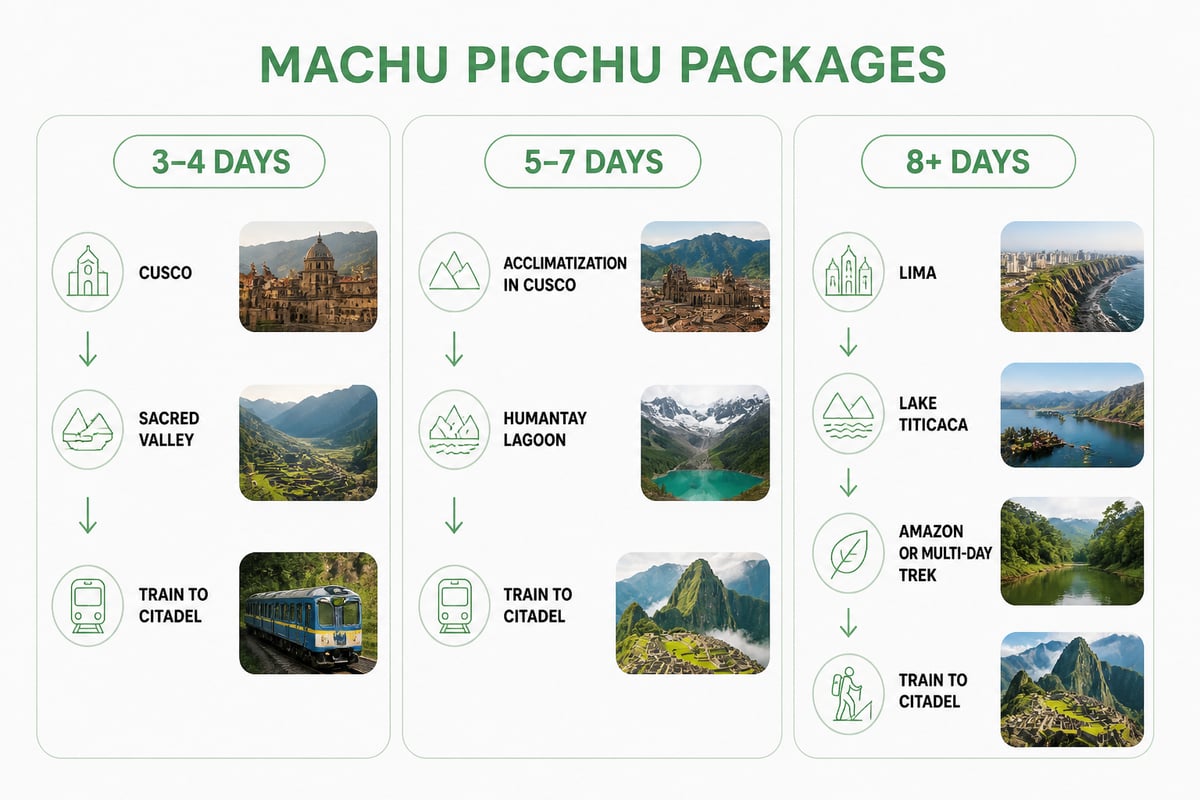
For most travelers, 5 to 7 days is the practical sweet spot, because it leaves time to adjust to altitude before the main sightseeing.
Cusco sits at high altitude, and arriving from sea level often leaves people tired or short of breath for the first day or two. A package that sends you straight from the airport to a long hike or a high pass is poorly designed. Look for a gentler first day, then build the intensity.
Short packages (3 to 4 days)
These suit travelers with limited time who are comfortable with a compressed schedule. Expect Cusco sightseeing, a Sacred Valley day and a train trip to the citadel. You will see the highlights but have little buffer for delays or weather.
Mid-length packages (5 to 7 days)
This range allows acclimatization, a full Sacred Valley day, a relaxed train journey and a guided morning at the site. It also fits an optional high-altitude excursion, such as a day hike to Humantay Lagoon, without rushing.
Extended packages (8 days and longer)
Longer itineraries add regions such as Lima, Lake Titicaca or the Amazon, or a multi-day trek. They make sense if Peru is the whole purpose of your trip rather than one stop on it.
Which Package Style Fits Your Travel Plans?
Packages fall into three broad styles: cultural, luxury and adventure, and each trades comfort, pace and physical effort differently.
| Style | Typical focus | Physical effort | Accommodation emphasis |
|---|---|---|---|
| Cultural | Inca history, markets, villages, the citadel | Low to moderate | Comfortable mid-range hotels |
| Luxury | Private guiding, premium rail, boutique stays | Low | High-end hotels and lodges |
| Adventure | Trekking routes, mountain lagoons, camping | Moderate to high | Mix of hotels and trail camps |
A cultural package spends more time with the story behind the stonework: Cusco's Inca foundations, terraces in the Sacred Valley and the reasons the citadel was built where it was. A luxury package prioritizes privacy and comfort, often with private transfers and upgraded rail. An adventure package puts the walk first and the sightseeing second.
Be honest about your fitness and comfort preferences when choosing. A package that looks inspiring on a page can feel punishing if the daily hiking hours are beyond your usual activity level. Ask for the daily walking time and elevation gain, not just the day's headline.
Choosing a Hiking Route to Machu Picchu
Trekking packages differ most in permits, route length and the level of support, so start with availability rather than scenery.
Some of the best-known routes use a permit system with limited daily numbers, and demand often exceeds supply during the dry months. A package that includes the permit is only valuable if the permit is actually confirmed for your dates. Ask for confirmation before booking flights.
Questions that separate a solid trek package from a risky one:
- Is the permit already secured, or will it be "requested" after you pay?
- How many hiking days are there, and what are the daily distances and elevation changes?
- Who carries the camping gear, meals and water supplies?
- What is the group size, and how many guides accompany it?
- What is the fallback plan if weather or trail conditions change?
Alternatives to the classic multi-day route include shorter treks that finish at the citadel by train or on foot, and high-mountain loops that skip Machu Picchu entirely. If your goal is the citadel itself and not just the walk, make sure the itinerary ends there with a properly timed entry.
A practical note on fitness: begin walking uphill with a loaded daypack several weeks before departure. Arriving in Cusco a couple of days early also improves how you feel on the trail.
The Role of a Local Guide and a Small Group
A small group led by a bilingual local guide gives you more flexibility at the site and a deeper understanding of what you are looking at.
Machu Picchu is large and its meaning is not obvious from the ruins alone. A guide can explain the site's layout, terraces and engineering, which gives context that is hard to get from the ruins alone.
Group size matters. In a large coach party, you spend time waiting, regrouping and listening to a voice you can barely hear. In a small group, the guide adjusts the pace, answers questions and chooses quieter viewpoints between larger crowds.
Machupicchu Trips is a locally owned Cusco operator that runs its trips from the destination itself. Its tours use small groups and professional bilingual local guides who explain Inca history and culture, and its team coordinates permits, entrance tickets, trains, transfers, hotels and trekking logistics. Packages can be tailored to your dates, group size, interests and travel style.
A Six-Day Itinerary Worth Considering
A six-day, five-night format covers Cusco, the Sacred Valley, a scenic rail journey and the citadel without feeling rushed.
The MACHU PICCHU PERU TOUR 6D/5N from Machupicchu Trips combines historic Cusco, the Sacred Valley of the Incas and Machu Picchu with expert local guides. It includes a scenic train journey through the Andes. For current dates and availability, check the tour page or contact the team directly.
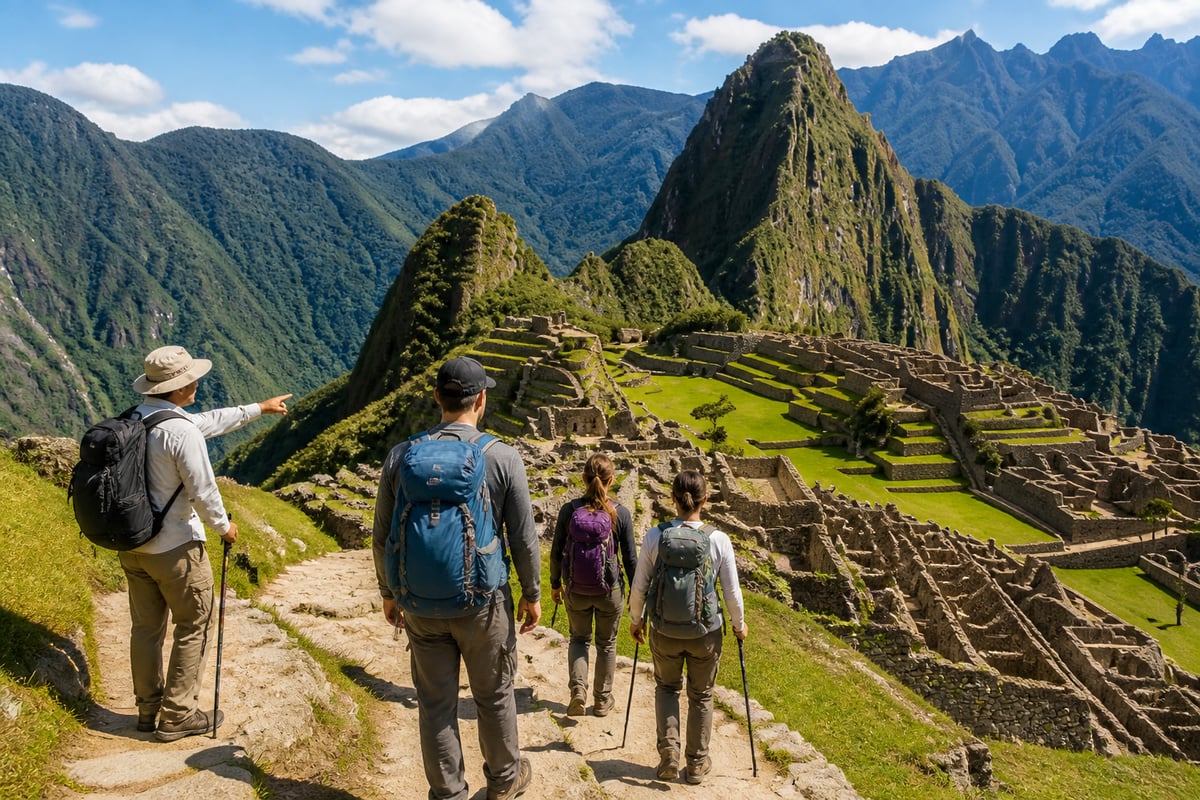
This kind of structure shows what to look for in any package: acclimatization before altitude, a mix of culture and landscape, and the key logistics already confirmed.
Understanding Tickets, Circuits and Entry Times
Your ticket determines which route you walk through the site and when you enter, so it should be chosen deliberately rather than assigned by default.
PeruRail describes Machu Picchu as having 3 main visitor circuits and 10 sub-circuits, and lists daily visitor capacity at up to 4,500 in high season and 3,800 in low season. Those caps are why entry slots sell out and why timing is built into the ticket itself. Different circuits reach different viewpoints and sectors, and some include extra climbs that suit stronger walkers.
When reviewing a package, ask three things:
- Which circuit is included, and what does it cover?
- What time is the entry slot?
- Can the circuit be changed, or is the ticket fixed once issued?
Because tickets are non-transferable, a missed train or a late transfer can cost you your slot. That is another reason to prefer an operator that manages the whole chain from Cusco rather than leaving gaps between separate bookings.
Train Travel: What to Compare
Rail is the most common way to reach the citadel in a package, and journey times vary a lot depending on where you board.
According to PeruRail’s train services page, the journey from Ollantaytambo takes about 1.5 to 2 hours, while from Cusco or Poroy it takes about 3.5 to 4 hours. From Aguas Calientes (Machu Picchu Pueblo), the bus ride to the official entrance takes 25 to 30 minutes. A package that starts the day in the Sacred Valley and boards at Ollantaytambo saves hours compared with one departing from Cusco.
Practical rail details to plan around:
- Passengers should arrive at the station 30 minutes before departure.
- The same page specifies a maximum carry-on bag or backpack weight of 8 kg, with maximum combined dimensions of 115 cm.
- Larger suitcases usually stay at your Cusco hotel, so pack a small overnight bag for the Aguas Calientes night.
If a package includes rail, compare service classes using PeruRail’s service comparison, which covers journey durations, onboard amenities, food and luggage allowances. Upgraded cars add comfort and panoramic windows, which may matter more on a longer ride than on a short one.
When Is the Best Month to Visit Peru?
The best months to visit Peru for Machu Picchu are generally May through September, which fall in the dry season.
During those months, trails are firmer, skies are clearer and mountain views are more reliable. The trade-off is demand: July and August are the busiest, so permits, trains and hotels sell out earlier and package prices tend to reflect that. If you want the dry-season weather with slightly fewer visitors, consider May, June or September.
The wetter months, roughly November through March, bring more rain, cloud and occasional trail disruption. They also bring fewer crowds and greener landscapes. Some trekking routes close for maintenance in February, so check this if a hike is central to your plan.
Whatever the season, Andean weather changes quickly. A package that builds in flexibility, such as an extra buffer day around the citadel, handles that more gracefully than a tightly packed schedule.
What to Wear: Can You Wear Jeans to Machu Picchu?
Yes, you can wear jeans to Machu Picchu, but lightweight hiking pants or quick-dry trousers are usually more comfortable.
Denim is heavy, slow to dry and restrictive on steep steps, which is a problem if you get caught in a shower or walk for several hours. A layered approach works better because temperatures shift from cool mornings to warm midday sun, and rain can arrive at any time of year.
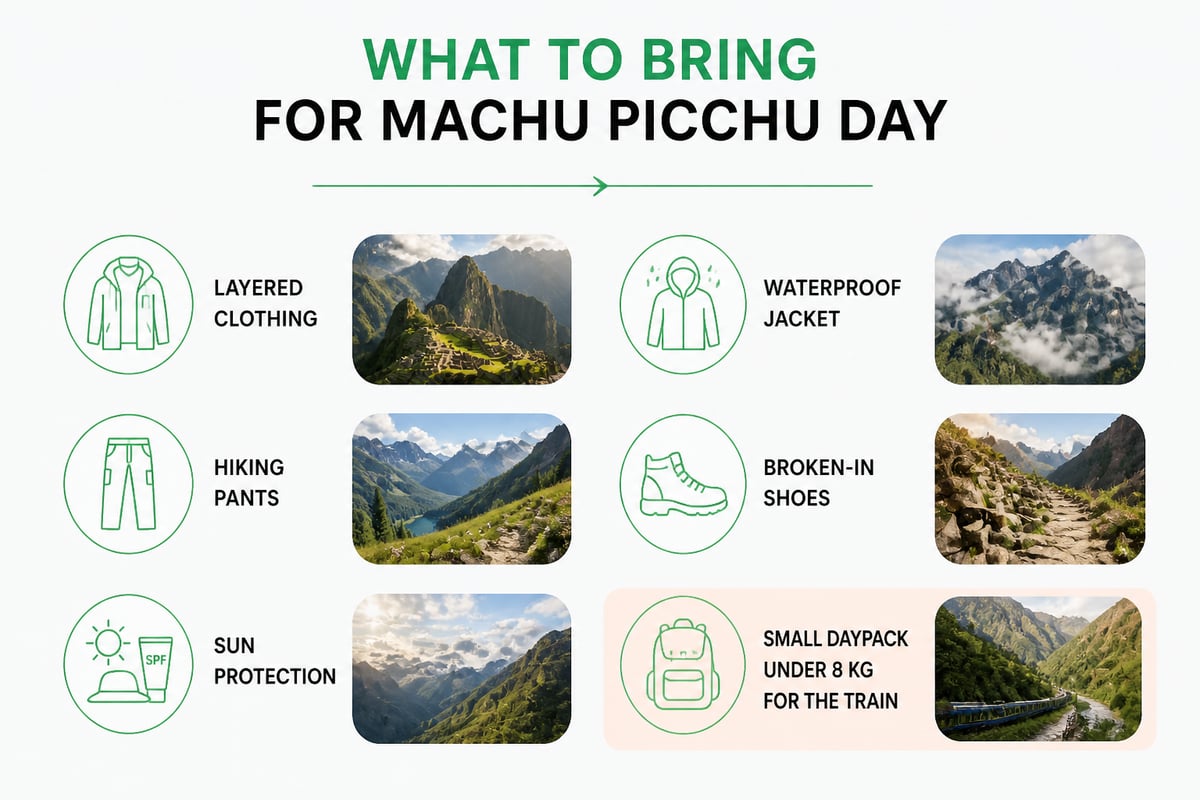
A simple packing list for the day at the site:
- Breathable base layer and a light fleece
- Waterproof jacket or poncho
- Hiking pants or comfortable trousers
- Broken-in walking shoes or light hiking boots with good grip
- Sun hat, sunscreen and sunglasses
- A small daypack within the rail baggage limits
For rail luggage rules and storage options, check PeruRail's luggage guidance before you pack, especially if your package involves a one-night stay in Aguas Calientes.
How to Judge Value Beyond the Price
Value comes from what the price covers, how well the logistics fit together and how much local knowledge is behind the itinerary.
Cost varies widely by season, hotel category, group size and trek length, and a lower headline figure often leaves out entrance fees, rail upgrades or guide services. Rather than comparing totals alone, line up inclusions item by item. Two packages that look similar can differ in train class, hotel location, the number of guided days or whether the permit is already confirmed.
A short list of warning signs:
- Inclusions described in broad terms without ticket circuit, entry time or hotel names
- Permits listed as "subject to availability" with no confirmation timeline
- Very large groups with a single guide
- Itineraries that pack long transfers and hikes into the first day at altitude
For a quote that reflects your dates and interests, ask the operator directly instead of relying on a generic price. That also lets you confirm whether the plan fits your pace.
FAQ
How much is a trip to Peru and Machu Picchu?
The cost depends on trip length, season, hotel category and whether you choose a guided trek or a rail-based itinerary. Entrance tickets, trains and permits are fixed parts of the total, while hotels and private services create the biggest range. Request an itemized quote for your dates so you can compare packages fairly.
Can you do the Galapagos and Machu Picchu together?
Yes, but they are separate regions that require flights to and from mainland Ecuador, so the combination works best with at least 10 to 12 days. Many travelers split the trip into two parts, beginning with Cusco and the citadel and finishing with the islands. Allow buffer time for international connections.
Do I need to book a package, or can I travel independently?
You can book the pieces yourself, but entry tickets, trains and permits are time-specific and non-transferable, so scheduling mistakes are costly. A package with a local operator removes that coordination risk. Travelers who want a fully unguided visit may prefer to plan independently.
Start by listing your travel dates, how many days you can spare and whether you want a rail-based visit or a hiking route, because those three choices narrow your options quickly. From there, Machupicchu Trips can match them to a package, including the MACHU PICCHU PERU TOUR 6D/5N, and handle permits, tickets, trains, transfers and hotels from Cusco. Share your preferences with the team to Plan My Machu Picchu Trip around your own schedule and pace.