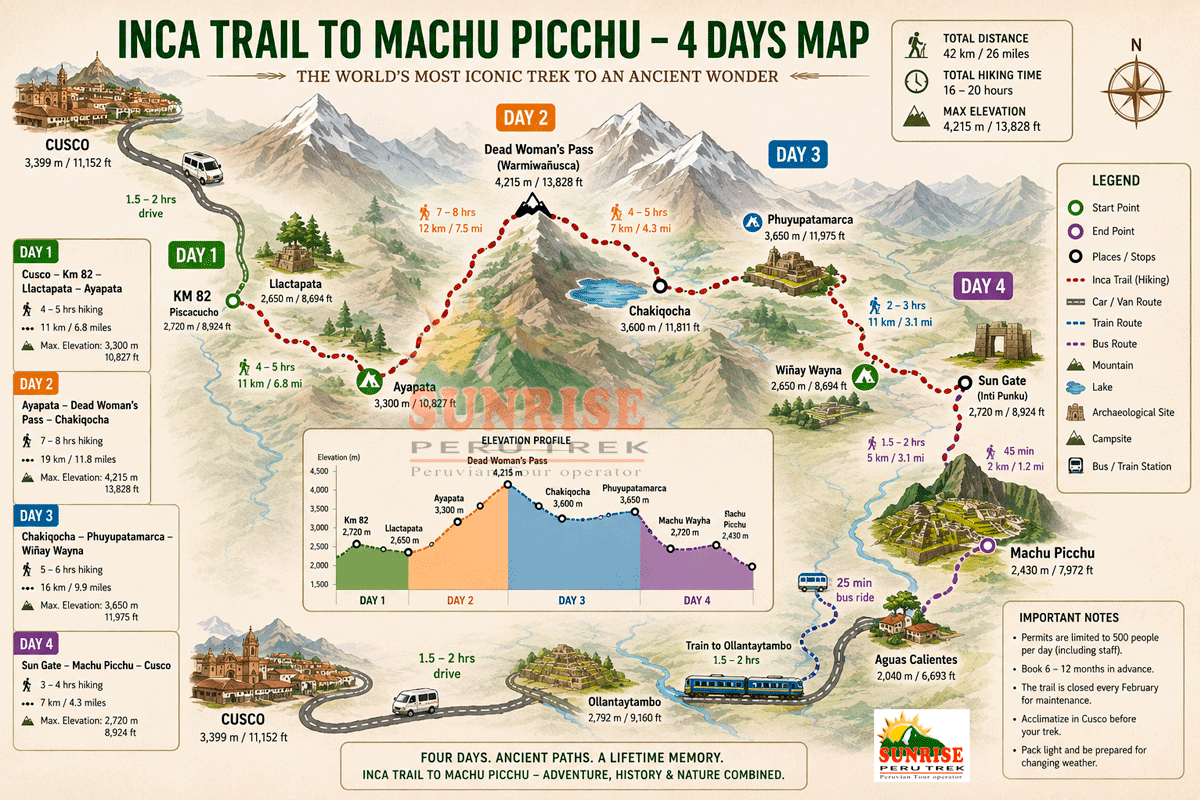

Classic Inca Trail 4 Days – Tour Overview
| Tour Information | Details |
|---|---|
| Duration | 4 Days / 3 Nights |
| Route | Km 82 – Inca Trail – Machu Picchu |
| Starting point | Piscacucho (Km 82) |
| Highest altitude | 4,215 m / 13,828 ft |
| Difficulty | Moderate to Challenging |
| Accommodation | 3 nights camping |
| Guide | English and Spanish |
| Meals | 3 breakfasts, 3 lunches, 3 dinners |
| Transportation | Private vehicle and train |
| Final destination | Machu Picchu |
| Price | From US$780 per person |
Availability: The Classic Inca Trail operates from March through January and closes during February for annual maintenance.
Booking recommendation: Inca Trail permits are limited. We recommend requesting availability well in advance, especially for popular travel months.
Why Choose the Classic Inca Trail to Machu Picchu?
The Classic Inca Trail is one of Peru’s most rewarding trekking experiences. Unlike other routes to Machu Picchu, this historic trail allows you to follow ancient Inca pathways through remote mountain landscapes and archaeological sites before approaching the citadel through Inti Punku, the famous Sun Gate.
During four days of hiking, you will experience:
Ancient Inca pathways: Walk along original stone roads built centuries ago.
Spectacular mountain scenery: Discover high Andean valleys, mountain passes, and lush cloud forests.
Remarkable archaeological sites: Explore Llactapata, Runkurakay, Phuyupatamarca, and Wiñay Wayna.
Dead Woman’s Pass: Reach the highest point of the trek at 4,215 m.
Local cultural knowledge: Learn about Inca history, architecture, and traditions from your professional guide.
An unforgettable Machu Picchu arrival: Reach the Sun Gate and enjoy your first view of the ancient citadel.
This adventure is ideal for travelers who enjoy hiking, history, nature, and authentic cultural experiences.
Classic Inca Trail 4 Days – Highlights
- Hike the legendary ancient Inca pathways to Machu Picchu.
- Explore fascinating archaeological sites along the route.
- Cross Dead Woman’s Pass at 4,215 m (13,828 ft).
- Enjoy spectacular Andean mountain and cloud forest scenery.
- Learn about Inca history with a professional local guide.
- Experience three nights of camping and freshly prepared meals.
- Reach Machu Picchu through the iconic Sun Gate (Inti Punku).
Classic Inca Trail – Short Itinerary
Day 1: Cusco – Km 82 – Llactapata – Ayapata Camp
Begin your trek at Km 82, explore Llactapata, and hike through beautiful Andean valleys to Ayapata.
Day 2: Ayapata – Dead Woman’s Pass – Runkurakay – Chakiqocha Camp
Cross the highest mountain pass of the trek, explore Runkurakay, and continue to Chakiqocha.
Day 3: Chakiqocha – Phuyupatamarca – Wiñay Wayna Camp
Discover spectacular cloud forest landscapes and explore the archaeological sites of Phuyupatamarca and Wiñay Wayna.
Day 4: Wiñay Wayna – Sun Gate – Machu Picchu – Cusco
Reach the Sun Gate for your first panoramic view of Machu Picchu, enjoy a guided visit, and return to Cusco by train and private transportation.
Essential Tips for the Inca Trail
- Arrive in Cusco 2–3 days early to acclimatize to the altitude.
- Prepare with regular walking, hiking, and cardiovascular exercise.
- Bring comfortable hiking boots, warm layers, sunscreen, and rain protection.
- Carry sufficient water and stay hydrated.
- Respect the archaeological sites and natural environment.
Reserve Your Classic Inca Trail in Advance
Official Inca Trail permits are limited and can sell out months ahead, especially during the high season. Contact our local team to check availability and secure your preferred departure date.
Classic Inca Trail 4-Day Itinerary
Day 1: Cusco – Km 82 – Llactapata – Ayapata Camp
Begin Your Classic Inca Trail Adventure
Your journey begins with an early morning hotel pick-up in Cusco. Travel through the beautiful Sacred Valley, passing traditional Andean villages, agricultural terraces, and impressive mountain scenery on your way to Km 82, the official starting point of the Classic Inca Trail.
After completing the entrance registration and meeting your trekking team, begin walking along the historic Inca route beside the Urubamba River.
Explore the Archaeological Site of Llactapata
Along the way, visit Llactapata, an important archaeological site featuring ancient Inca structures and agricultural terraces. Your guide will introduce you to the history, engineering, and cultural significance of this remarkable place.
Continue through beautiful valleys and mountain landscapes until reaching Ayapata Camp, located at approximately 3,300 m / 10,826 ft.
After settling into camp, enjoy a freshly prepared dinner and relax beneath the spectacular Andean night sky.
Highlights:
- Scenic drive through the Sacred Valley.
- Starting the trek at Km 82.
- Visit to Llactapata archaeological site.
- Views of the Urubamba Valley.
- Overnight camping at Ayapata.


Day 3: Chakiqocha – Phuyupatamarca – Wiñay Wayna Camp
Discover the Cloud Forest and Beautiful Inca Ruins
The third day offers an extraordinary combination of archaeology and natural scenery.
After breakfast, continue along the ancient stone pathways through changing landscapes, from high mountain terrain to the lush Andean cloud forest.
The route offers beautiful views of the mountains, valleys, native vegetation, and surrounding natural environment.
Visit Phuyupatamarca – The Town Above the Clouds
One of the major highlights is Phuyupatamarca, an impressive Inca archaeological complex located high above the Urubamba Valley.
Explore its terraces, stone structures, and ceremonial water features while learning about the remarkable engineering and architectural knowledge of the Incas.
Explore Wiñay Wayna
Continue descending along ancient stone stairways toward Wiñay Wayna, one of the most impressive archaeological sites along the Inca Trail.
Its agricultural terraces, ceremonial structures, and remarkable location make it one of the most memorable stops before reaching Machu Picchu.
After approximately 6–7 hours of hiking, arrive at Wiñay Wayna Camp, your final campsite before visiting Machu Picchu.
Enjoy dinner with your trekking team and prepare for the final day of your adventure.
Highlights:
- Beautiful Andean cloud forest landscapes.
- Visit Phuyupatamarca, the Town Above the Clouds.
- Explore Wiñay Wayna archaeological complex.
- Discover original Inca pathways and terraces.
- Final overnight camping before Machu Picchu.


What Is Included in the Classic Inca Trail 4 Days?
Our four-day Inca Trail package includes the essential services and trekking arrangements listed below.
Permits and Entrance Tickets
Official Inca Trail permit.
Entrance ticket to Machu Picchu.
Entrance to archaeological sites along the authorized trekking route.
Transportation
Hotel pick-up in Cusco.
Private transportation from Cusco to Km 82.
Tourist train from Aguas Calientes to Ollantaytambo (Expedition or Voyager, according to the confirmed booking).
Private transportation from Ollantaytambo to your hotel in Cusco.
Professional Trekking Team
Professional bilingual guide (English and Spanish).
Experienced trekking chef.
Professional porter team.
Pre-departure briefing.
Camping Equipment
Camping tents shared by two hikers.
Sleeping mats.
Dining tent and kitchen equipment.
Portable toilet facilities for the group.
Meals During the Trek
3 breakfasts.
3 lunches.
3 dinners.
Daily snacks and hot drinks.
Vegetarian, vegan, and special dietary options upon request.
Safety and Support
First-aid kit.
Emergency oxygen tank.
Assistance from your trekking team throughout the journey.
Machu Picchu Visit
Guided visit to Machu Picchu.
Bus ticket from Machu Picchu to Aguas Calientes.
What Is Not Included?
The following expenses are not included in the tour price:
Lunch on the final day in Aguas Calientes.
Personal snacks and beverages.
Travel insurance.
Personal medical expenses.
Tips for guides, chefs, and porters.
Sleeping bag rental.
Trekking pole rental.
Personal expenses and souvenirs.
Any additional service not specifically mentioned in the inclusions.
Optional equipment rental:
Sleeping bag: US$15.
Trekking poles: US$15 per pair.
Camping and Meals During the Inca Trail
During the Classic Inca Trail, you will spend three nights camping at designated campsites along the route.
Our trekking team organizes the camping equipment and meals so you can concentrate on enjoying the journey.
Camping Accommodation
Your camping arrangements include:
Shared tents for two hikers.
Sleeping mats.
Dining tent and kitchen equipment.
Portable toilet facilities for the group.
Freshly Prepared Meals
A professional trekking chef prepares meals during the journey, including breakfast, lunch, and dinner.
Vegetarian, vegan, and other dietary requirements can be requested in advance.
Packing List for the Classic Inca Trail
Preparing the right equipment will make your trek more comfortable.
Items for Your Porter Duffel Bag

The published package includes porter assistance for up to 7 kg of personal belongings. Confirm the precise allowance and whether your sleeping bag is included in that weight limit before departure.
Recommended items:
Sleeping bag suitable for cold mountain nights.
Thermal clothing.
Fleece or down jacket.
Hiking shirts and trousers.
Hiking socks and underwear.
Warm hat and gloves.
Toiletries and personal towel.
Headlamp and extra batteries.
Personal medication.
Items for Your Daypack
You should carry your essential belongings during the hiking day.

We recommend:
Small hiking backpack (20–30 liters).
Original passport.
Reusable water bottle or hydration system.
Rain jacket or waterproof poncho.
Sunscreen and sunglasses.
Sun hat or cap.
Insect repellent.
Camera or mobile phone.
Personal snacks.
Basic personal first-aid items.
Remember to pack according to the weather and the physical demands of the route.
Important Information Before Booking
Inca Trail Permits
The Classic Inca Trail requires an official permit, and the number of daily admissions is restricted.
Reservations should be made as early as possible, especially for popular departure dates.
Permits are issued using the traveler’s passport information. Please provide accurate passport details when making your reservation and bring the corresponding original passport for the trek.
February Trail Closure
The Inca Trail closes every February for its scheduled annual maintenance and conservation period. Alternative departure months should be considered when planning your trip.
Altitude Acclimatization
Cusco is located at high altitude. We recommend arriving 2–3 days before starting the trek to allow your body time to acclimatize.
Travel Insurance
We strongly recommend comprehensive travel insurance that covers high-altitude trekking, medical emergencies, evacuation, and trip interruptions.
Responsible Tourism
The Inca Trail passes through an important cultural and natural heritage area. Please follow your guide’s instructions, respect archaeological sites, and avoid leaving waste along the route.
Our trekking team works with local staff and porters who play an essential role in the experience.
How Difficult Is the Classic Inca Trail?
The Classic Inca Trail is considered a moderate-to-challenging trek. It involves several hours of walking each day, steep ascents, mountain descents, uneven terrain, and numerous original Inca stone steps.
The most demanding section is the ascent to Dead Woman’s Pass at 4,215 m / 13,828 ft.
Previous trekking experience is helpful but not essential. However, travelers should have a reasonable level of physical fitness and prepare before arriving in Peru.
Recommended Preparation
Walk or hike regularly before your trip.
Practice walking on uneven terrain.
Improve cardiovascular fitness and leg strength.
Arrive in Cusco at least 2–3 days before the trek to acclimatize.
Stay hydrated and follow your guide’s recommendations.
If you have concerns about your fitness or altitude tolerance, consult a medical professional before undertaking the trek.
Best Time to Hike the Inca Trail
The Classic Inca Trail is accessible from March through January, with February reserved for annual trail maintenance and conservation work.
Dry Season: May to October
This is generally the most popular period for trekking, with better chances of clear skies and good mountain visibility. It is also a busy period when permits can become limited well in advance.
Rainy Season: November to April
The Andes become greener, and the cloud forest landscapes are particularly lush. Rain showers are more frequent, so waterproof clothing and suitable hiking equipment are important.
Weather conditions can change quickly at high altitude, regardless of the season.
Frequently Asked Questions – Classic Inca Trail 4 Days
How many days is the Classic Inca Trail?
The Classic Inca Trail takes four days and three nights, beginning at Km 82 and ending at Machu Picchu.
How difficult is the four-day Inca Trail?
It is a moderate-to-challenging trek involving steep ascents, descents, high-altitude mountain passes, and several hours of hiking each day. Regular physical preparation is recommended.
What is the highest point of the Inca Trail?
The highest point is Dead Woman’s Pass (Warmiwañusca), at approximately 4,215 m / 13,828 ft above sea level.
Where does the Classic Inca Trail start?
The trek starts at Km 82, also known as Piscacucho, near Ollantaytambo in the Sacred Valley region of Peru.
Does the Inca Trail include Machu Picchu entrance tickets?
Yes. The published package includes the official Inca Trail permit and Machu Picchu entrance ticket. The specific Machu Picchu circuit must be confirmed according to the ticket issued for your departure.
Do I need previous trekking experience?
Previous trekking experience is helpful, but it is not essential. Travelers should have a reasonable fitness level and be prepared for long hiking days and high-altitude conditions.
How many nights do we camp?
The itinerary includes three nights of camping at designated campsites along the Inca Trail.
Are meals included?
Yes. The package includes three breakfasts, three lunches, and three dinners, together with snacks and hot drinks as described in the inclusions.
Are porters included?
Yes. Porter assistance is included for camping equipment and the published personal duffel allowance of up to 7 kg. Confirm the exact weight conditions before departure.
Is the Inca Trail open all year?
No. The trail closes every February for annual maintenance. It normally operates from March through January, subject to official authorization and availability.
How far in advance should I book?
We recommend planning well ahead, particularly for travel during the popular dry season. Availability depends on official permit inventory, and a departure is not confirmed until the required reservation has been secured.
How do we return to Cusco after visiting Machu Picchu?
After the guided visit, you take the bus down to Aguas Calientes, board the scheduled train to Ollantaytambo, and continue by private transportation to Cusco.
Can I bring a sleeping bag and trekking poles?
Yes. These are recommended items for the trek. The current package lists both as optional rental equipment.
Is travel insurance necessary?
We strongly recommend insurance that specifically covers high-altitude trekking and emergency medical assistance.
Additional Information for Your Classic Inca Trail Experience
The Classic Inca Trail is more than a hike to Machu Picchu. It is an opportunity to discover ancient Inca heritage, experience the beauty of the Andes, and enjoy a carefully organized trekking adventure with a local support team.
What Is Daily Life Like on the Inca Trail?
Each day combines mountain hiking, archaeological exploration, and time to relax at camp. Start your mornings with a freshly prepared breakfast, enjoy lunch along the route, and finish the day with a warm dinner at camp. This experience allows you to connect with nature while discovering the history of the ancient Inca civilization.
Professional Guides and Local Trekking Team
Travel with knowledgeable local guides who share their understanding of Inca history, Andean culture, and the natural environment. Our trekking team, including the chef and porters, helps coordinate meals, camping equipment, and essential arrangements throughout your journey.
Responsible Porter Service
Porters play an essential role in the Inca Trail experience by transporting camping equipment, food, and authorized personal luggage. We value their contribution and support responsible tourism through fair working conditions and respect for the people who make these adventures possible.
Camping and Freshly Prepared Meals
Enjoy three nights of camping in designated locations along the Inca Trail. Your trekking arrangements include shared camping tents, sleeping mats, and dining facilities. A professional trekking chef prepares fresh meals, snacks, and hot drinks to keep you energized during the adventure.
Vegetarian, vegan, and other dietary requirements can be requested in advance.
Why Travel With Us?
Planning the Classic Inca Trail requires more than reserving a trekking package. It involves permits, transportation, camping arrangements, professional guides, and coordination throughout the journey.
Our local team works from Cusco and understands the logistics of traveling through the Andes and visiting Machu Picchu.
Local Knowledge
Discover Peru with a locally based team familiar with the region, its culture, and its trekking routes.
Personalized Assistance
Receive support when planning your departure, preparing your documents, and organizing your Inca Trail experience.
Professional Trekking Team
Travel with a bilingual guide, trekking chef, and porter team as described in your package.
Responsible Tourism
We value the work of local communities and the importance of protecting the natural and cultural heritage of the Inca Trail.
Organized Travel Experience
From your Cusco hotel pick-up to your return from Machu Picchu, your itinerary is coordinated by our local team.