
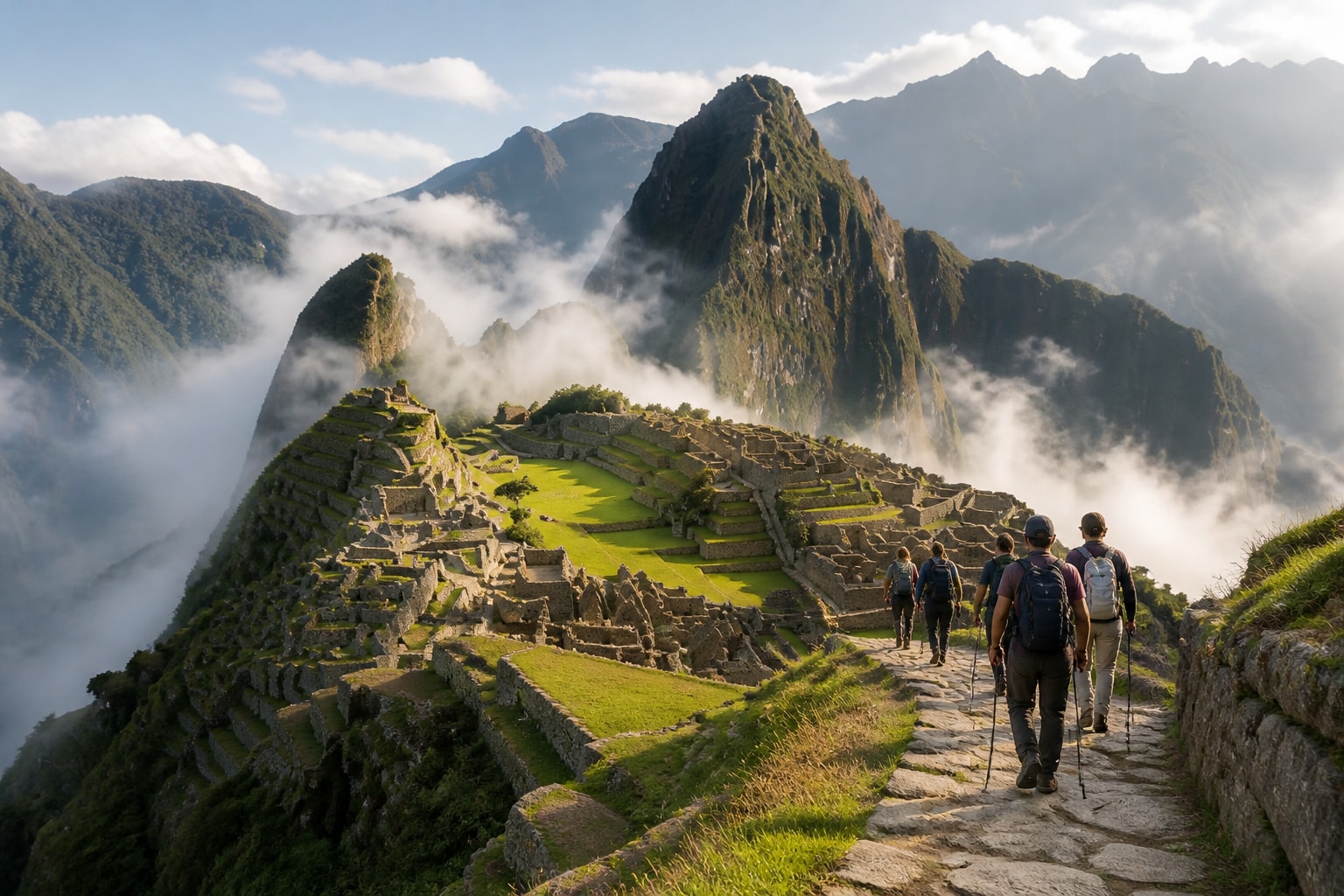
A Machu Picchu travel package bundles the logistics that make a visit possible: entrance tickets, train seats, hotels, transfers and a guide, usually arranged around a stay in Cusco and the Sacred Valley. Most first-time visitors choose between a train-based itinerary of 3 to 5 days and a trekking route that adds walking days before arrival. This article explains what a package covers, how the main formats differ, and how to judge one before paying.
What a Machu Picchu Travel Package Includes
A typical package covers airport transfers, hotel nights, a train to Machu Picchu, the entrance ticket, a bus or walking connection to the site, guided visits and some meals. The exact mix varies, so the inclusions list matters more than the headline duration.
Items usually bundled:
- Entrance ticket to the citadel for a fixed date and time slot
- Round-trip train between the Sacred Valley (or Ollantaytambo) and Machu Picchu Pueblo
- Hotels in Cusco, the Sacred Valley and Machu Picchu Pueblo
- Ground transfers between stations, hotels and sites
- Bilingual guide for the citadel and other stops
Items often left out: international flights, some lunches and dinners, tips, travel insurance, and optional add-ons such as extra mountain climbs. Ask for the list in writing before you compare two quotes, because a lower price often means fewer meals or a shared, less flexible transfer.
Tickets deserve particular attention. The Machu Picchu Official Website states that the Ministry of Culture sells 1,000 entrance tickets per day in person at its ticket office in Machupicchu Pueblo, subject to the site's visitor capacity. Relying on same-day purchase is a gamble, which is why a package that secures your ticket and train together removes the most common point of failure.
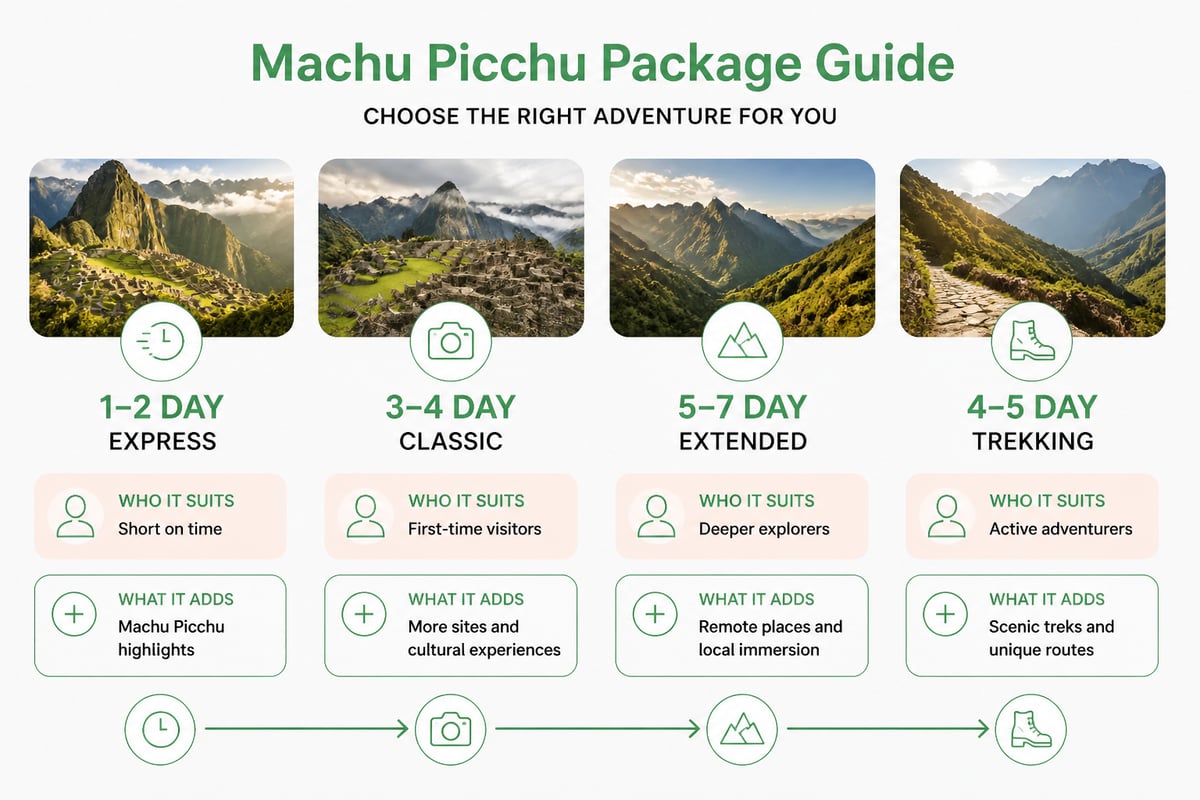
How Long Should a Machu Picchu Package Be?
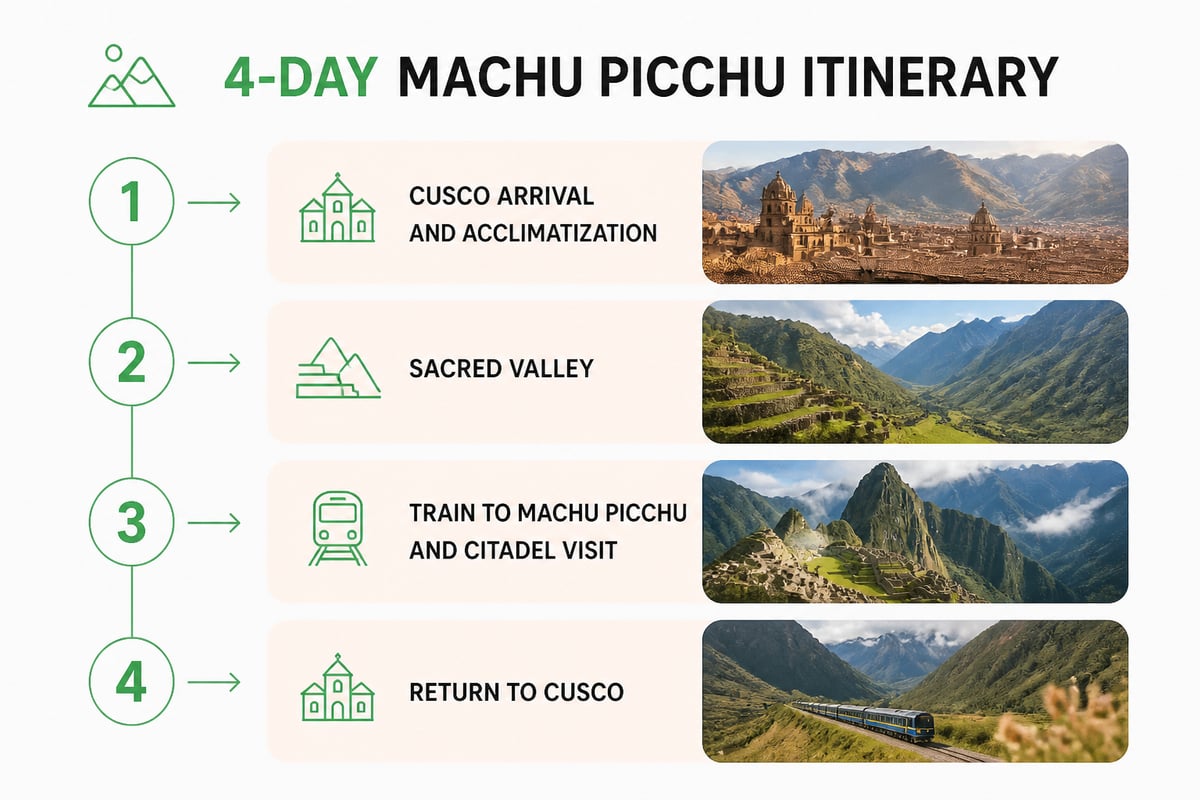
For a first visit, four days is the most practical length because it allows time to acclimatize in Cusco, see the Sacred Valley and still reach the citadel without rushing. Shorter options exist, and longer ones add depth.
| Length | Typical shape | Who it suits |
|---|---|---|
| 1-2 days | Train from the Sacred Valley, guided citadel visit, return | Travelers already in Cusco with limited time |
| 3-4 days | Cusco, Sacred Valley, train to Machu Picchu | Most first-time visitors |
| 5-7 days | Adds extra valley sites, a hike or a second region | Travelers who want depth and a slower pace |
| 4-5 days trekking | Walking route ending at the citadel | Active travelers comfortable with multi-day hiking |
Cusco sits at high altitude, so arriving without a buffer day is a common reason visitors feel unwell early in the trip. Building one gentle day into the schedule costs little and protects the days that matter.
Train Route or Trek: Choosing Your Way In
The train route suits travelers who want comfort and flexibility, while the trekking route suits active travelers who want to earn the arrival on foot. Both end at the same citadel, but the experience on the way differs sharply.
The train-based itinerary
You spend nights in Cusco and the Sacred Valley, then ride the train to Machu Picchu Pueblo and take a short bus or walk to the gate. This format works for mixed groups, families, older travelers and anyone who prefers a hotel bed each night. Luggage rules apply on board. PeruRail lists one backpack up to 8 kg or one carry-on up to 12 kg for Machu Picchu journeys, so a small overnight bag for the Machu Picchu night, with the rest left at your Cusco or valley hotel, is the standard approach. Its purchase terms note that additional-baggage transport can be requested in advance and depends on available space.
The trekking itinerary
Trekking packages add camping or lodge nights, porters, cooks and permit coordination. They suit fit travelers who enjoy long days on foot at altitude and want the citadel as the reward at the end. Permits for classic routes are limited and issued by date, so the order of booking is: permit availability first, flights second.
Be honest about your fitness. If you have not hiked consecutive days with elevation gain, the train format with a shorter day walk in the Sacred Valley will serve you better and still delivers the citadel.
What Does a Machu Picchu Trip Cost?
How expensive it is to go to Machu Picchu depends on the format, the season and the hotel level, and the entrance ticket and train are only part of the total. Prices move widely between a simple guided day visit and a multi-night luxury itinerary, so compare packages by what they include rather than by the total alone.
Factors that move the price:
- Hotel category in Cusco, the Sacred Valley and Machu Picchu Pueblo
- Train service level, since carriages differ in comfort and schedule
- Group size and privacy, with small groups and private guiding costing more per person than large shared tours
- Season, with the dry months from roughly May to September drawing the heaviest demand
- Meals and extras included or left for you to pay locally
For current figures, request a quote based on your dates and group size from the operator's booking page rather than relying on averages found elsewhere. A quote built around your actual travel dates will account for train and ticket availability, which is where prices change fastest.
Can an 80-Year-Old Go to Machu Picchu?
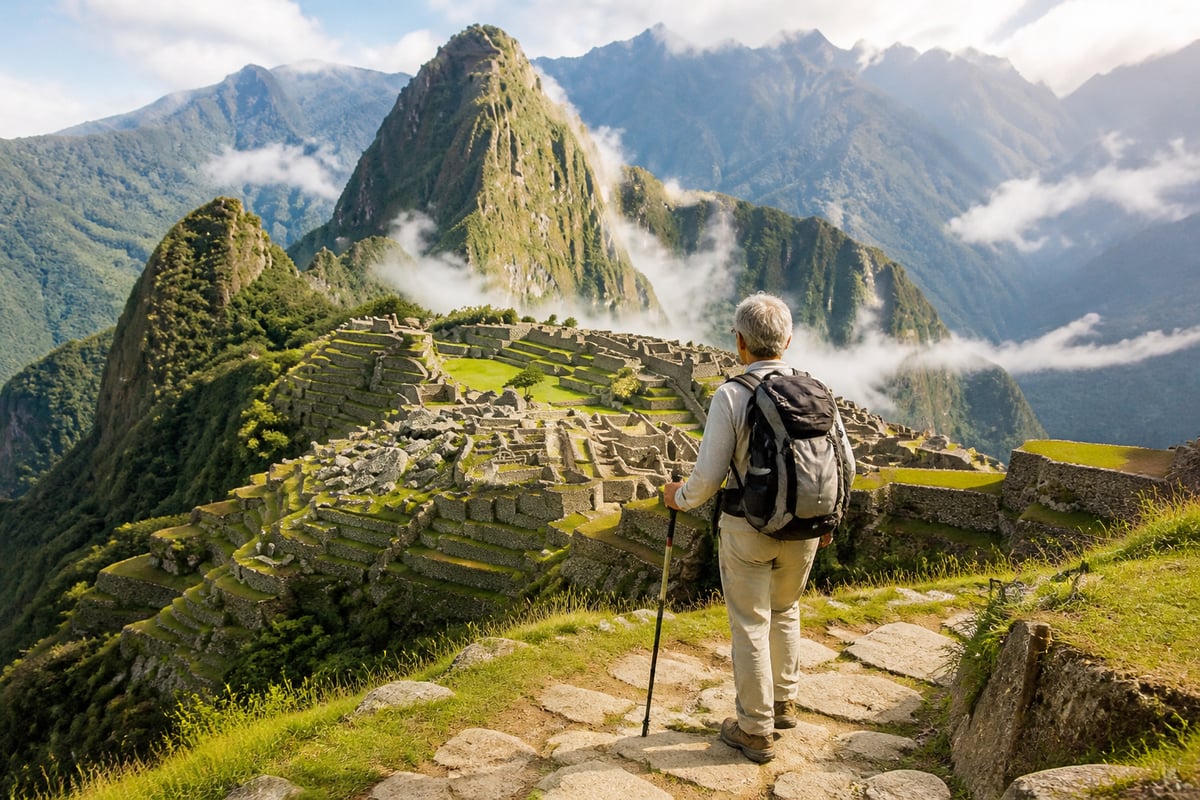
Yes, older travelers visit Machu Picchu regularly, provided the itinerary is paced for altitude and walking. The train-based route is the sensible choice, with extra acclimatization time in the lower-lying Sacred Valley before or after Cusco.
Practical adjustments that help:
- Spend the first night in the Sacred Valley (about 2,800 meters) rather than going straight to Cusco
- Request a private or small-group guide who can slow the pace and choose shorter circuits at the citadel
- Skip steep optional climbs; the main terraces and temple area are rewarding on their own
- Speak with a doctor about altitude before booking, and carry any regular medication in hand luggage
The citadel involves uneven stone steps and sloped paths, so sturdy shoes and a walking pole matter more than stamina.
What a Family Itinerary Looks Like
A good family itinerary keeps travel days short, alternates active mornings with free afternoons, and uses the Sacred Valley as a lower-altitude base. A workable shape is a four to six day plan.
- Day 1: Arrive in Cusco or go directly to the Sacred Valley; rest and walk gently
- Day 2: Valley sites such as terraces and a local market, with hands-on stops that hold children's attention
- Day 3: Train to Machu Picchu Pueblo and an afternoon visit to the citadel
- Day 4: A second, quieter morning at the site or a walk near the town, then train back
- Day 5: Cusco's old city, the main plaza and Inca stonework
Children tend to respond well to storytelling, so a guide who explains how the Inca built and used the site is worth more than extra sites on the schedule. Ask whether the operator can adjust the pace for younger travelers and book family rooms in advance.
Machu Picchu and the Galapagos in One Trip
Combining Machu Picchu with the Galapagos Islands is possible, but they are separate trips linked by flights rather than a single package. Peru and Ecuador require separate bookings, and the Galapagos usually needs several days on its own.
The practical approach is to build the Peru segment first, then add Ecuador with an operator specializing in the islands. Allow a rest day between the two to absorb the change in altitude and climate, and check entry and park-fee requirements for Ecuador separately. A Peru-focused operator can handle the Cusco and Machu Picchu leg in full and coordinate your arrival and departure timing so the flights connect cleanly.
A Four-Day Classic Option Worth Considering
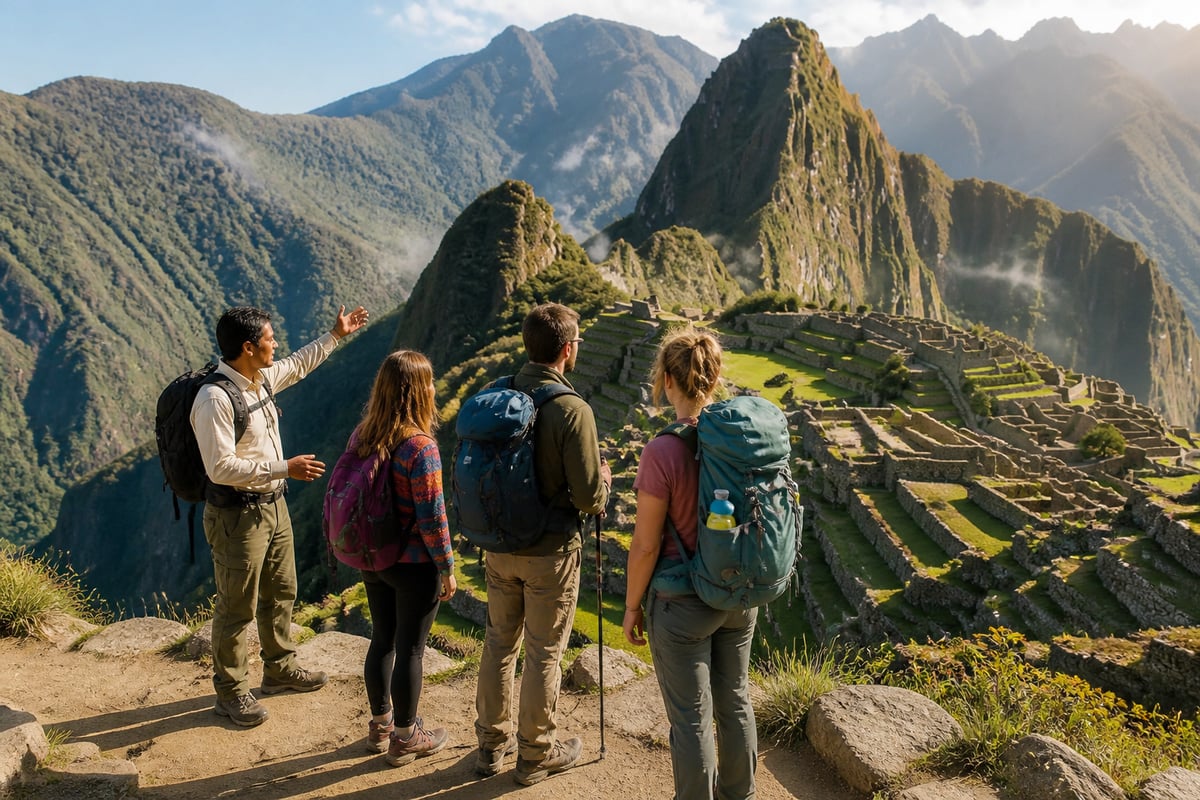
If you want a balanced first visit, a four-day format covering Cusco, the Sacred Valley and the citadel is the most common starting point. Machupicchu Trips, a locally owned Cusco operator, offers the MACHU PICCHU CLASSIC TOUR: 4 Days 3 Nights, which moves through the historic city of Cusco, the Sacred Valley and a train ride to Machu Picchu with expert local guides. Check the tour page or contact the team for current inclusions and rates.
How to Judge a Package Before You Book
The most reliable test of a package is whether the operator can explain each logistic detail clearly and in writing. Vague answers about tickets, trains or guide ratios are a warning sign.
Questions worth asking:
- Who is the operator, and where are they based? A company based in Cusco can handle last-minute changes more directly. Machupicchu Trips, for example, runs small-group tours with professional bilingual guides.
- Are the entrance ticket and train confirmed before I pay? Both sell out in busy months.
- What is the group size? Smaller groups mean more time with the guide and a quieter pace.
- How are changes handled? Delayed flights and weather happen, so ask what flexibility exists.
- What is not included? Meals, tips and insurance are the usual gaps.
Because packages can be tailored to your dates, group size, interests and travel style, ask for a draft itinerary and adjust it before committing. Rushed itineraries that stack too many sites into too few days are a common weakness.
Practical Preparation Before You Go
Good preparation is mostly about documents, luggage and timing. The steps below cover what trips most first-time visitors.
- Match your passport name to every ticket. Entrance tickets and train seats are issued against passport details, and mismatches can cause refusal at the gate.
- Pack for two climates. Cold mornings in Cusco and warm, humid afternoons near Machu Picchu call for layers and a light rain jacket.
- Respect baggage limits on the train. Carry only a small overnight bag; leave the rest at your hotel.
- Arrive at the station early. PeruRail recommends arriving 30 minutes before departure with a digital or printed ticket, and its FAQ covers related questions in more detail.
- Plan for altitude. Drink water, eat lightly on arrival, and keep the first day easy.
- Book early in the dry season. Trains, tickets and trekking permits fill first for May through September.
Travel insurance that covers altitude-related medical care and trip changes is worth arranging at the same time as your flights.
FAQ
Is it better to book a Machu Picchu package or arrange everything myself?
A package is usually easier because tickets, trains and transfers are coordinated for you, and the guide handles entry rules at the site. Arranging everything yourself can work, but it requires matching ticket dates, train times and hotel nights across several platforms.
What time of year is best for a Machu Picchu package?
The dry season, roughly May to September, brings clearer skies and more stable trail conditions, but also the largest crowds. The shoulder months of April and October often balance weather and availability, so book earlier if you plan to travel then.
Do I need a guide at Machu Picchu?
Guided entry is the norm for the citadel, and a knowledgeable guide adds context on Inca engineering, ceremony and daily life that signs alone do not convey. A bilingual local guide also helps with the site's one-way circuits and timed entry.
Your next step is to write down your travel dates, group size and preferred pace, then check whether train seats and entrance tickets are open for those days. With that list in hand, the team at MACHU PICCHU CLASSIC TOUR: 4 Days 3 Nights can show how a four-day itinerary would fit your schedule, and a locally owned operator can adapt it to your fitness and interests. If you would like help shaping the route, Machupicchu Trips will gladly help you plan my Machu Picchu trip around your dates and travel style.