
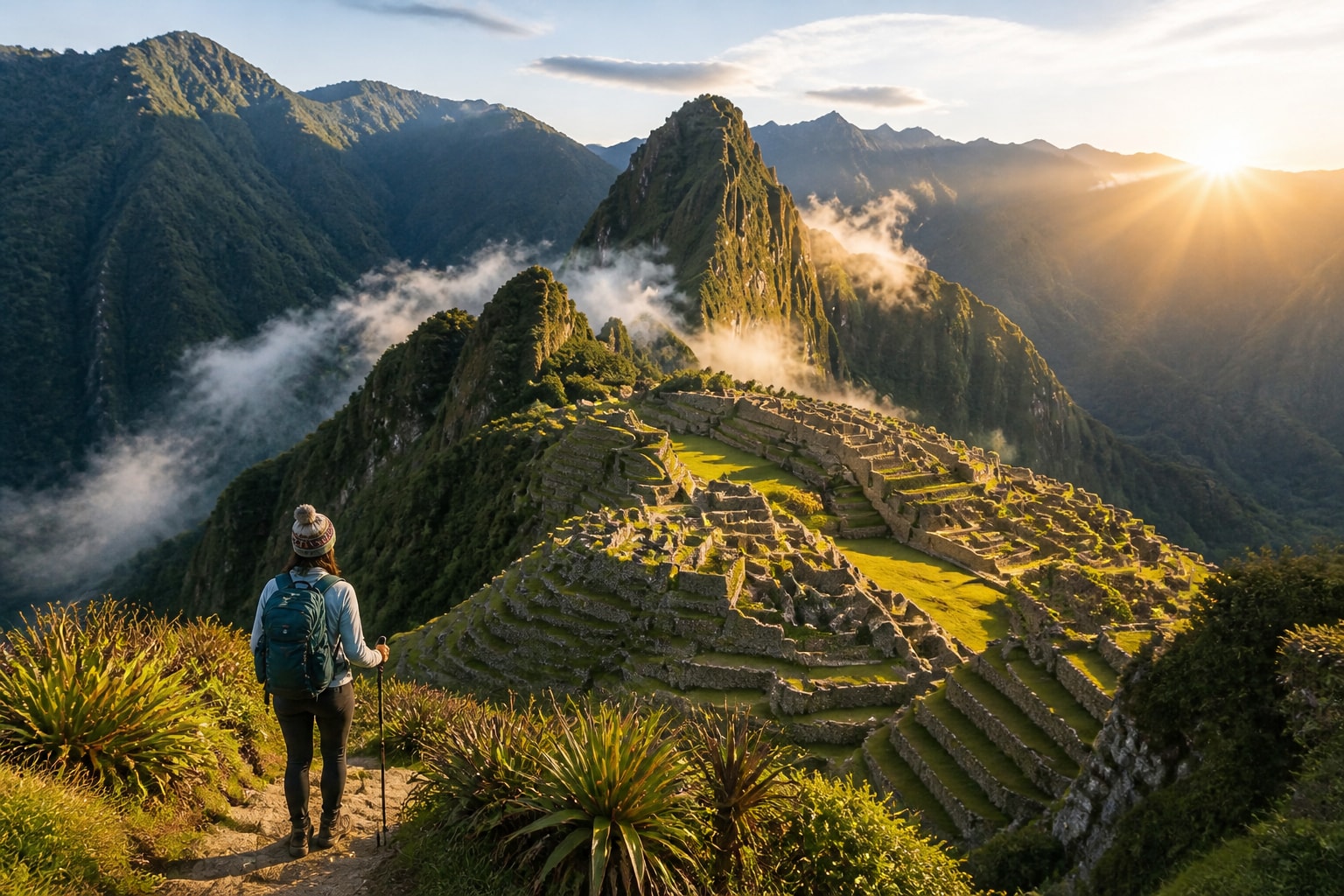
To visit Machu Picchu, you need a timed entry ticket bought in advance, a fixed circuit route, and a plan for reaching the town of Aguas Calientes by train or on foot. Tickets are sold through Peru's official online platform, daily numbers are capped, and entry rules are enforced at the gate, so booking early and understanding the system will save you from the most common planning mistakes. This guide covers tickets, circuits, the best months, how to get there, what to pack and how to choose between a train trip and a trek.
How Machu Picchu Tickets and Circuits Work
Machu Picchu tickets are timed-entry passes tied to a specific circuit, and you must choose both before you travel. Since June 1, 2024, visits are organized into three circuits comprising ten routes. Each route follows a set direction through the citadel, and you cannot freely backtrack once you have passed a checkpoint.
The practical effect is that the circuit you choose determines what you see. Some routes focus on the upper terraces and the classic postcard viewpoint. Others take in the lower sector with the Temple of the Sun and the Royal Tomb. Review the circuit descriptions before you buy, and confirm that your route includes the sites that matter most to you.
Capacity limits also shape availability. For 2026, the daily limit is 4,500 visitors in low season and 5,600 on designated high-season dates: January 1, April 2 to 5, June 19 to November 2, and December 30 and 31. Tickets are available through the official online platform and can be purchased in advance, which is the safest approach for any travel date.
A few points to settle before purchasing:
- Entry time slot: Pick a slot that fits your train arrival, with margin for delays.
- Circuit and route: Match it to the sites you want to see.
- Add-on hikes: Huayna Picchu and Machu Picchu Mountain are separate permits with their own limits.
- Passport details: The name on the ticket must match the passport you carry.
When Is the Best Time to Visit Machu Picchu?
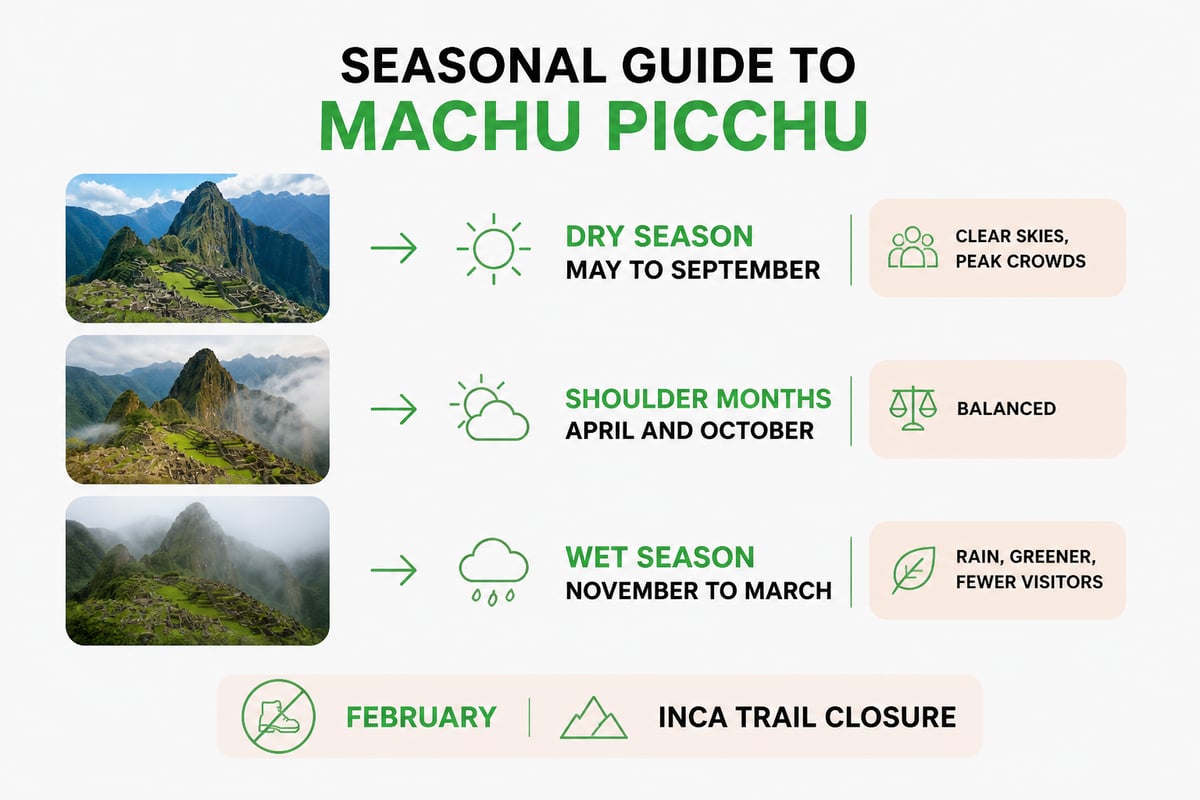
The best time to visit Machu Picchu is the dry season, from May through September, when skies are clearest and trails are driest. It is also the busiest period, so tickets and trains sell out earlier and the citadel feels more crowded.
The shoulder months of April, May, September and October balance weather and crowds well. The wet season runs roughly from November to March. Rain is frequent and clouds can hide the citadel for hours, yet the mountains turn green and visitor numbers drop. February is notable because the Inca Trail closes for annual maintenance, which matters if you plan to trek.
Time of day matters as much as season. Early slots often catch cooler air and softer light, while afternoon slots can be quieter as the first tour groups leave. If photography is a priority, ask your guide which sectors face the sun at your entry hour.
How to Get to Machu Picchu From Cusco
Most travelers reach Machu Picchu by taking a train from the Cusco region to Aguas Calientes, then a short bus ride up to the entrance. There is no road to the town itself, so the train or a multi-day trek are the realistic options.
The usual sequence looks like this:
- Travel from Cusco to the Sacred Valley or directly to the train station serving the route.
- Board the train to Aguas Calientes, also known as Machu Picchu Pueblo.
- Take the shuttle bus up the switchbacks to the citadel entrance.
- Present your ticket and passport at the gate within your entry window.
Your arrival time deserves attention. For 2026, Peru's tourism authority states there is a 45-minute grace period in high season and 30 minutes in low season, and arriving later can mean denied entry. Build in a buffer for queues at the bus stop, especially in peak months.
Many first-time visitors prefer to spend a night in Aguas Calientes so they start the day rested and close to the bus line. It also gives you a margin if a train runs late. Travelling with children or older relatives? Our Machu Picchu family trip planning guide covers timing, altitude and pacing for every age.
Machu Picchu Day Trip or Overnight Stay?
A day trip is workable if you have limited time, while an overnight stay gives you a calmer schedule and a better chance of an early or late entry slot. The right choice depends on how many days you have in Peru and how much altitude you are comfortable managing.
A one-day visit covers the essentials efficiently: transport from Cusco, guided time in the citadel and a return journey. If you are short on days, the Machu Picchu Day Tour from Machupicchu Trips handles the logistics from Cusco and includes a professional guide who explains the temples and terraces.
An overnight stay suits travelers who want to avoid a long single day. You arrive the evening before, sleep at lower elevation than Cusco, and enter at a time you choose. It also leaves room to add a mountain hike or a second visit window.
Which Hiking Route Reaches Machu Picchu?
Several trekking routes end at Machu Picchu, and the classic Inca Trail is the most famous, with permits limited and sold well in advance. If you are an active traveler, a trek turns the visit into a multi-day journey through cloud forest, high passes and smaller Inca sites that you cannot reach by train.
Common options include:
- Classic Inca Trail: The most historic route, with stone paths, tunnels and ruins along the way. Permits are capped, so book months ahead.
- Salkantay Trek: A high-altitude route beneath a glaciated peak, with a wider range of landscapes.
- Lares Trek: A cultural route passing Andean farming communities, often chosen by travelers who want local interaction.
- Short Inca Trail: A condensed route for those with less time that still finishes at the Sun Gate.
Trekking requires logistics that are hard to arrange alone: permits, porters, camps, meals and timed entry. Machupicchu Trips, a locally owned Cusco operator, coordinates permits, entrance tickets, trains and trekking logistics for small groups, with bilingual local guides.
Allow at least two days in Cusco or the Sacred Valley before any trek so your body adjusts to altitude. Cusco sits at high elevation, and the first days can bring headaches or shortness of breath.
What to Pack and What Is Not Allowed
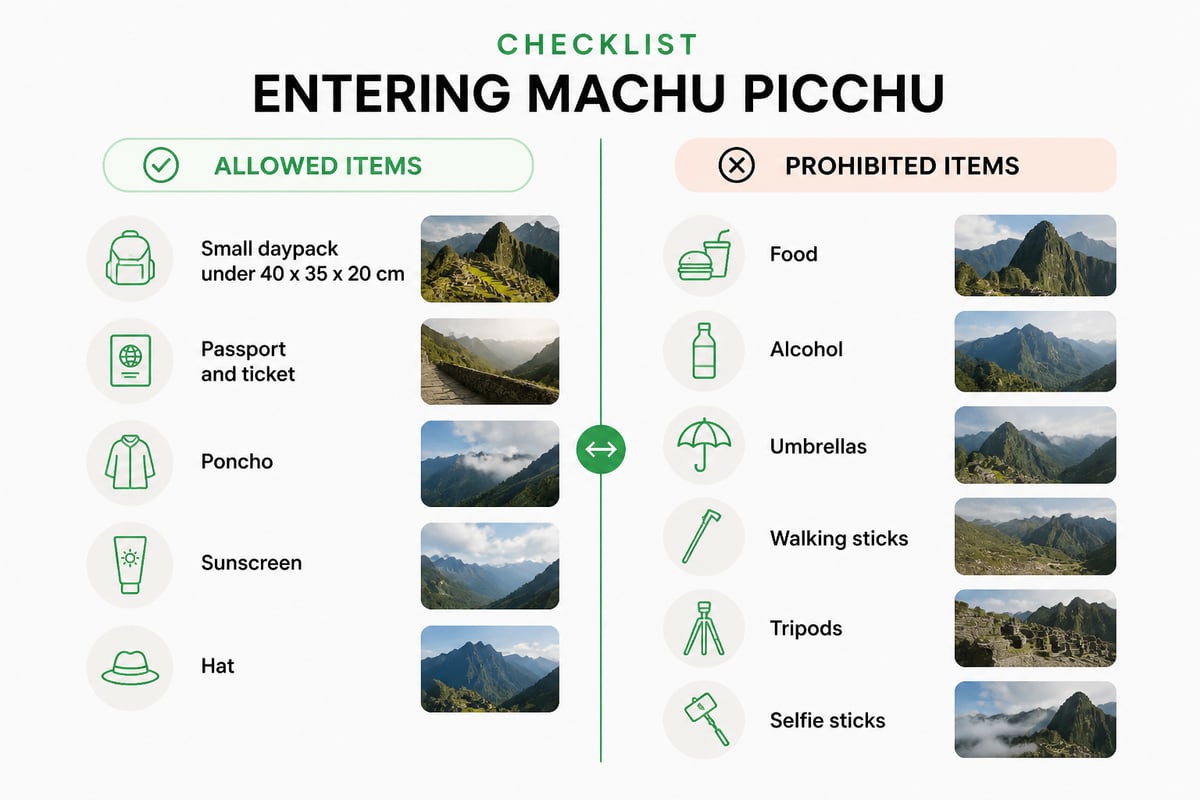
Pack light, because the site enforces strict limits on what you can carry through the gate. The official code of conduct prohibits bags larger than 40 x 35 x 20 cm (16 x 14 x 8 inches), so a small daypack is the right choice and larger luggage stays at your hotel.
The same code prohibits food and kitchenware, alcohol, umbrellas, walking sticks, tripods, selfie sticks and camera-stabilization accessories. Rain ponchos replace umbrellas, and trekking poles are generally only allowed with rubber tips on approved hiking routes, so confirm the current rule with your guide.
What belongs in the daypack:
- Passport and printed or digital ticket
- Layered clothing, since temperatures change quickly
- Sunscreen, sunglasses and a brimmed hat
- Insect repellent for the lower elevations
- A refillable water bottle without a bulky cover, plus any personal medication
- A light rain poncho in every season
Can You Wear Jeans to Machu Picchu?
Yes, you can wear jeans to Machu Picchu, and there is no dress code at the gate, but lighter fabrics are more comfortable. Denim dries slowly after rain and feels heavy on the long staircases and uphill sections. Mornings can start cool and turn warm by midday, and a pair of jeans that felt fine at breakfast can become stiff and clammy once you are climbing terraces in direct sun. If a shower catches you, wet denim also stays cold against the skin for hours.
Quick-dry hiking pants or leggings work better, with a base layer and a light jacket you can add or remove as the weather shifts. A rain poncho covers you in any season, since umbrellas are not allowed through the gate. Wear closed shoes with good grip, since the stone steps are uneven and can be slick. Sandals and smooth-soled fashion sneakers are a poor match for the terraces. If you do bring jeans, choose a pair with some stretch and pack a spare layer for the train ride back.
What Makes Machu Picchu So Special?
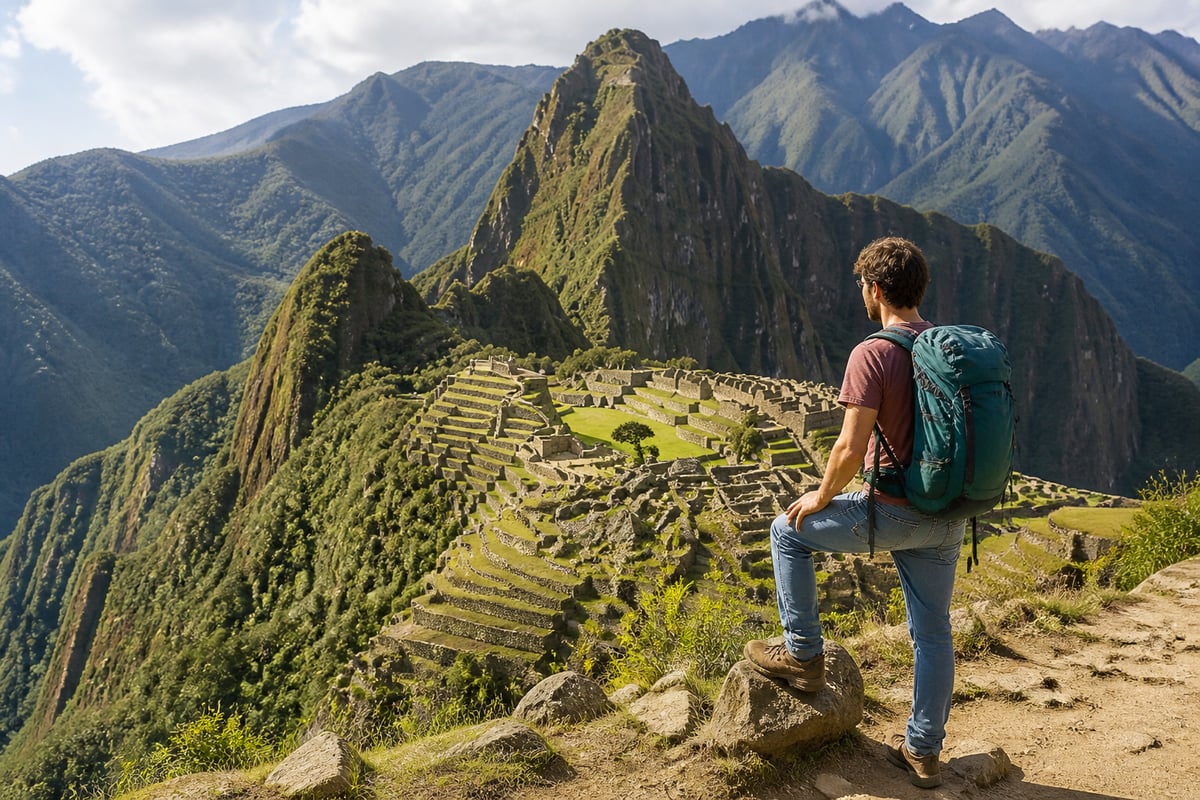
Machu Picchu is special because it combines Inca engineering, sacred landscape and remarkable preservation in a single mountain-top site. Built in the 15th century, the citadel sits on a ridge above the Urubamba River, with agricultural terraces, temples, plazas and water channels.
The stonework is a major draw. Walls were fitted without mortar, with blocks cut so precisely that many have endured for centuries. Several structures also align with the sun, including the Intihuatana stone and the Temple of the Sun, which reflect the astronomical knowledge of Inca builders.
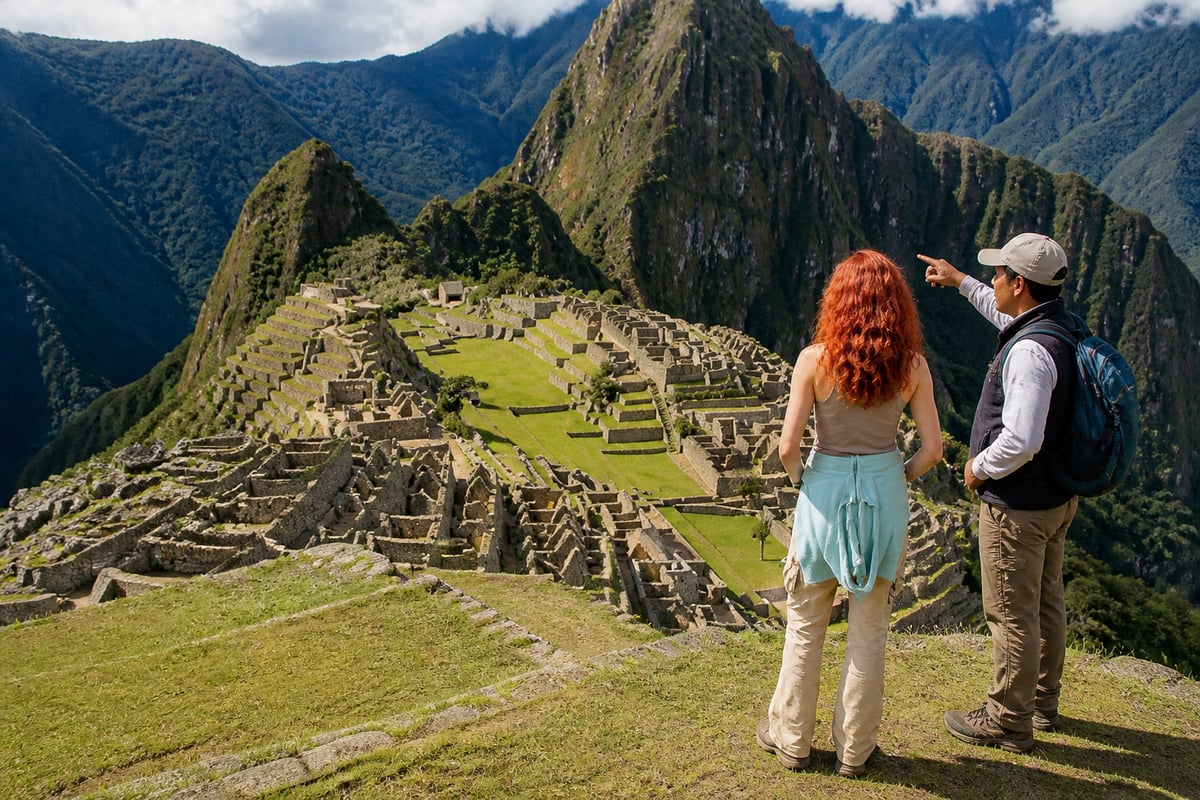
The setting adds to the effect. Steep peaks, cloud forest and a river canyon surround the ruins, so the site feels both constructed and natural. A guide who knows Inca history and culture makes a real difference here, because many of the most meaningful details are not obvious from the paths alone.
Choosing a Guide and a Trip Style
A guide is a practical requirement for most routes and a significant benefit at the site, since interpretation turns stone walls into a story. Local guides can explain construction methods, ritual spaces and how the citadel fit into the wider Inca network, and they help you move efficiently through your assigned circuit. Because each route runs in one direction with fixed checkpoints, a guide who knows the layout can pace your time so you reach the viewpoints and temples you care about before your route moves on. They also handle the gate procedures, including the entry window and passport checks.
Trip style is the other decision. Adventure itineraries focus on trekking and active exploration, luxury trips emphasize comfort in hotels and rail, and cultural itineraries add time in Andean communities and the Sacred Valley. A useful way to choose is to start from your available days: a short stay suits a single guided day, while a week or more leaves room for a trek, an overnight in Aguas Calientes or a Sacred Valley stay. Machupicchu Trips offers small-group tours with personal attention and can tailor packages to your dates, group size, interests and travel style. For specific itineraries and availability, use its product pages or contact page.
FAQ
Should I bring toilet paper to Peru?
It is wise to carry a small pack of tissues or toilet paper when traveling in Peru. Public restrooms outside hotels, restaurants and major attractions often do not supply it, and plumbing in many places cannot handle paper, so used paper commonly goes into a bin rather than the toilet.
Which is older, Machu Picchu or the Pyramids?
The Egyptian pyramids are far older, dating back thousands of years before Machu Picchu was built in the 15th century CE.
Your next step is to check available entry dates on the official ticket platform and pick a travel window before booking trains or hotels. If you would like local help with permits, tickets, transfers and guiding, you can build a plan around the Machu Picchu Day Tour or a longer trek. Machupicchu Trips can arrange the details from Cusco, so start planning and request a Machu Picchu trip tailored to your dates and travel style.