
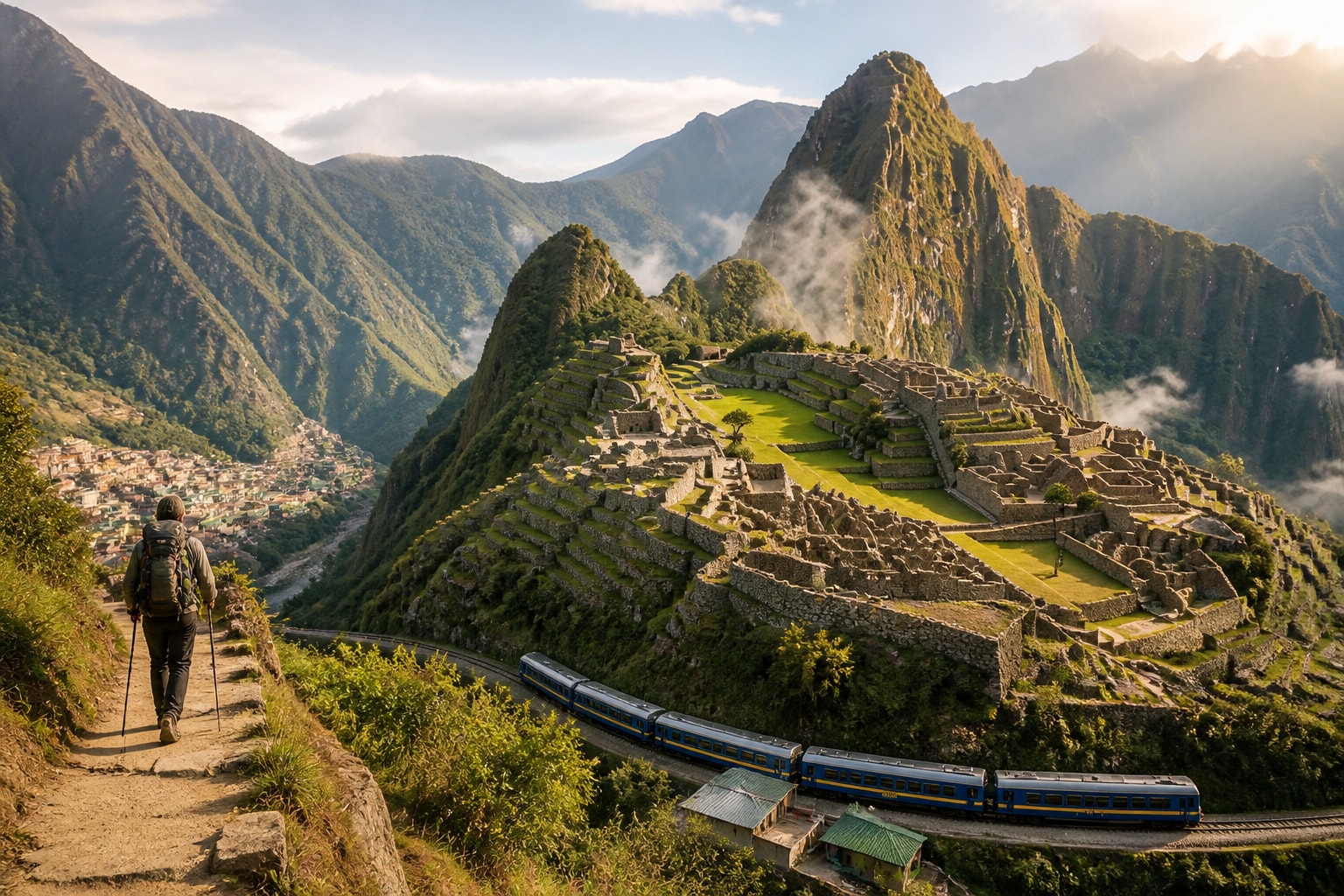
A Machu Picchu two day tour takes you from Cusco or the Sacred Valley by train to Aguas Calientes, gives you a guided visit to the citadel, and returns you to Cusco on day two. It is the most practical way to see the site without rushing, because the overnight stay removes the pressure of a single, very long day. Many travelers on this format spend a morning at the ruins and an evening in the town at the foot of the mountain.
This guide explains the day-by-day structure, how the new visitor circuits work, what the logistics cost you in time, and who this format suits.
What a Machu Picchu Two Day Tour Includes
A standard two-day trip combines transport, one hotel night, entrance tickets and a guide, so you arrive at the citadel with every permit already arranged. The usual building blocks are:
- Transfer from Cusco or the Sacred Valley to the train station
- Round-trip train tickets to Machu Picchu Pueblo (Aguas Calientes)
- One night in a hotel in Aguas Calientes
- Round-trip bus between the town and the citadel entrance
- Machu Picchu entrance ticket for a fixed time slot
- A bilingual professional guide for the ruins
Be aware of one common gap. PeruRail states that its Expedition and Vistadome fares do not include Machu Picchu admission or the bus between the town and citadel, so a train ticket alone does not get you through the gate. A packaged tour bundles these items together, which saves you from booking five separate things in the right order.
Meals vary by package. Confirm with your operator which breakfasts, lunches and dinners are covered before you travel.
Day One: Cusco to Aguas Calientes
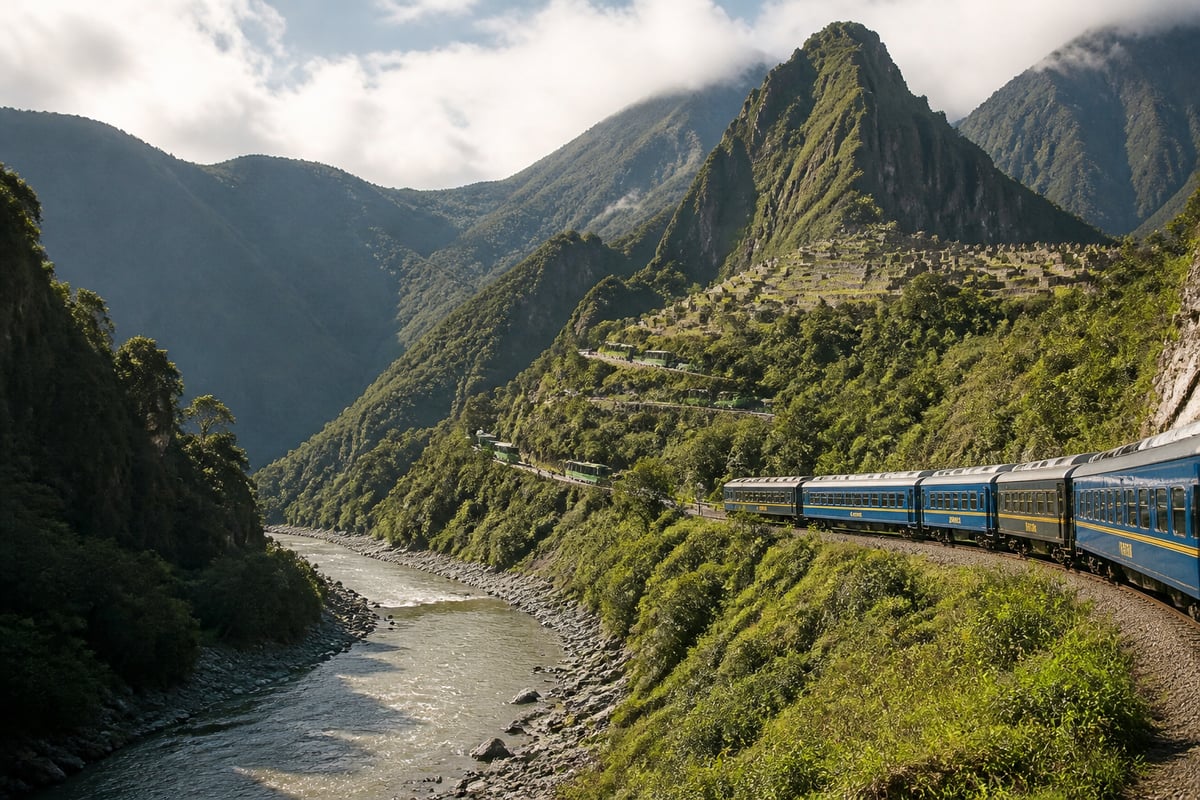
Day one is mostly about getting to the base of the mountain, with time for the Sacred Valley or an afternoon in town depending on your train. The route runs from Cusco to Ollantaytambo or Poroy, then by rail along the Urubamba River to Machu Picchu Pueblo.
Journey times matter for planning your morning. PeruRail lists the Ollantaytambo to Machu Picchu Pueblo trip at 1 hour 30 minutes, while the Poroy to Machu Picchu Pueblo trip takes 3 hours 30 minutes. Add the road transfer to the departure station and you can see why many itineraries leave Cusco early or start from Ollantaytambo.
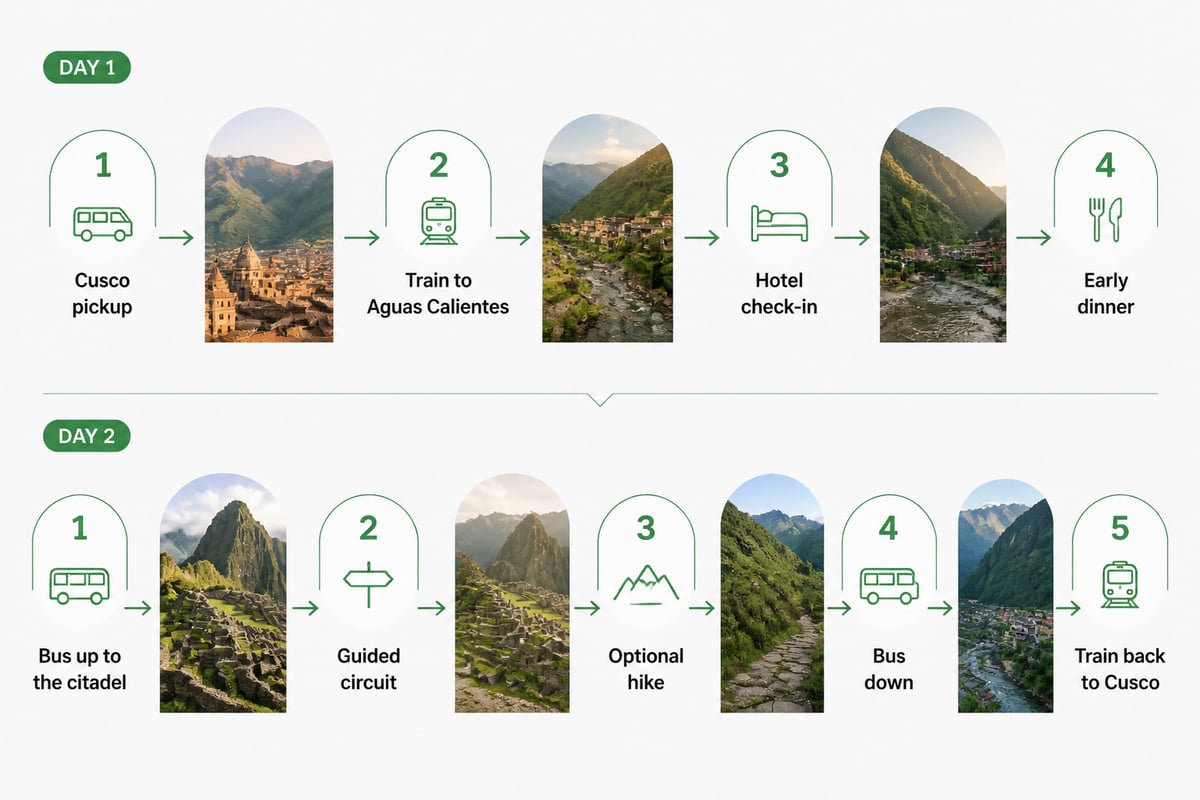
A typical day one runs like this:
- Morning pickup in Cusco or your Sacred Valley hotel
- Transfer to the station and board the scenic train
- Arrive in Aguas Calientes and meet your guide
- Hotel check-in, then free time or a briefing for the next day
- Early dinner and an early night
Aguas Calientes sits at a noticeably lower elevation than Cusco. Many visitors find they sleep better here, which helps before a demanding morning.
Day Two: The Citadel and the Return to Cusco
Day two is the main event, and the schedule is dictated by your entry time slot rather than by your preference. You take the shuttle bus up the switchbacks from town, join your guide at the gate, and walk a set route through the site.
Timing is enforced. Under the current rules, visitors have a 45-minute arrival grace period in high season and 30 minutes in low season, and entry may be refused after that window. Plan to be in the bus queue well before your slot, since lines build quickly in the early morning.
A guided visit generally covers the main landmarks:
- The Temple of the Sun and its curved masonry
- The Intihuatana stone
- The Sacred Plaza and the Temple of the Three Windows
- The residential and agricultural terraces
- The classic postcard viewpoint over the citadel
Guided circuits typically take a few hours inside the site, depending on pace and crowds. After that you can walk back down or take the bus, have lunch in town, and catch an afternoon train that returns you to Cusco by evening. Check your train time against your ticket, since schedules can change.
How the Visitor Circuits and Routes Affect Your Visit
Machu Picchu now operates under a circuit system, and the route you hold determines what you can see and in which direction you walk. The system includes three circuits made up of ten routes, and it took effect on June 1, 2024, according to Peru Travel.
In practice this means:
- Routes follow a one-way direction, so you cannot freely backtrack
- Each ticket is tied to a circuit, a route and a time slot
- Some circuits include the upper viewpoint and the classic photo terrace, while others focus on the lower sections
- Side hikes such as Huaynapicchu are separate permits
This is where an operator that handles tickets earns its fee. Official tickets are sold through the Ministry of Culture platform, and the official Machu Picchu site explains the current booking and circuit framework. A guide who knows the routes will also pace the visit so you reach the best viewpoints inside your window.
Daily Limits and High-Season Dates for 2026
Capacity is capped, and the limit changes with the season, so booking early is essential. For 2026, the daily limit is 5,600 visitors on designated high-season dates and 4,500 for the rest of the year.
The high-season dates for 2026 include January 1, April 2 to 5, June 19 to November 2, and December 30 to 31. That long summer block overlaps with the dry months, which most first-time visitors prefer, so tickets and train seats for that period sell out first.
A practical rule: if you plan to travel between June and early November, secure your tour as soon as your dates are fixed. Permits for extra hikes tend to go before general entry tickets do.
Adding Huaynapicchu to Your Two Days
If you are active and want a better vantage point, a two-day tour can include the Huaynapicchu climb behind the citadel. It is the steep peak that appears in most classic photographs, and the summit gives a view straight down onto the ruins and the river canyon.
Machupicchu Trips runs a Machu Picchu & Huaynapicchu Tour 2 Days that pairs the guided citadel visit with the mountain hike, a scenic train ride and one night in Aguas Calientes. Transportation, train tickets, hotel, entrance tickets and guide service are part of that package, and early booking is recommended because the hike permits are limited.
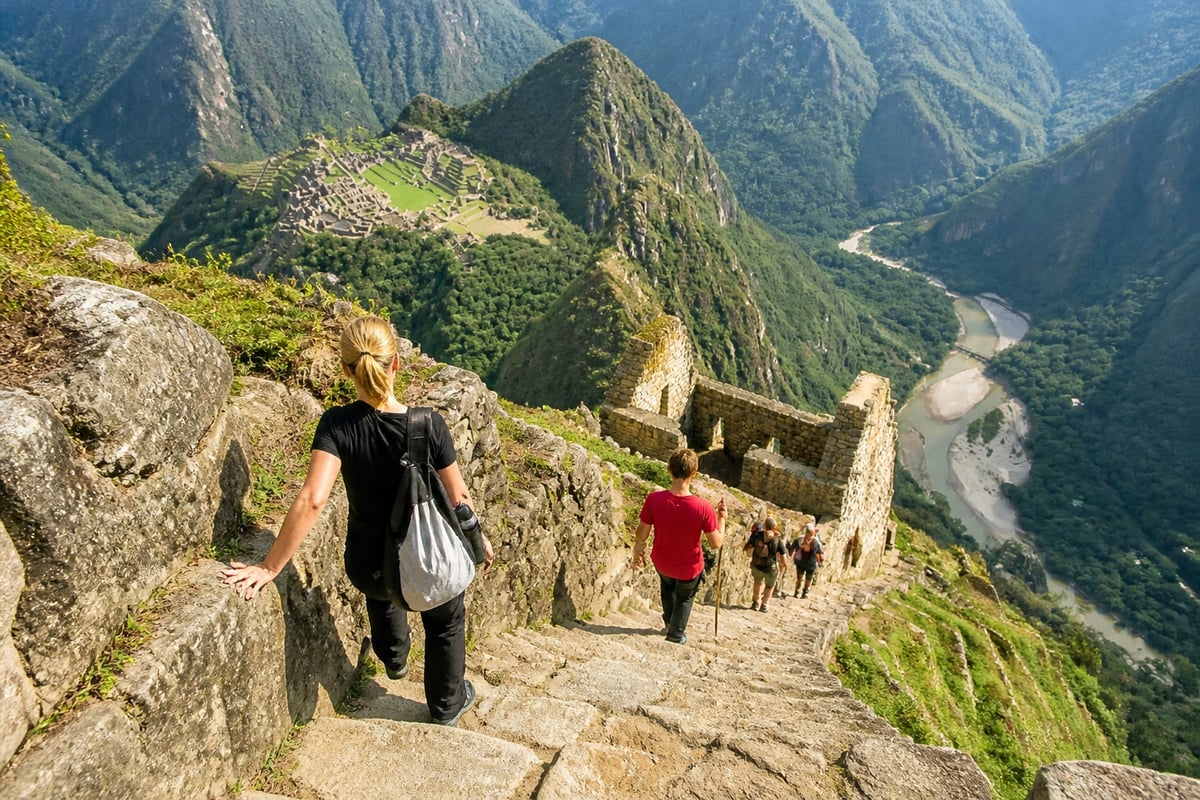
The Huaynapicchu trail involves narrow stone steps, exposed sections and a sustained climb, taking a good part of a morning round trip. It rewards steady walkers with a different perspective on the site. It is not a casual stroll, so confirm the details and requirements with your operator.
Can a Beginner Handle a Machu Picchu Two Day Tour?
Yes, a beginner can complete a two-day train-based visit comfortably, because it involves no multi-day trekking. The effort is moderate: you walk on uneven stone paths, climb many steps inside the site, and deal with altitude and sun exposure.
The main challenges are practical rather than athletic:
- Altitude: Spend a day or two in Cusco or the Sacred Valley first, so your body adjusts before the early start
- Footwear: Wear broken-in shoes with grip, since wet stone is slippery
- Weather: Pack a light rain jacket, sun protection and layers, as conditions shift quickly
- Pace: Guided circuits move steadily but allow photo stops
If you want a hiking route instead of the train, a short Inca Trail option covers more ground on foot. That route is a separate permit-controlled experience and is considerably more demanding than the train-based format, so it suits travelers with good fitness and a few months of lead time.
Can You Combine Machu Picchu With Rainbow Mountain?
Not realistically within a two-day Machu Picchu schedule, because both outings need most of a day and an early start. Rainbow Mountain sits at a very high altitude, and the drive from Cusco takes several hours each way.
Trying to fit it around a train-based Machu Picchu trip would compress your acclimatization and risk missing your entry slot. A better approach is to allow separate days. If you have extra time in the region, many travelers place Rainbow Mountain before Machu Picchu only after a few days at altitude, or skip it in favor of the Sacred Valley's lower sites.
Best Time to Take the Trip
The dry season, roughly May to September, brings clearer skies and more reliable views, but also the largest crowds. The wetter months, from about November to March, bring lush green scenery and thinner visitor numbers, along with afternoon rain and a higher chance of cloud over the citadel.
Shoulder months such as April, May and October often balance weather and crowds well. If you are choosing between a high-season date and a quieter one, remember that the daily cap is higher on high-season dates, but demand rises to meet it.
What to Pack and Prepare
Pack light for the overnight stay, since you will often leave your main luggage at a Cusco hotel. A small daypack is enough for the ruins, and some stations restrict bag size.
Bring these essentials:
- Passport, which is checked against your entry ticket
- A printed or saved copy of your ticket and train reservation
- Refillable water bottle and light snacks
- Sunscreen, hat and insect repellent
- Layers and a compact rain jacket
- Comfortable walking shoes
Large backpacks, tripods and single-use plastics are generally restricted at the site, so check the current rules with your operator before you pack.
Is a Guided Two-Day Tour Worth It?
For first-time visitors, a guided package usually saves more in coordination effort than it adds in cost. The citadel has no signage that explains Inca engineering, astronomy or religion in depth, so a knowledgeable guide transforms a walk through stone into a readable story.
Logistics are the other benefit. Permits, tickets, trains, transfers and hotels all have to line up against fixed time windows, and one mismatch can cost you entry. Machupicchu Trips, a locally led operator offering Peru travel experiences, coordinates these pieces and offers bilingual local guides who explain the history on site. Itineraries can be tailored to your dates, group size and interests.
This format is less suited to anyone who wants to wander the ruins entirely on their own schedule without a guide.
FAQ
How long does it take to walk Circuit 2 at Machu Picchu?
Visitors typically need a few hours to walk a guided circuit, depending on pace, photo stops and crowd levels. Your assigned route and entry time determine the exact path, so confirm which circuit your ticket covers.
Is Machu Picchu open to tourists again?
Yes, Machu Picchu is open to visitors under a ticketed system with daily caps and fixed time slots. Closures can occur for maintenance or weather events, so verify current status on the official site before finalizing travel plans.
Do I need to book a two-day trip far in advance?
For June to early November, book as early as your dates allow, since the high-season daily limit is reached quickly and train seats go with it. Outside those months you have more flexibility, though popular hike permits still fill early.
Your next step is to pick your travel dates and check whether they fall in the 2026 high season, since that decides how early you need to book. If you want the citadel plus the Huaynapicchu hike over two days, the Machu Picchu & Huaynapicchu Tour 2 Days is a good starting point to review. The local team at Machupicchu Trips can match permits, trains and hotels to your schedule, so you can use their booking page to plan my Machu Picchu trip around your dates and group size.