
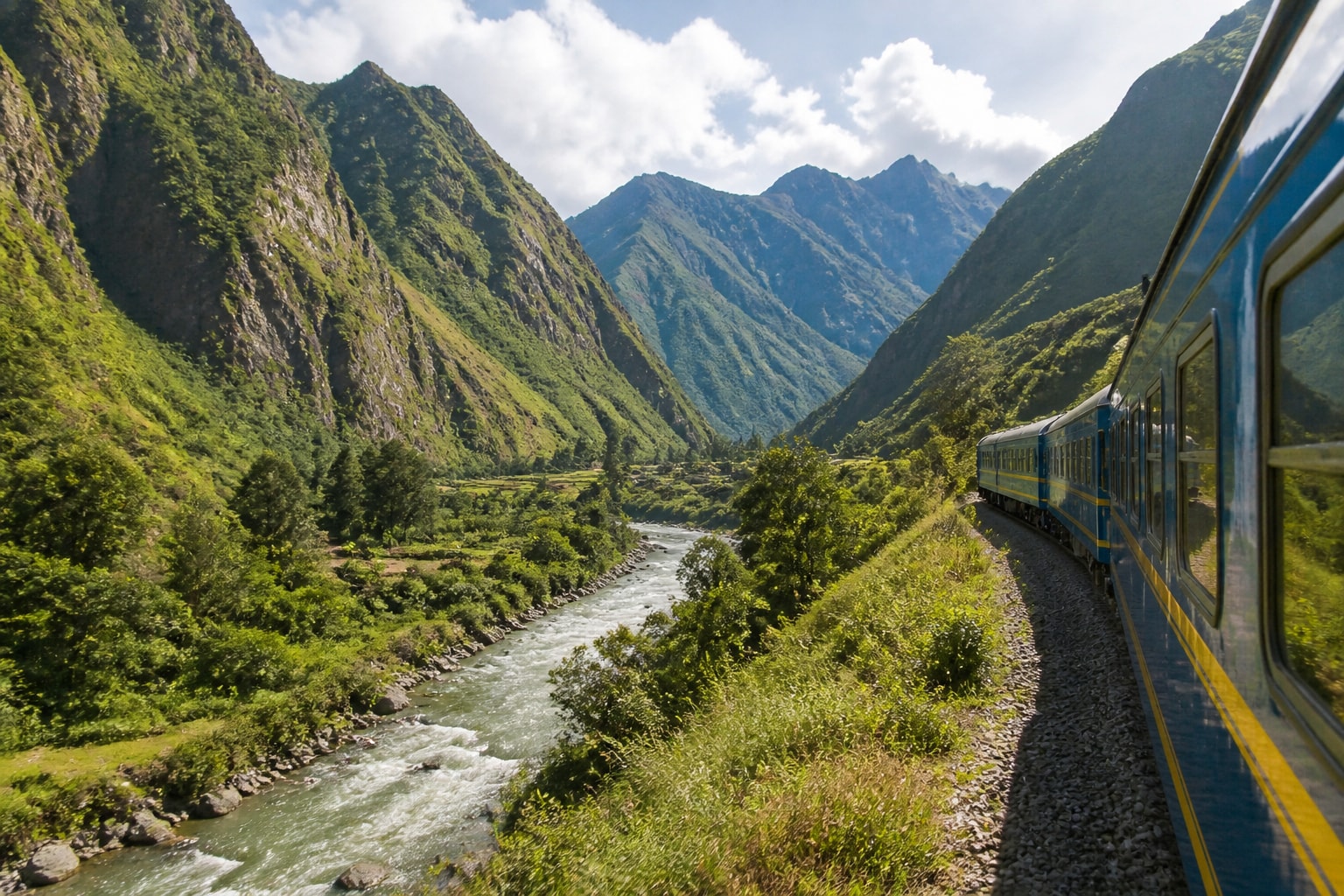
The most common way to get from Cusco to Machu Picchu is a road transfer to Ollantaytambo, a train to Aguas Calientes, and a short shuttle bus up to the citadel, which takes several hours in total. Active travelers can instead hike the Inca Trail or a shorter trekking route, while those on a tighter budget can take the long overland route via Hidroeléctrica. This guide explains how to get to Machu Picchu from Cusco by each method, with realistic travel times, cost ranges and planning advice for 2026.
The Standard Route: Road, Train and Shuttle Bus
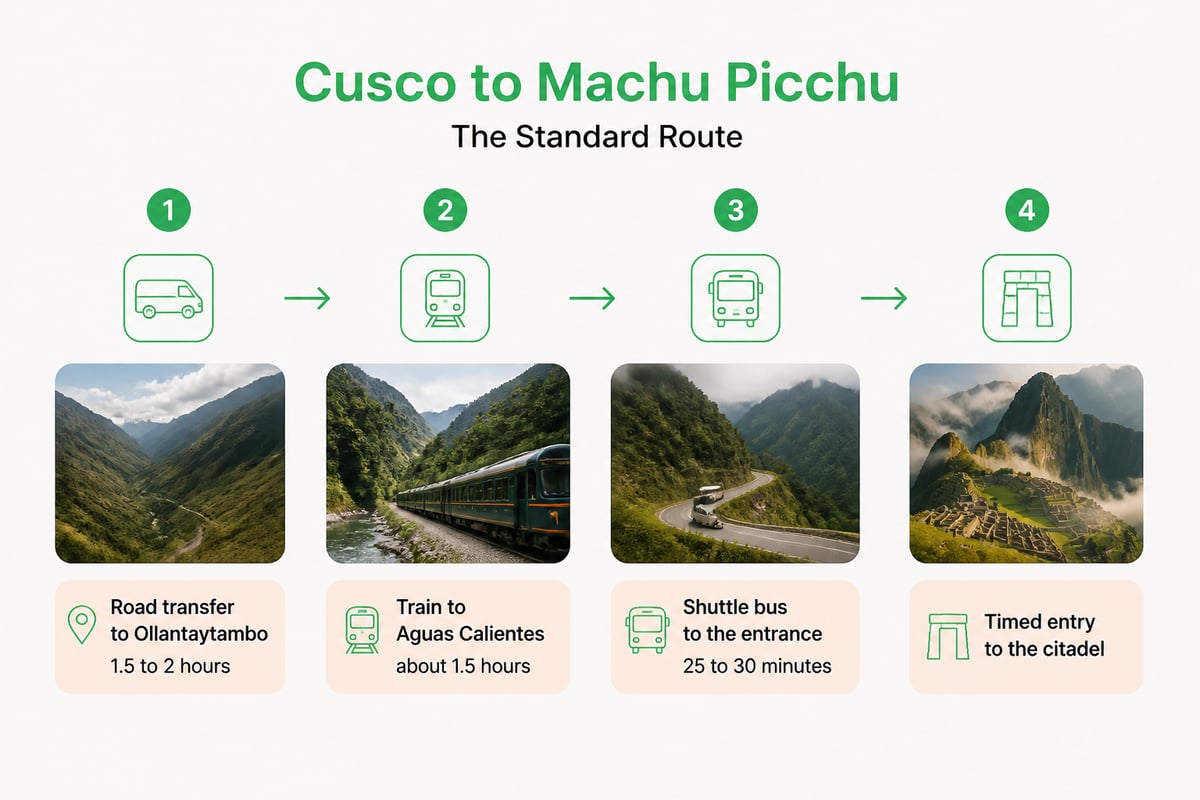
The standard route from Cusco to Machu Picchu combines three legs: a drive to Ollantaytambo, a train to Aguas Calientes, and a shuttle bus to the entrance. According to Fertur Travel, the road leg takes about 1.5 to 2 hours, the train about 1.5 hours, and the shuttle bus about 25 to 30 minutes.
Here is how the journey typically unfolds:
- Cusco to Ollantaytambo (road): A private transfer or shared van descends into the Sacred Valley, passing Chinchero and Urubamba.
- Ollantaytambo to Aguas Calientes (train): The railway follows the Urubamba River through a narrowing canyon with cloud forest on both sides.
- Aguas Calientes to Machu Picchu (shuttle bus): Buses climb a switchback road to the main gate.
- Entry and circuit: Your timed ticket assigns an entry window and a visitor circuit.
Most first-time visitors choose this route because it is predictable, scenic and well supported. It also allows a stop at Sacred Valley sites such as Ollantaytambo's fortress before boarding the train.
Train Options From Cusco and Ollantaytambo
Trains to Machu Picchu depart from several stations, and the one you choose determines how much road travel you add. Services run in standard, panoramic and luxury categories, and the main difference lies in comfort, windows and onboard service rather than the route itself.
Where the trains depart
- Ollantaytambo: The most frequent departure point and the shortest ride. Travel to the station from Cusco is by road.
- Poroy: A station just outside Cusco, used for some departures when you prefer to board near the city.
- San Pedro (Cusco): Services from the city center take longer. PeruRail’s FAQ lists the journey from San Pedro station to Machu Picchu station as 4 hours 30 minutes.
- Bimodal services: Some operators combine a bus segment with a train segment, which removes the need to arrange your own transfer to Ollantaytambo.
Choosing a class of service
Standard trains suit most travelers and offer large windows and a comfortable seat. Panoramic carriages add glass roofs for canyon views, and luxury services include dining and lounge access. The ride from Ollantaytambo takes about 1.5 hours on the way out, while the return is closer to 2 hours, according to Fertur Travel.
Book train seats as early as your dates are fixed. Seats are limited, and there are baggage limits onboard, so plan to leave larger bags in Cusco.
Travel Time and Cost Comparison by Route
Costs and times vary by season and provider, so treat the figures below as planning ranges rather than quotes. For current prices, check directly with the train operator or request a tailored itinerary.
| Route | Approximate travel time | Cost level | Best for |
|---|---|---|---|
| Road + train + shuttle bus | Several hours | Mid to high | First-time visitors wanting a reliable journey |
| Direct train from Cusco area | About 4.5 hours by rail | High | Travelers who want one continuous rail leg |
| Road via Hidroeléctrica + walk | Long drive each way, plus walking | Lower | Active travelers comfortable with a long day |
| Classic Inca Trail | 4 days, 3 nights | Highest, permit required | Trekkers wanting the full hiking experience |
| Short Inca Trail | 2 days, 1 night | High, permit required | Hikers with limited time |
Costs for a Machu Picchu visit are made up of several separate items. Budget for the entrance ticket, round-trip train, round-trip shuttle bus, the guide, and any hotel night in Aguas Calientes. The train is usually the largest single expense for non-trekkers, and the permit is the largest for hikers.
The Overland Route via Hidroeléctrica
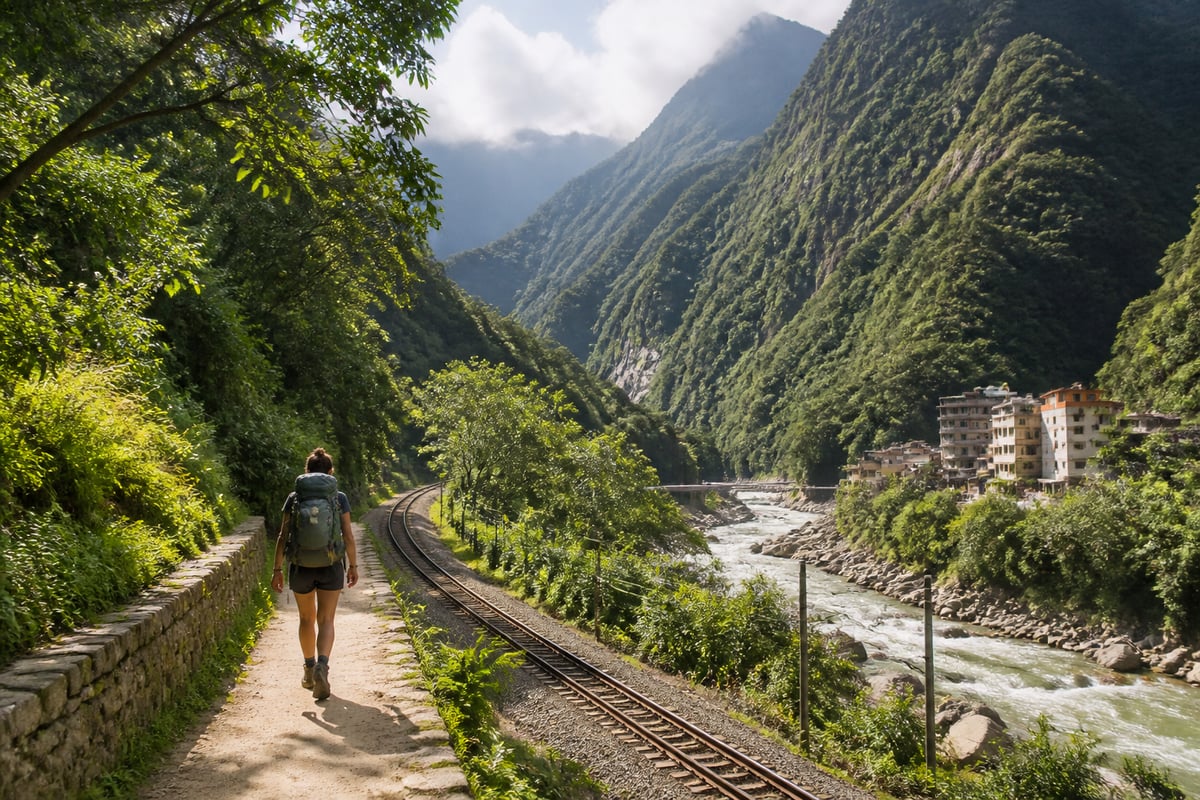
The overland route reaches Aguas Calientes by road and on foot, avoiding the train for most of the trip. According to Terra Quechua Peru, this alternative runs via Hidroeléctrica, with a drive of about 6 hours each way followed by a walk of about 2 hours 30 minutes to Aguas Calientes.
This option has clear trade-offs:
- Advantages: It often costs less than a round-trip train ticket and passes through rural landscapes few visitors see.
- Drawbacks: The drive is long and winding, and the walk follows the railway line, so it suits travelers who are comfortable with extended days and uneven timing.
- Planning note: It usually works best as part of a multi-day trip with a night in Aguas Calientes, rather than a rushed same-day attempt.
If you are considering this route, confirm road conditions before departure, since weather in the rainy season can affect timing.
Hiking to Machu Picchu: Inca Trail and Alternatives
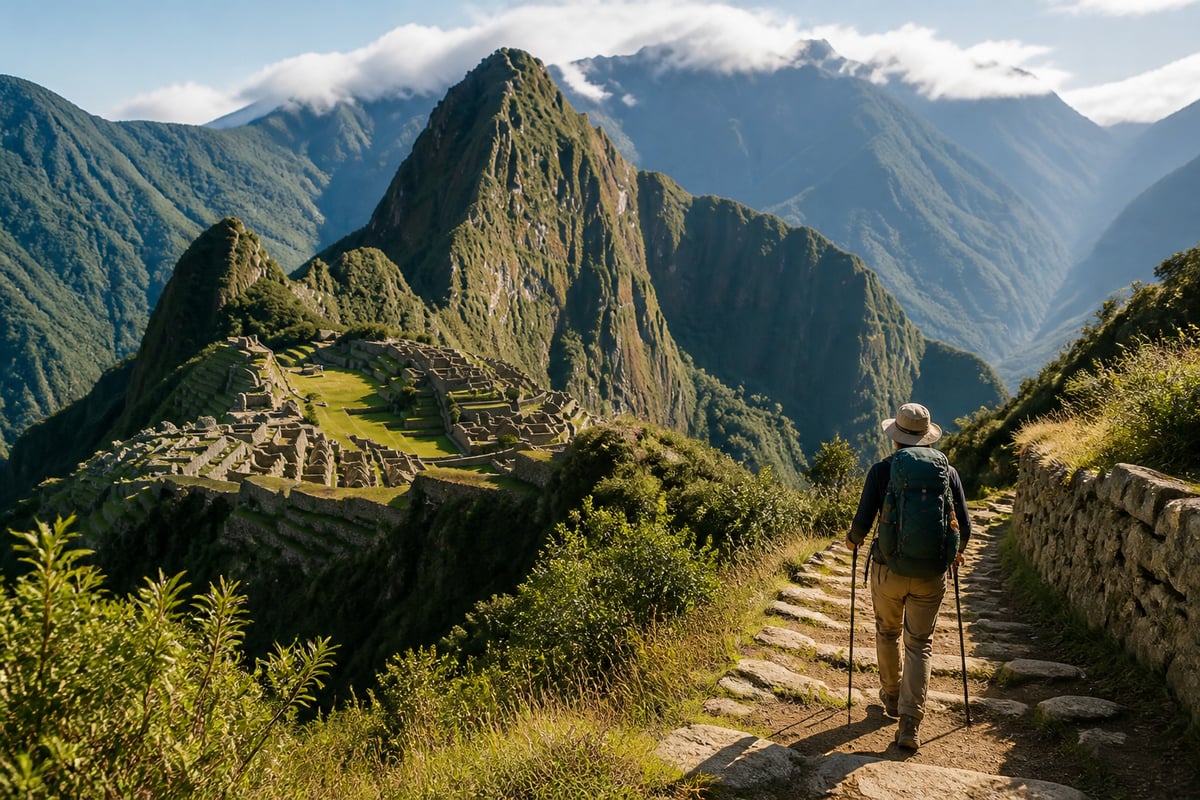
Hiking is the most rewarding way to arrive for active travelers, and the Inca Trail is the best known of several routes. The classic trail runs four days and three nights and ends at the Sun Gate, where trekkers enter the citadel on foot. A shorter two-day version also reaches the Sun Gate for those with less time.
How difficult is the Inca Trail hike?
The Inca Trail is moderately challenging rather than technical. It involves long stone staircases and a high pass at Dead Woman's Pass, so acclimatization in Cusco before starting is strongly advised. Most reasonably fit travelers complete it with steady pacing, a good guide and porter support.
Permits are limited and sell out well in advance, so confirm your dates before booking flights. Alternative treks, such as routes through the Salkantay or Lares areas, offer a similar sense of reward without the same permit pressure, though they are different in character and altitude profile.
Active travelers who want the logistics handled can work with a locally owned operator that coordinates permits, trekking logistics, trains and transfers in one itinerary.
Planning a Day Trip From Cusco
A single-day visit is possible, and it suits travelers with limited time who still want to see the citadel with a guide. The day is long: an early departure from Cusco or the Sacred Valley, a train each way, a guided walk through the site, and a late return.
The standard legs add up quickly. Based on figures from Fertur Travel, you spend about 1.5 to 2 hours on the road to Ollantaytambo, about 1.5 hours on the train, and 25 to 30 minutes on the shuttle bus, before any time at the site. The return train is somewhat longer than the outbound ride, so the trip back is slower than the trip out. If you board at Cusco's San Pedro station instead, PeruRail lists the journey at 4 hours 30 minutes each way, which fills much of the day on rails alone. Pick the earliest practical departure so your entry window falls in the morning, and confirm your return train time before you enter the site so you are not rushing the final terraces.
A guided option removes the coordination burden of timing the train, shuttle bus and entry slot. The Machu Picchu Day Tour from Machupicchu Trips is built for this situation, taking you from Cusco to the Inca citadel with a professional guide who explains the temples and terraces.
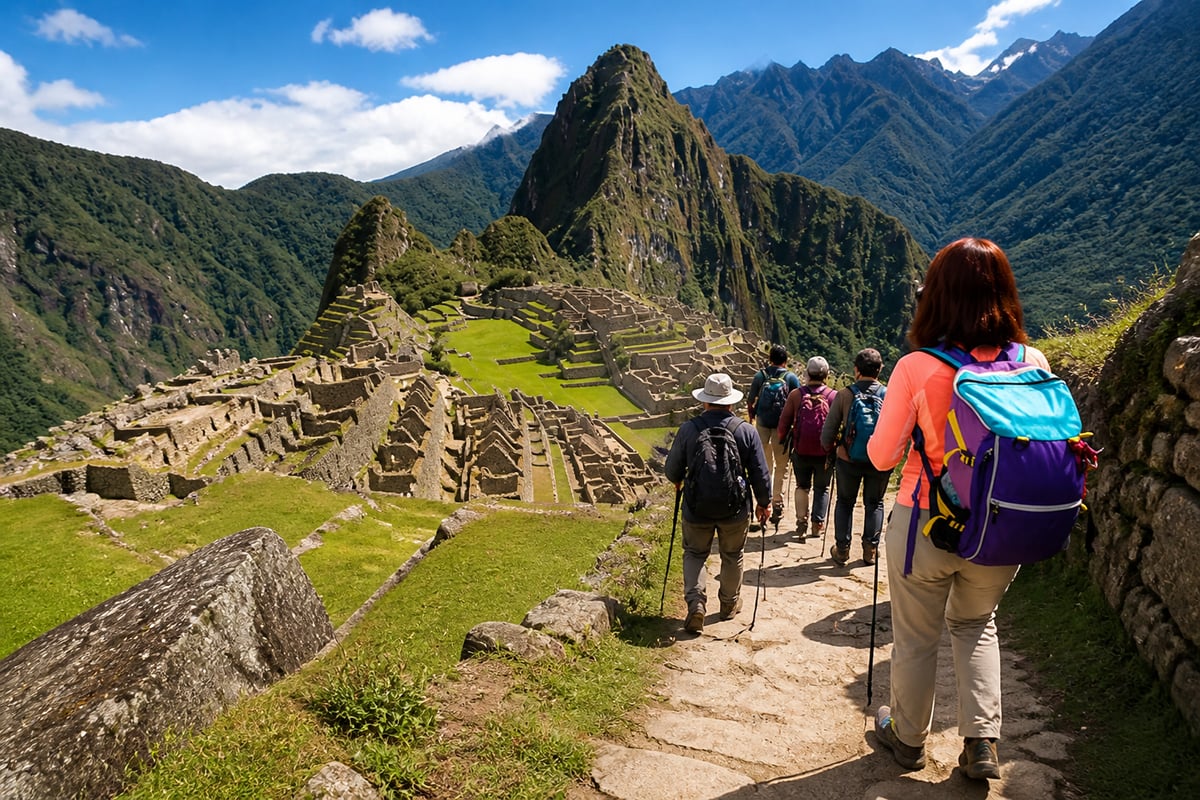
For most first-time visitors, one night in Aguas Calientes is more relaxed than a same-day return. It lets you enter the site earlier, avoid rushing for the evening train, and absorb the setting more fully.
Tickets, Circuits and Timed Entry
You cannot simply arrive at Machu Picchu and walk in, because entry is controlled by timed tickets and designated circuits. The official Machu Picchu site describes the three-circuit system and the route changes that took effect on June 1, 2024, and these rules determine which parts of the citadel you can walk.
Keep these points in mind:
- Book your entrance ticket before your train, since both are date-sensitive.
- Match your train arrival time to your entry window, leaving time for the shuttle bus.
- Carry your passport, since it is checked against the ticket at the gate.
- Expect to follow a one-way route within your assigned circuit.
The timing arithmetic is worth doing in advance. The shuttle bus from Aguas Calientes takes about 25 to 30 minutes to reach the entrance, and the train from Ollantaytambo takes about 1.5 hours, so a train that arrives shortly before your entry window leaves almost no margin for the bus queue. Choose a train that lands you in Aguas Calientes with a comfortable buffer. Because the circuit is one-way, you cannot double back to a viewpoint you skipped, so ask your guide which stops belong to your assigned route before you start walking. An operator who arranges tickets, trains and transfers together reduces the risk of mismatched times, which is the most common planning error on this trip.
What to Wear and Pack
Dress for variable mountain weather, and comfort matters more than formality. Jeans are allowed at Machu Picchu, though lightweight, quick-drying trousers are more comfortable on wet days and long walks.
A practical day pack includes:
- Layers, including a light rain jacket
- Sturdy walking shoes with good grip on wet stone
- Sun protection and a hat
- Insect repellent for the lower, humid areas
- Your passport and printed tickets
- A small bag, since larger backpacks are restricted at the entrance
Layering matters because conditions shift within a single visit. Mornings in the cloud forest can be cool and damp, while midday sun at the citadel is strong, so a thin base layer, a fleece or light sweater, and a packable rain shell cover most situations. Stone steps and terraces turn slick in drizzle, which is why shoes with real tread are preferable to fashion sneakers. Since the train has baggage limits and the entrance restricts large packs, leave suitcases and bulky gear at your Cusco hotel and carry only what fits in a small daypack. Bring a refillable water bottle and a few snacks, and keep your passport and tickets in an easy-to-reach pocket for the gate and train checks.
FAQ
Is there a train that goes from Lima to Cusco?
No, there is no passenger train between Lima and Cusco. Most travelers fly, which is the quickest option, or take an overland bus, which is a very long journey. Flying is the standard choice for visitors planning a first trip.
How much does it cost to go to Machu Picchu?
The total depends on your route, season and whether you travel independently or with a guide. Main costs include the entrance ticket, round-trip train, shuttle bus, guide fees and accommodation, while trekkers add a permit and trek services. Request a tailored quote for your dates to get a figure that reflects current rates.
How far in advance should I book?
Book as early as your dates are confirmed, and plan several months ahead for the Inca Trail. Train seats and entry tickets for the dry season tend to sell out first. Booking early also gives you more choice of departure times.
Start by deciding your route and fixing your travel dates, since permits, train seats and entry tickets all depend on them. Machupicchu Trips is a locally owned Cusco operator that has run Peru travel experiences since 1999, with bilingual local guides and small groups, and it coordinates permits, tickets, trains, transfers and hotels in one plan. If you want a single day at the citadel, look at its Machu Picchu Day Tour, or Plan My Machu Picchu Trip with a team that can tailor the route, pace and timing to your group.