
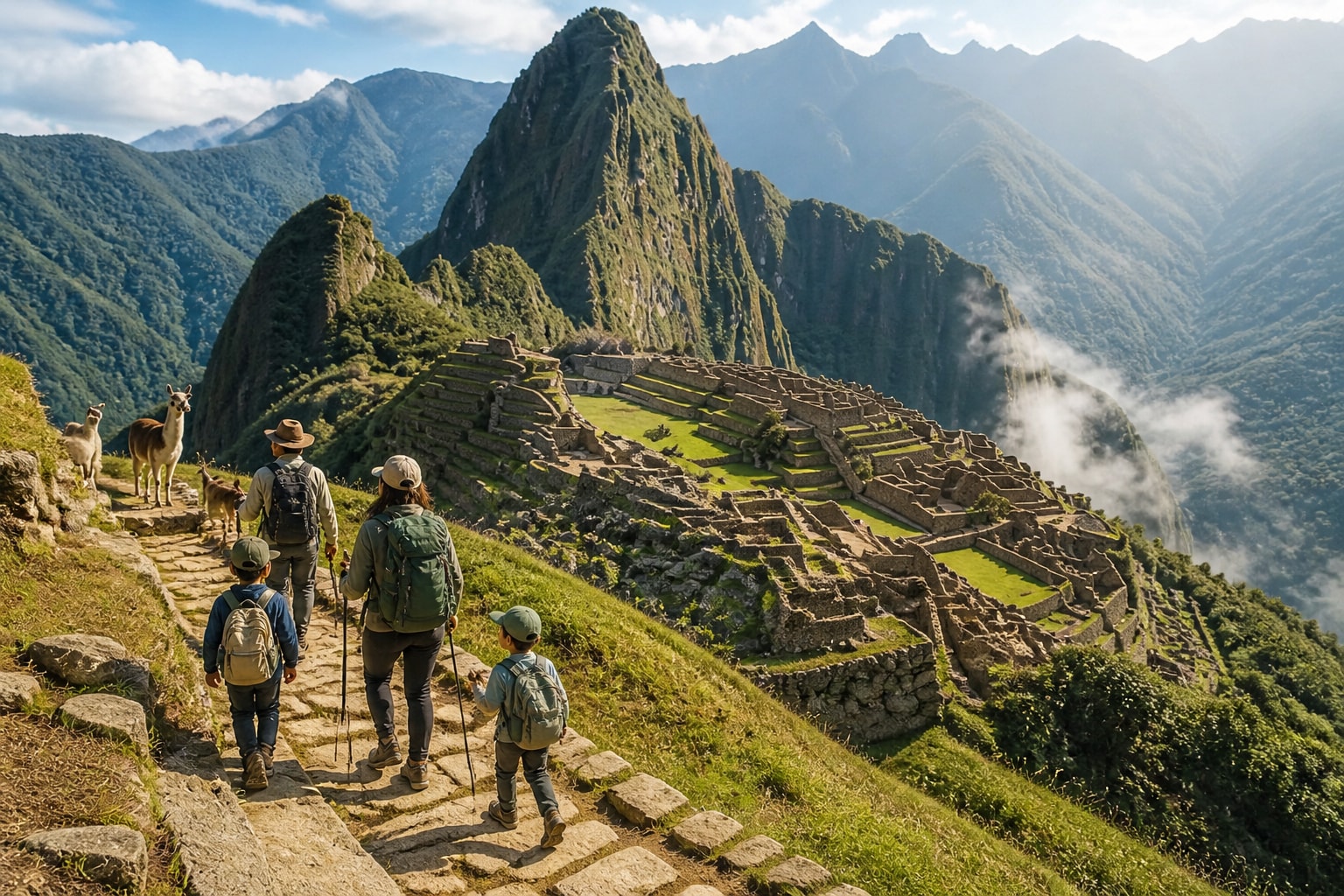
A Machu Picchu family trip works well when you plan around three things: altitude, timed entry tickets and a pace that suits your youngest traveler. Many children manage the citadel's walking circuits comfortably, provided you reserve tickets and trains early, acclimatize in the Sacred Valley first and keep each day's schedule short. This guide covers timing, logistics, costs, kid-friendly stops and practical health questions so you can build an itinerary with confidence.
Is Machu Picchu Suitable for Families?
Machu Picchu can suit many families, and the site itself may be easier on young legs than some first-time visitors expect. The main circuits follow stone paths and terraces, with places to pause along the way. The real challenges are altitude, steps in a few areas and the limited time slot your ticket allows.
The citadel sits at a lower elevation than Cusco, which is high in the Andes. That detail matters. Because Machu Picchu is lower than Cusco, the order of your itinerary can make a real difference to how comfortable the trip feels.
Consider these age-related points:
- Toddlers and infants: Carriers are allowed, but strollers are not practical on the uneven stone. Plan for shorter circuits and frequent rest breaks.
- Ages 5 to 9: Stories do the work here. Children engage with llamas, hidden stairways and Inca engineering far more than with dates and dynasties.
- Ages 10 to 17: Teenagers often enjoy the climbs, the photography and the question of how the Incas moved granite without wheels.
- Grandparents: Multigenerational groups do well with a slower circuit and a guide who adjusts the route in real time.
For a deeper look at how children respond to the site, the Machu Picchu with kids overview from Kuoda Travel offers a useful perspective on pacing.
When Is the Best Time for a Machu Picchu Family Trip?
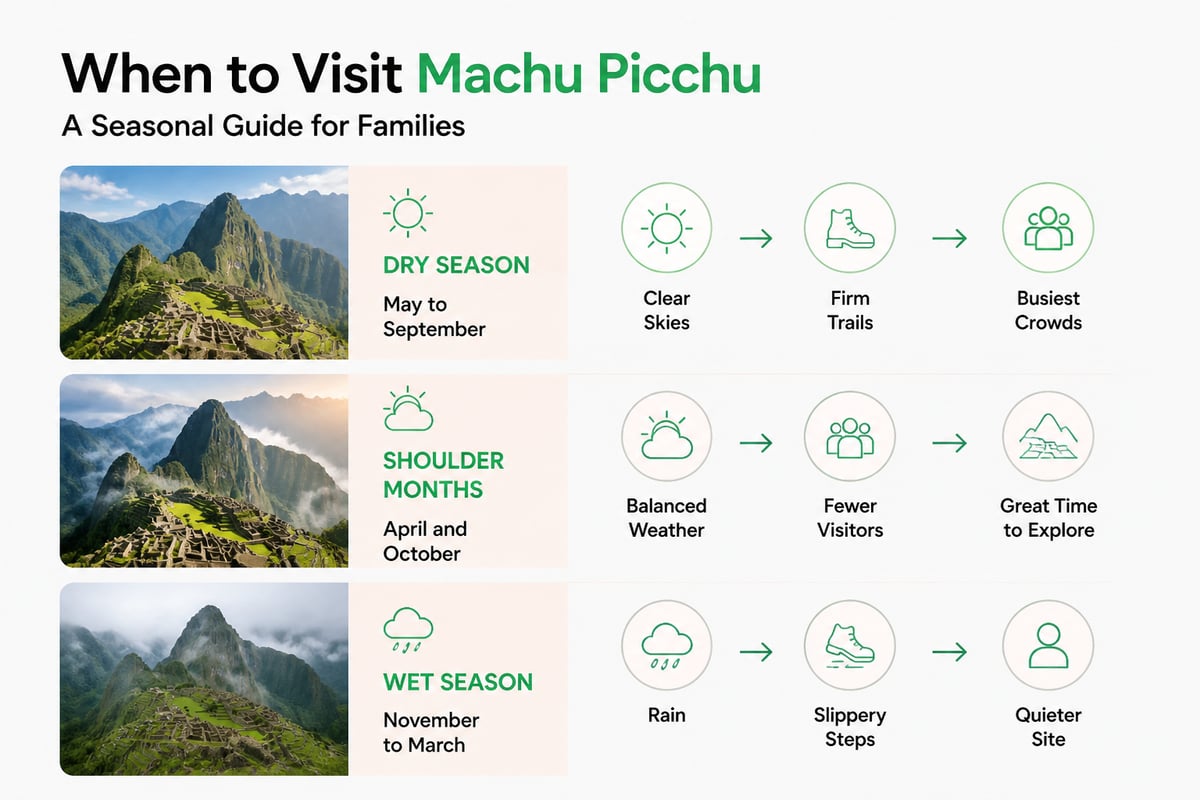
The dry season, roughly May through September, is generally the most comfortable time for a Machu Picchu family trip, with clearer mornings and firmer trails. Holiday periods are usually the busiest, so booking early is wise.
The wet season runs roughly from November through March. Rain brings lush scenery and thinner crowds, but it also brings slippery steps, cloud cover and occasional rail disruptions. February is typically among the wettest months. Condé Nast Traveler’s guide to the best time to visit Machu Picchu breaks down seasonal weather and crowd patterns in useful detail.
Shoulder months deserve attention. April and October can offer balanced weather with fewer visitors, which may mean shorter lines and more space on the terraces.
Matching the Season to Your Family
If your children are under 8, the dry season is the safer choice because cold, damp conditions can be tiring for small travelers. If your children are teenagers who enjoy adventure, the shoulder season gives you quieter trails and softer light for photographs.
How Do Tickets, Trains and Timed Entry Work?
Machu Picchu requires a timed-entry ticket, and the train ticket is a separate purchase, so both should be coordinated before you travel. Entry is limited each day, so booking early helps secure your preferred slot.
Here is the sequence that keeps things simple:
- Choose your travel dates and confirm everyone's passport details, since names on tickets must match exactly.
- Reserve the entrance ticket and circuit first, because it determines the time you need to arrive.
- Book the train to match your entry window, leaving buffer time for the bus ride up from Aguas Calientes.
- Arrange hotels and transfers around those fixed points.
PeruRail's guide to tickets for Machu Picchu is helpful when you need to line up a train departure with an entry slot.
For families, a morning entry slot is often a good choice, since temperatures tend to be cooler and afternoon clouds can obscure the view. Our recommendation is to avoid the last entry window of the day with younger children, since tired legs and closing time rarely mix well.
A locally owned operator removes much of this coordination. Machupicchu Trips, a locally owned Cusco operator, coordinates permits, entrance tickets, trains, transfers and hotels, which is practical when you are managing several travelers at once.
How Much Does a Machu Picchu Family Trip Cost?
The cost of a Machu Picchu family trip depends on trip length, hotel level, train class and whether you choose a guided package, so there is no single figure that applies to every family. Budget planning is easier when you break the total into its main components.
The main cost categories are:
- Entrance tickets: Priced per person, with separate rates for adults and for children and students under certain conditions.
- Train tickets: Priced by service level, route and departure time. Child fares exist on some services.
- Bus transfers: The shuttle between Aguas Calientes and the citadel is a per-person, round-trip cost.
- Guide: Required for entry in most cases and highly valuable for children, since a good guide turns stones into stories.
- Hotels and meals: The largest variable, ranging from simple family rooms to boutique lodges in the Sacred Valley.
- International and domestic flights: Lima to Cusco is the usual link.
Because rates change by season and availability, request a current quote rather than relying on figures from older articles. Machupicchu Trips tailors packages to dates, group size, interests and travel style, so the contact and booking pages are the right place to ask for pricing that matches your family.
How Should You Pace the Itinerary for Altitude?
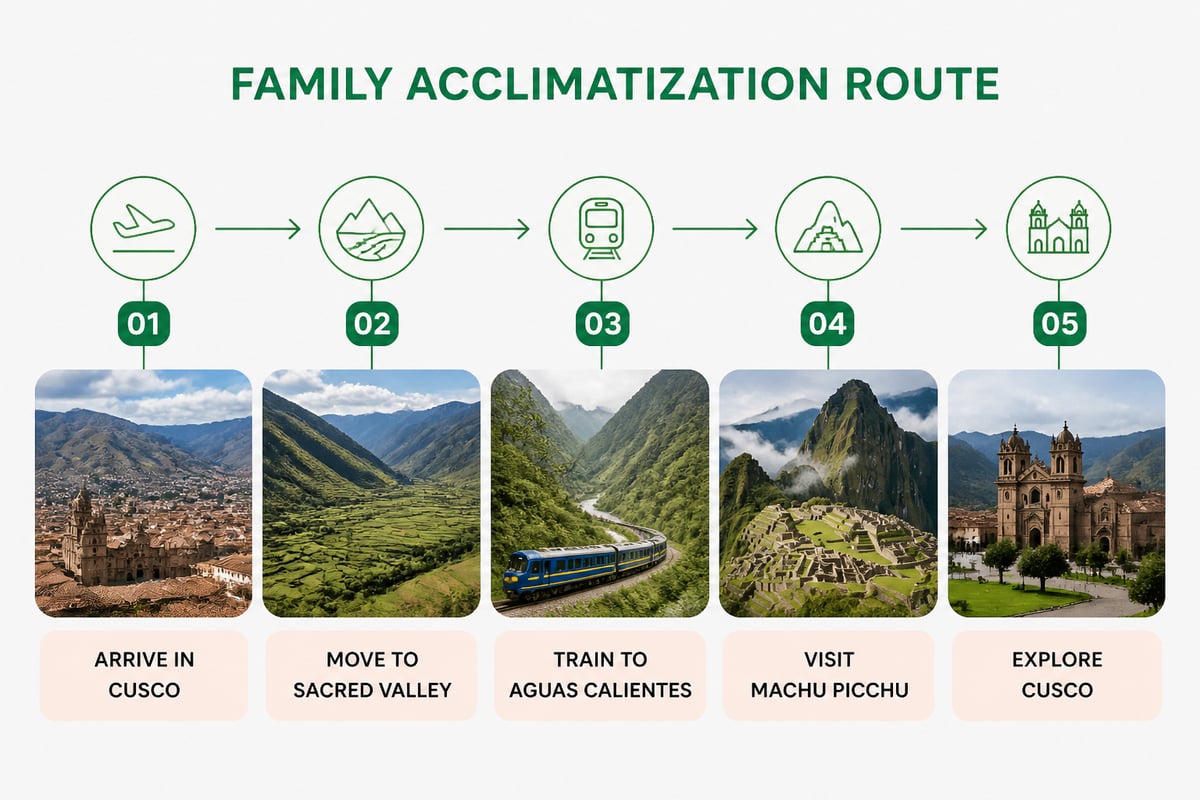
Pace your itinerary by sleeping at a lower elevation first, then moving gradually higher, because altitude affects children and adults in different and sometimes unpredictable ways. The Sacred Valley sits at a lower elevation than Cusco and is a gentler starting point.
A sensible sequence for a family looks like this:
- Land in Cusco and transfer directly to the Sacred Valley. Rest, hydrate and keep activity light on day one.
- Spend two nights in the valley. Visit Pisac, Ollantaytambo or a local weaving community at an easy pace.
- Travel by train to Aguas Calientes. The lower elevation helps most travelers sleep well.
- Visit Machu Picchu in the morning. Return to Cusco afterward, when your bodies have adjusted.
- Explore Cusco last. Its markets and ruins are easier once you have acclimatized.
Watch for headaches, unusual tiredness, nausea or loss of appetite, especially in younger children who may not describe symptoms clearly. Drink water frequently, choose light meals and avoid pushing through discomfort. Consult your pediatrician or a travel medicine clinic before departure, as they can advise on altitude medication and vaccinations for your specific family.
What Will Kids Actually Enjoy at Machu Picchu?
Kids often enjoy Machu Picchu most when they have a role to play, such as spotting llamas, counting terraces or wondering how the Incas fit stones together without mortar. A guide who frames the site as a puzzle keeps attention far longer than one who recites dates.
Ideas that tend to work well:
- The train ride itself. Panoramic windows and the Urubamba River make the journey part of the adventure.
- Llamas on the terraces. They are a reliable highlight, though visitors should keep a respectful distance.
- The Temple of the Sun and the Intihuatana stone. Both invite questions about astronomy and ritual.
- Short guided stories. Legends of the Inca, the mountains as protective spirits and the idea of a lost city appeal to imagination.
- A scavenger-hunt format. Ask children to find a trapezoid window, a carved stone and a drainage channel.
Beyond the citadel, the surrounding region offers family-friendly variety. Salt terraces at Maras, pottery workshops and weaving demonstrations give children hands-on contact with living Andean culture. Kuoda Travel's family adventure tour to Peru is useful if you are considering extensions beyond Cusco.
Should You Visit on a Day Tour or Stay Overnight?
A day tour suits families with limited time and children who handle early starts well, while an overnight in Aguas Calientes suits families who want a slower, less rushed visit. Both approaches work, and the right choice depends on your children's ages and your total trip length.
A one-day visit from Cusco involves an early departure, a train ride, the guided tour and a return that evening. It can be efficient for families with a tight schedule.
The Machu Picchu Day Tour from Machupicchu Trips travels from Cusco to the Inca citadel with a professional guide who explains the temples and terraces, a practical option for families who want the highlights without adding nights to their itinerary.
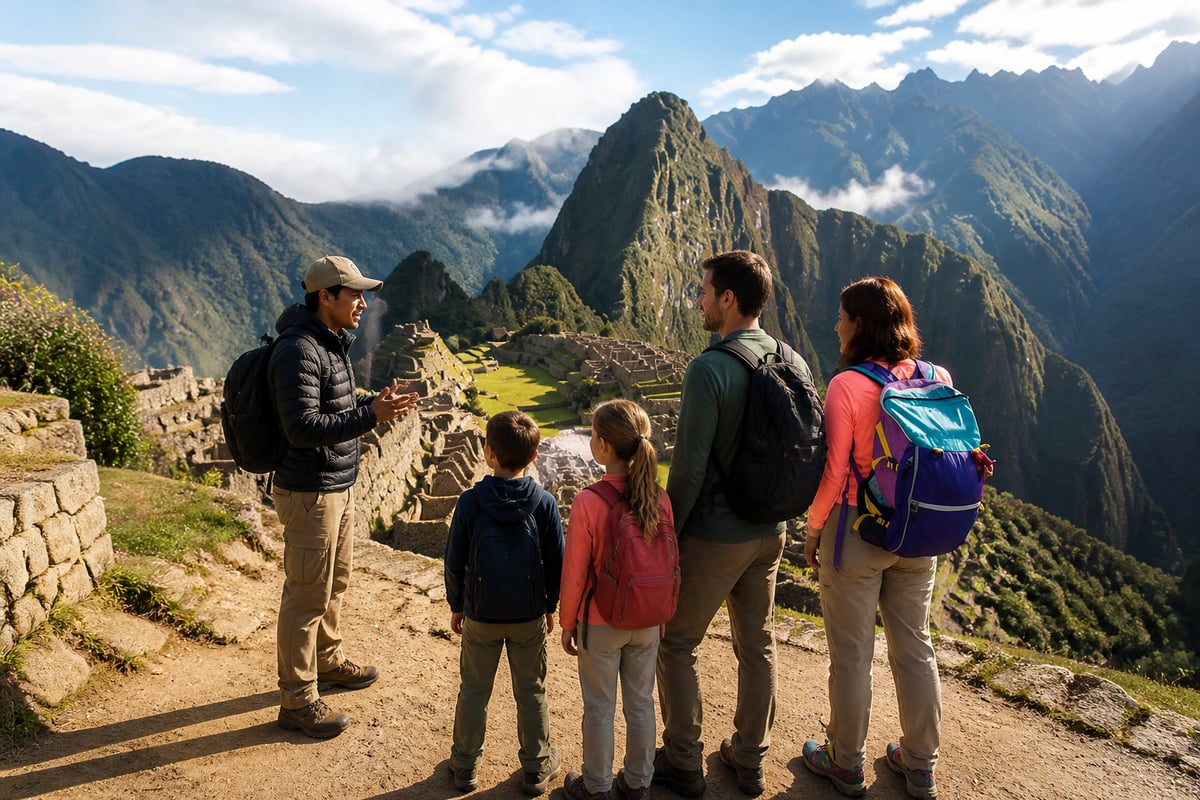
An overnight stay changes the experience. You arrive in Aguas Calientes the evening before, sleep at a lower elevation, and enter the site fresh in the morning. Children who tire easily benefit from not having a long return journey on the same day.
Trekking Options for Active Families
Families with teenagers who enjoy hiking can consider trekking routes such as the Inca Trail or alternatives like Salkantay and Lares. These typically require advance permits, reasonable fitness and a guide team that manages logistics. Ask your operator which routes accept your children's ages, since age policies vary.
What Should You Pack for a Family Visit?
Pack layers, sun protection, water and small comforts, because weather at Machu Picchu can change quickly. Rules on bag size and prohibited items apply at the entrance, so confirm current regulations before you travel.
Essentials for each traveler:
- A light rain jacket, even in the dry season
- A sun hat, sunscreen and sunglasses, since ultraviolet exposure is higher at altitude
- Comfortable shoes with good grip for stone steps
- Insect repellent for the lower-elevation areas
- A refillable water bottle for use before entry
- Snacks for use before and after the circuit
- Copies of passports, as the original is needed at the gate
Remind children to use restrooms before beginning the walk. Carry a small pack of tissues or wipes in your day bag, since supplies are not always stocked in public restrooms throughout Peru.
Why Choose a Locally Led Guide for Your Family?
A locally led guide makes a Machu Picchu family trip smoother by handling logistics and by adapting the tour to your children's energy in real time. Families benefit when someone who knows the site, the weather patterns and the rhythms of the day is making decisions on their behalf.
Machupicchu Trips is a locally owned Cusco operator running every trip from the destination itself. Its small-group format offers personal attention, and its bilingual local guides explain Inca history and culture. Because the company handles permits, tickets, trains, transfers, hotels and trekking logistics, parents spend less time on spreadsheets and more time with their kids.
Independent review platforms can also help you compare experiences. Tripadvisor listings for Machu Picchu tours show traveler feedback, which can inform your own selection criteria.
FAQ
Do I need to bring toilet paper to Peru?
Yes, carrying a small supply is wise. Public restrooms in Peru do not always stock toilet paper, and used paper is often placed in a bin rather than flushed. Tissues and hand sanitizer in your day bag solve the problem easily.
What is special about Machu Picchu in Peru?
Machu Picchu is an Inca citadel set on a mountain ridge above the Urubamba River, and it is a UNESCO World Heritage Site. Its precisely fitted stonework, agricultural terraces and alignment with the surrounding peaks reflect Inca engineering and spiritual belief. For families, the combination of history, scenery and wildlife such as llamas makes it unusually engaging.
How much do you need to go to Machu Picchu?
The total depends on your travel dates, group size, hotels, train class and whether you book a guided package. Entrance tickets, trains and bus transfers are separate costs, and prices vary by season. Requesting a quote tailored to your family is the most reliable way to budget.
Your next step is to choose two or three possible travel dates and check whether entry slots and trains are available for your whole group. Once those dates are set, you can build the rest of the itinerary around them, including a day at the citadel such as the Machu Picchu Day Tour. Machupicchu Trips can coordinate the tickets, trains, hotels and guides for you, so you can plan my Machu Picchu trip with a Cusco team that tailors each itinerary to your family's pace.