
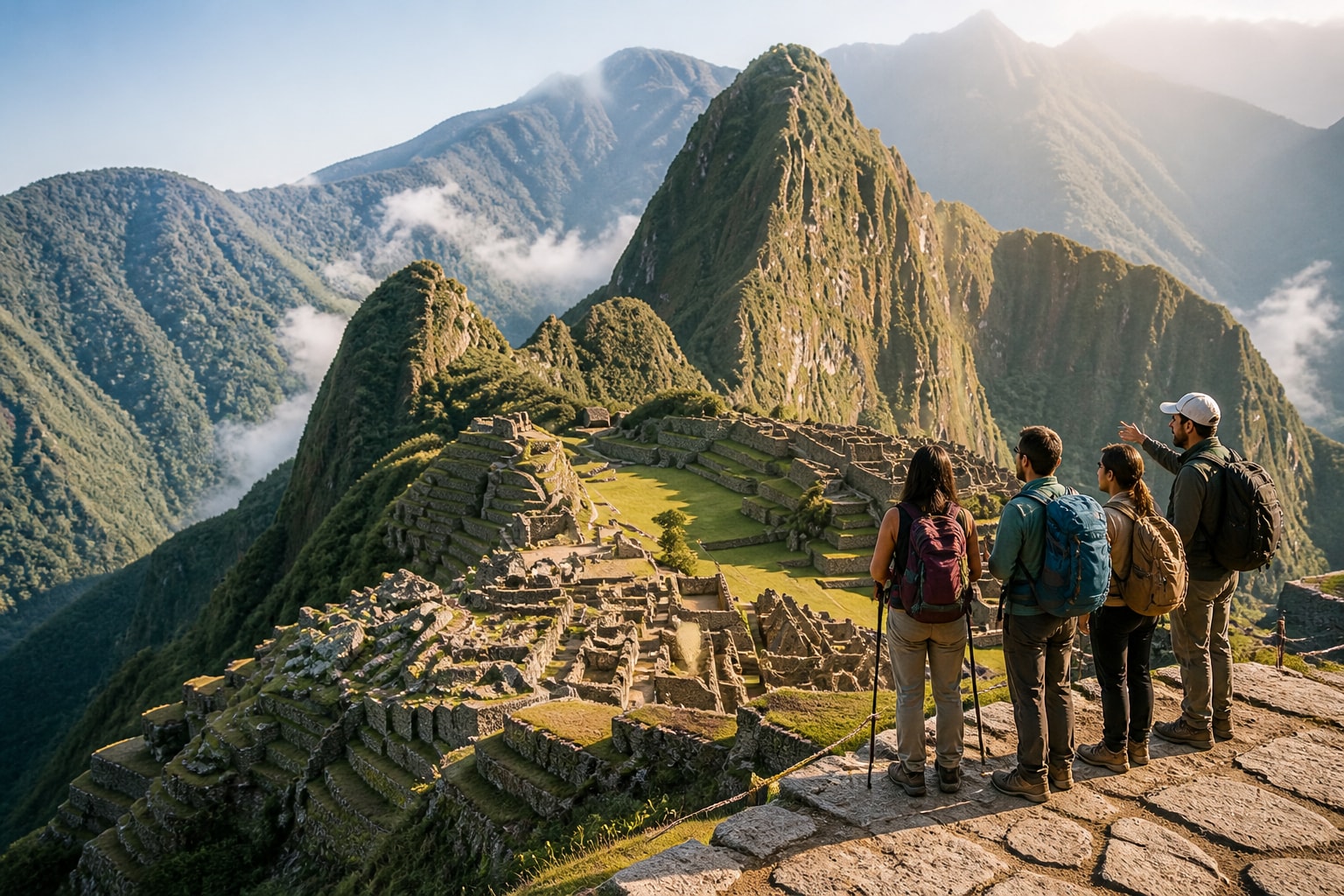
A Machu Picchu group tour bundles your permits, entrance ticket, train seats, transfers, hotels and a licensed guide into one itinerary, and it is the simplest way for a first-time visitor to see the citadel without managing the logistics alone. Group trips from Cusco vary widely in length, and trekking groups typically spend several days on foot. The right choice depends on your pace, your fitness and how much time you want in the Sacred Valley before you reach the ruins.
What a Machu Picchu Group Tour Includes
A well-built group itinerary covers the parts of the trip that are hardest to arrange yourself: timed entry, rail seats, ground transport and guiding. Inclusions vary by operator, so confirm each item in writing before you pay.
Typical inclusions are:
- Entrance ticket for the citadel, with the circuit and route matched to your group
- Round-trip train between the Sacred Valley and Machu Picchu Pueblo
- Bus transfer from the town up to the citadel gate
- Hotels in Cusco, the Sacred Valley or Machu Picchu Pueblo
- A bilingual guide who explains Inca history, architecture and astronomy
- Airport and station transfers in Cusco
Meals, tips, travel insurance and international flights are often separate. Entrance fees to other sites, such as Moray or the Ollantaytambo complex, may also be extra, depending on the package.
Machupicchu Trips is a locally owned Cusco operator that has run Peru travel experiences since 1999, and it coordinates permits, entrance tickets, trains, transfers, hotels and trekking logistics for its groups. That coordination matters more than it sounds, as the next section explains.
How Tickets, Circuits and Time Limits Shape Your Day
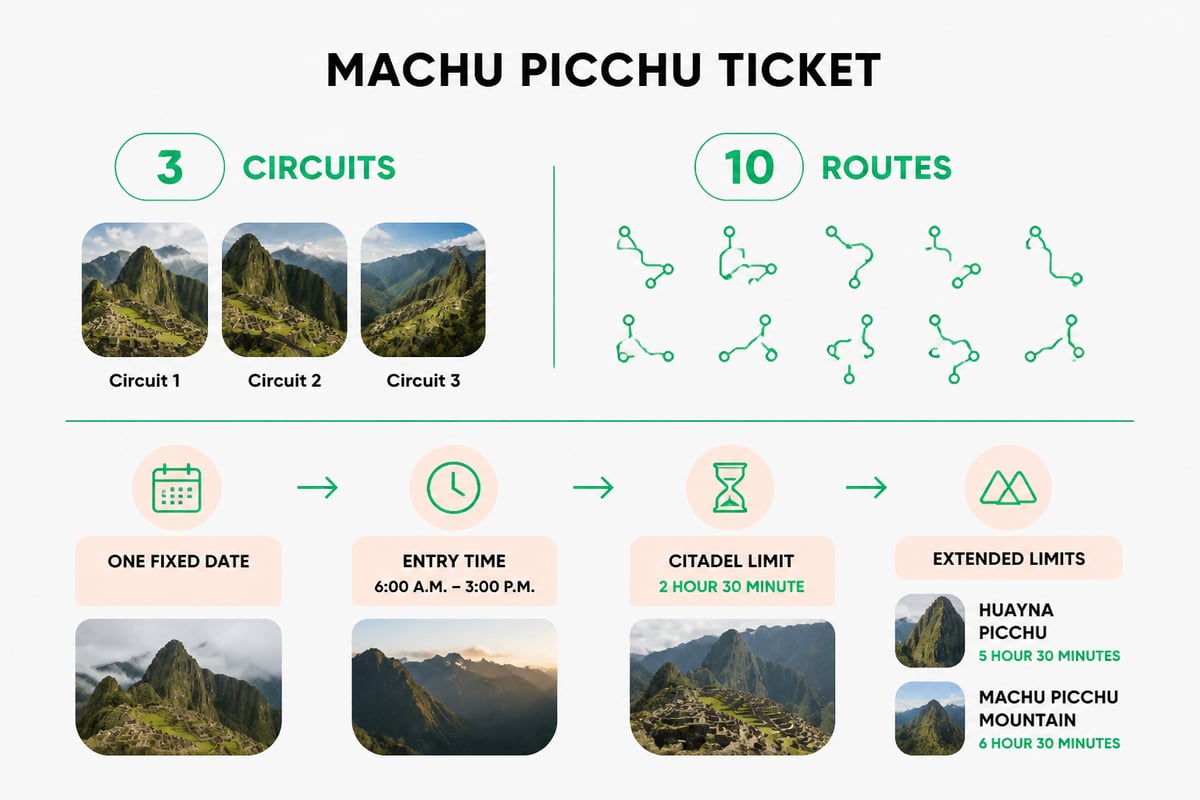
Your ticket controls your day at the citadel, so a good tour is planned around it rather than the other way around. According to MachuPicchu.com, the site uses three visitor circuits with ten designated routes, and each ticket is valid for one specific circuit, route, date and entry time.
Several rules affect how you spend your hours:
- Entry times run from 6:00 a.m. to 3:00 p.m.
- A standard citadel visit is limited to 2 hours 30 minutes from entry, per MachuPicchu.com’s entry rules.
- The Huayna Picchu route allows up to 5 hours 30 minutes in total, including the citadel visit, while Machu Picchu Mountain allows up to 6 hours 30 minutes.
- The 2027 daily cap is up to 5,600 visitors on designated high-season dates and 4,500 on other dates.
The high-season dates listed for 2027 are January 1 to 3, March 25 to 28, June 19 to November 2, and December 29 to 31. If you are planning ahead from 2026, that means the long stretch from late June to early November is the period when tickets and train seats sell out first. Booking a group departure early protects your preferred entry time, and a tour operator holds those allocations on your behalf.
Group Tour Formats Compared
The main formats differ in length, physical effort and how you reach the citadel. Compare them on the same terms before choosing.
| Format | Typical length | Effort | How you arrive | Suits |
|---|---|---|---|---|
| Full-day from Cusco | 1 day | Low | Train and bus | Tight schedules, short stays |
| Classic train-based tour | 3 to 5 days | Low to moderate | Train and bus | First-time visitors |
| Sacred Valley plus Machu Picchu | 2 to 4 days | Low | Train and bus | Culture and history focus |
| Multi-day trek (Inca Trail or Salkantay) | 4 days or more | High | On foot to the Sun Gate or via Aguas Calientes | Active travelers |
A full-day visit is possible but compressed, since you spend much of it in transit. A multi-day itinerary lets you adjust to the altitude in Cusco before you start climbing or touring.
The formats also differ in how much time you control. On a full-day trip, the train schedule dictates almost everything, and the 2 hour 30 minute citadel limit leaves little room for a slow walk or extra photographs. Sacred Valley combinations spread the effort out, so a morning at a site such as Ollantaytambo can precede an afternoon train. Treks reverse the pattern: the walking days are long, but the citadel visit at the end is the reward rather than a rushed stop. If you are unsure, a travel companion's fitness is a good deciding factor, since the slowest member sets the pace on any trek.
Train-Based Tours: The Straightforward Option for a First Visit
A train-based itinerary is the most relaxed way to see Machu Picchu, and it gives you time for the Sacred Valley and Cusco as well. You travel by rail to Machu Picchu Pueblo, sleep there or return the same day, and take the bus up to the citadel.
PeruRail advises visitors to travel from Machu Picchu Pueblo to the citadel entrance by Consettur bus, which is the transfer a tour arranges for you. A good itinerary also builds in a buffer, because a missed train or a late bus can cost you your entry slot.
Sleeping in Machu Picchu Pueblo the night before is the most reliable way to protect an early entry time. Entry runs from 6:00 a.m. to 3:00 p.m., and a morning slot means you reach the citadel without a long rail journey the same day. A same-day return from Cusco works, but the train and bus legs take up a large share of the day, and a late arrival can leave you with little of your 2 hour 30 minute window. If you want to extend your time at the ruins, ask whether the itinerary can include a Huayna Picchu or Machu Picchu Mountain route, which allow longer visits but require their own ticket.
For travelers who want this structure with local guiding, the MACHU PICCHU CLASSIC TOUR: 4 Days 3 Nights covers Cusco, the Sacred Valley and a train journey to the citadel with expert local guides. It balances culture, history and scenery without requiring trekking experience.
Trekking Group Tours: Reaching Machu Picchu on Foot
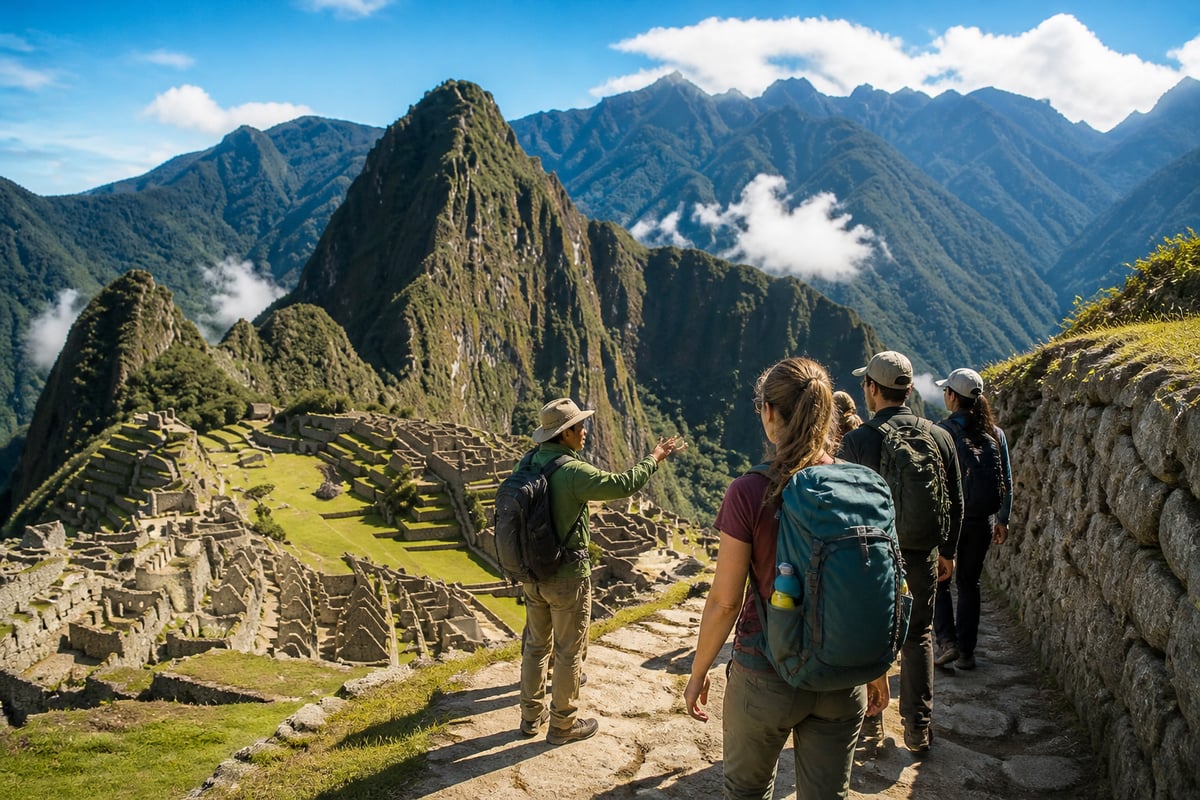
A trekking group tour suits travelers who want the approach to be part of the experience, and the best-known routes are the Inca Trail and the Salkantay Trek. Both usually take four days and finish at or near the citadel, with camping or lodge accommodation along the way.
What to weigh before committing:
- Fitness and acclimatization: Daily climbs and high passes are demanding. Spend at least two nights in Cusco or the Sacred Valley first.
- Permits and dates: Trekking routes depend on advance permits, and availability is limited in high season. Ask your operator how far ahead to book.
- Support team: Confirm who carries gear, who cooks and how many guides accompany the group.
- Final day logistics: Trekkers still need a citadel ticket for the right date and entry time, so the trek and the ticket must be planned together.
Shorter options exist for people who want some hiking without four days of effort, such as a two-day Inca Trail variant that ends with a hotel night near the ruins. Ask any operator which route fits your fitness level honestly.
How to Choose the Right Group Size and Guide
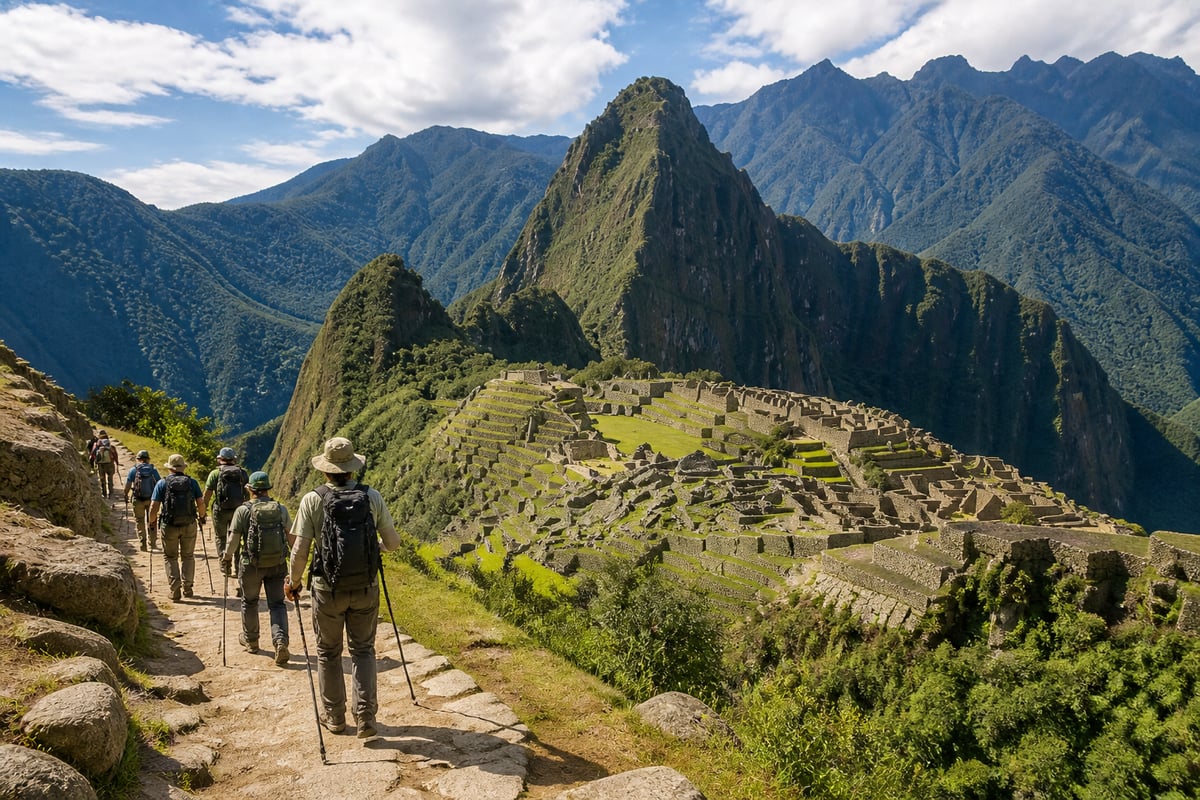
Group size and guide quality shape your experience more than the brochure does. Smaller groups move faster through narrow terraces, hear the guide clearly and can adjust the pace when someone struggles with altitude.
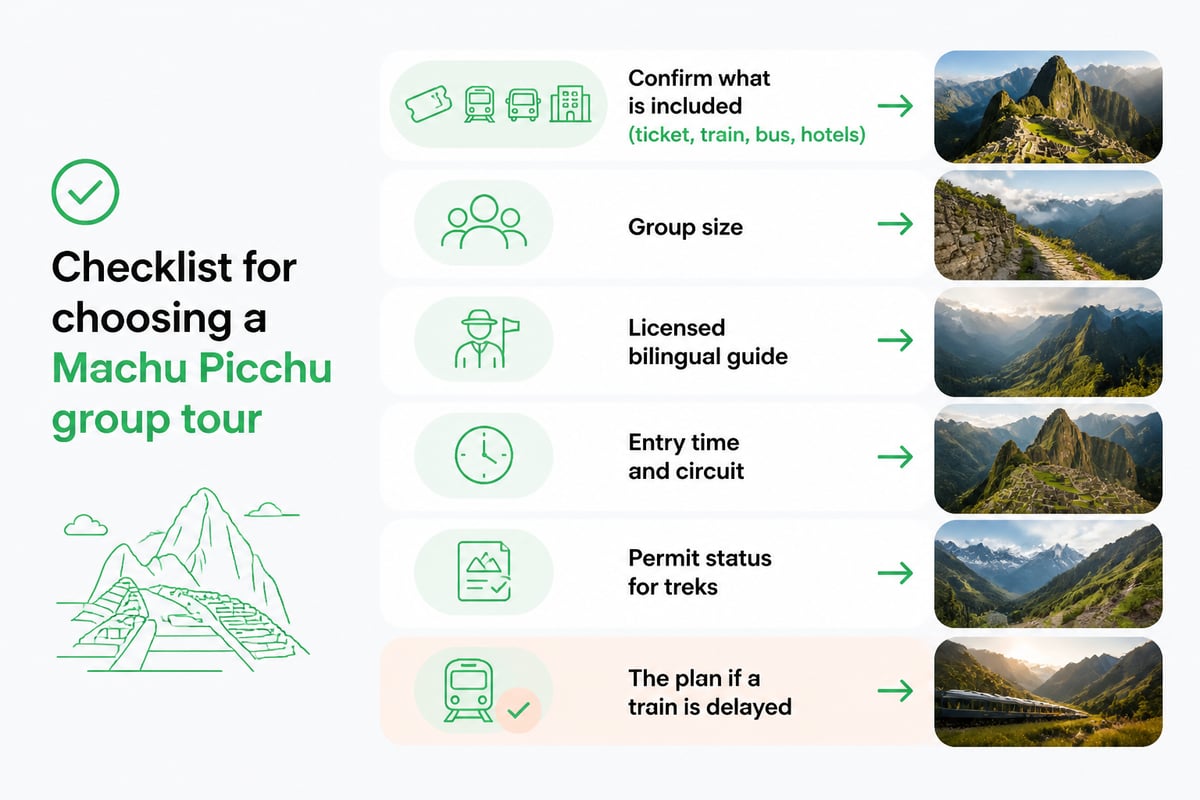
Questions worth asking any operator:
- How many travelers are in a typical group, and is there a maximum?
- Is the guide licensed, and does the guide speak your language fluently?
- Does the guide stay with the group throughout the citadel visit?
- Who handles problems such as a train delay or a lost reservation?
- Can the itinerary be adjusted for your dates and interests?
Machupicchu Trips runs small-group tours with personal attention and professional bilingual local guides who explain Inca history and culture. Packages can also be tailored to your dates, group size, interests and travel style, which helps if you are traveling with family or friends who want a private departure. For exact group sizes and departure schedules, check the tour pages or contact the team directly.
When to Go and How to Prepare
The best time for a group tour depends on whether you prefer drier weather or smaller crowds. The dry season, roughly May to September, brings clearer skies and busier trails, and it overlaps heavily with the designated high-season dates. The wetter months from November to March bring greener scenery and more variable weather.
The calendar also affects capacity. The 2027 daily cap rises to 5,600 visitors on designated high-season dates, including June 19 to November 2, and falls to 4,500 on other dates. A higher cap does not mean easier booking, since demand in those months is strongest, so confirm your tour dates well ahead of buying flights. Shoulder periods outside the listed high-season windows can offer a quieter citadel and a wider choice of entry times.
Practical preparation for a first visit:
- Arrive in Cusco at least one or two days before your tour to adjust to the altitude.
- Carry your passport, since it is checked for train and ticket verification.
- Pack layers, a rain jacket, sun protection and sturdy walking shoes.
- Bring a small daypack, because large bags are restricted at the citadel.
- Book flights into Cusco after your tour dates are confirmed, not before.
If a spare day is part of your plan, ask about extensions such as Rainbow Mountain, Moray or the Sacred Valley markets. Locally run tours can often add these without changing your Machu Picchu date.
Why Booking Through a Local Operator Helps
A Cusco-based operator can solve problems on the ground that an overseas booking agent cannot. Train timetables shift, tickets sell out and weather can disrupt road transfers, and a team based in the destination can rebook, reroute or advise in real time. Because each citadel ticket is tied to one circuit, route, date and entry time, a change to your train can cascade into a change to your entry slot, and someone who works with these allocations daily knows which adjustments are possible and which are not.
PeruRail notes that up to 1,000 next-day tickets are available for in-person purchase in Machu Picchu Pueblo between 3:00 p.m. and 10:00 p.m., with valid identification. That is a useful fallback for independent travelers, but it is a gamble on availability, and it requires you to be in town the evening before. A group tour with confirmed seats removes that uncertainty, which is why most first-time visitors, especially those with a fixed vacation window, choose a pre-arranged itinerary. A local team also coordinates the smaller handoffs, such as the Consettur bus to the citadel entrance and the timing of your guide's arrival, so the day runs to one schedule.
Your next step is to pick your preferred travel window, then check which entry dates and train seats are still open for it, since high season fills first. Whether you want a relaxed train-based trip like the MACHU PICCHU CLASSIC TOUR: 4 Days 3 Nights or a hiking route with trekking logistics handled for you, a local team can match the itinerary to your pace. Tell the team your dates and group size and Machupicchu Trips will help you plan my Machu Picchu trip around them.