
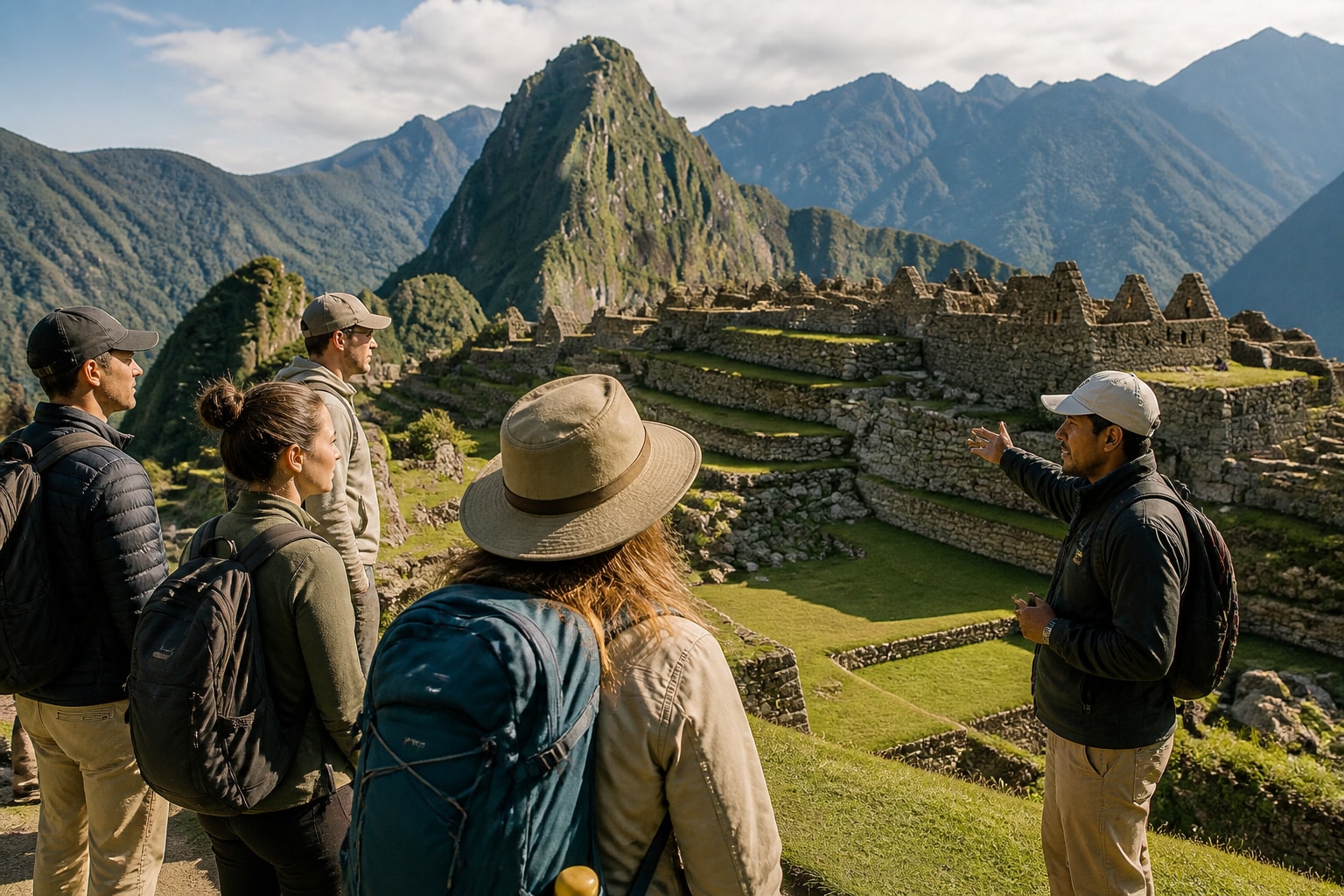
A Machu Picchu tour guide is a licensed local professional who explains the history, architecture and astronomy of the Inca citadel and keeps your visit on schedule within the site's timed-entry rules. For first-time visitors and trekkers, the right choice comes down to credentials, group size, language ability and how well the operator handles permits, trains and tickets behind the scenes.
Machu Picchu rewards context. Without it, the site is a set of beautiful stone walls. With a knowledgeable guide, the Temple of the Sun, the Intihuatana stone and the agricultural terraces become a coherent story about a mountain estate, its engineering and the people who built it. This article explains how guiding works at the site, what separates a strong guide from an average one, and how to match your trip style to the right format.
Do You Need a Guide at Machu Picchu?
Yes. In practice, you need a guide for most visits, because the 2026 ticketing system is built around guided or well-planned access. The entry ticket is tied to a selected circuit or route, a date and an entry time, and entry is organized in hourly slots. Once you are inside, you follow a set one-way route, and rangers expect visitors to stay on it.
A guide helps in three concrete ways:
- Route management. Guides know which circuit your ticket covers and how to pace the visit so you do not miss your slot or backtrack into restricted areas.
- Interpretation. Signage inside the site is minimal. A guide supplies the dates, construction methods and cultural meaning that explain what you are looking at.
- Logistics. Guides coordinate bus timing from Aguas Calientes, bathroom stops, photo points and exit timing so your day runs without friction.
Travelers who want a fully independent, no-guide visit have other options, and this article is not aimed at them. For everyone planning a first visit or a hiking route, a guide is the most reliable way to turn a timed ticket into a well-paced day.
What to Look for in a Machu Picchu Tour Guide
The most important quality is official licensing, followed by deep local knowledge, strong English or your preferred language, and a teaching style that matches your interests. Legitimate guides carry identification that rangers and operators can verify.
Use this checklist when vetting any guide or operator:
- Licensing. Ask whether the guide is officially licensed for Machu Picchu and whether the license is current.
- Language fluency. A bilingual guide should explain complex ideas, such as Inca road systems or terrace drainage, without losing detail in translation.
- Specialization. Some guides focus on archaeology, others on Andean cosmology, botany or photography. Match the specialty to what you want to learn.
- Group size. Smaller groups mean more questions answered and less waiting at viewpoints.
- Local roots. Guides born and trained in the Cusco region often share family and community perspectives that add depth beyond textbook history.
- Transparent inclusions. Confirm whether entrance tickets, bus fares, train seats and meals are included, so there are no surprises.
A strong guide also adapts. If your group is interested in the engineering of the site, a good guide will spend more time at the water channels and the quarry. If you are more drawn to ritual spaces, the guide will lengthen the stop at the Temple of the Three Windows.
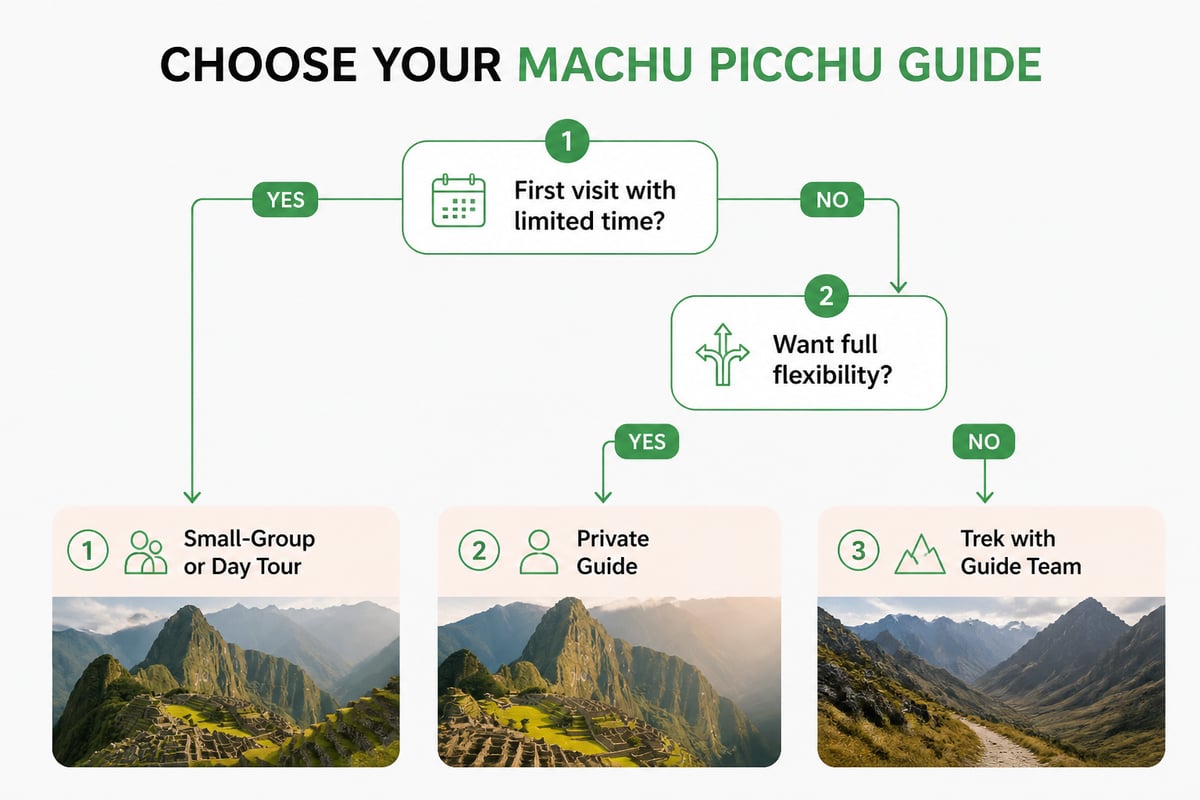
Group Tour, Private Guide or Trek Leader?
Your choice depends on budget, flexibility and how much time you have. Each format suits a different traveler, and mixing them is common.
| Format | Typical group size | Pace | Best suited to |
|---|---|---|---|
| Small-group guided tour | Around 6 to 12 | Moderate, fixed schedule | First-time visitors who want expert interpretation and a shared experience |
| Private guide | Your own party only | Fully flexible | Families, photographers, travelers with mobility or interest-specific needs |
| Trek leader with guide team | Varies by route | Set by the trail | Active travelers hiking the Inca Trail or a Salkantay-style route |
Small groups strike the best balance for most first-timers. Private guiding costs more but lets you set the pace and linger where you choose. On a multi-day trek, the guide team also handles camp logistics, route safety and altitude pacing, which makes experience at elevation as important as archaeological knowledge.
How 2026 Tickets and Timing Shape Your Guide's Role
Your guide's value increases under the 2026 rules because timing is strict and routes are fixed. Tickets are sold by circuit and entry slot, and late arrivals risk losing access. Visitors have a 30-minute entry tolerance in low season and 45 minutes in high season, except where route-specific rules differ.
High season matters for planning. The 2026 high-season dates include January 1, April 2 to 5, June 19 to November 2, and December 30 to 31, per PeruRail. During those windows, tickets and train seats sell out earlier, so booking a guide-led package well ahead protects your preferred circuit.
Pricing also affects which route you pick. The general adult fare for standard routes is S/152, while routes that include Huayna Picchu, Machu Picchu Mountain or the Gran Caverna cost S/200, according to The Rio Times. Discounted standard-route fares are S/77 for university students and S/70 for visitors under 18. A good operator will explain which circuit fits your fitness level and interests before purchasing anything, since the ticket cannot be freely changed once it is issued.
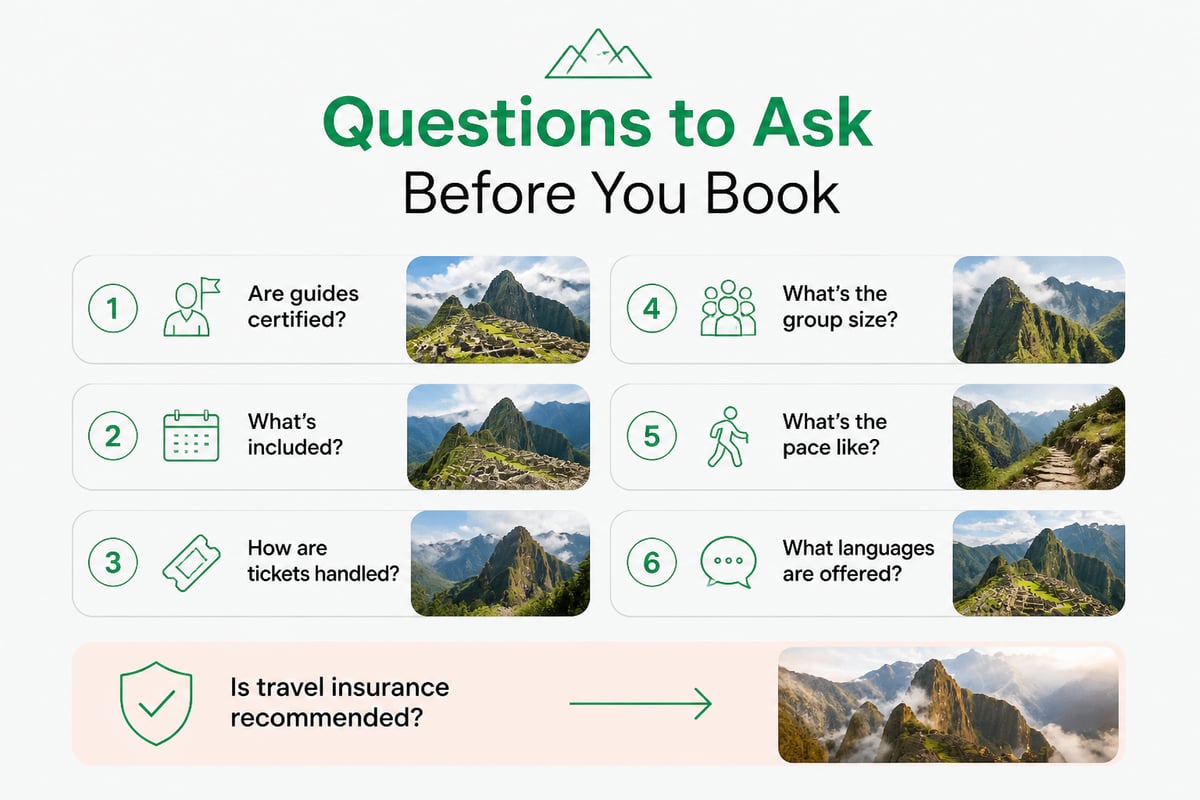
Questions to Ask Before You Book
Ask direct questions and expect specific answers. Vague replies about "the best experience" are a warning sign. These questions separate organized operators from improvised ones:
- Which circuit and entry time does my ticket cover, and who buys it?
- Is the guide licensed, and how many years has the guide worked at Machu Picchu?
- What is the maximum group size?
- Which train service and departure time are included?
- What happens if a strike, weather event or rail disruption changes the schedule?
- What is the cancellation and rebooking policy?
- Are there any costs not included, such as bus tickets, tips or optional hikes?
Written confirmation of these points protects both sides. Reputable operators answer in detail and put the plan in writing before asking for payment.
Choosing a Guide for Trekking Routes
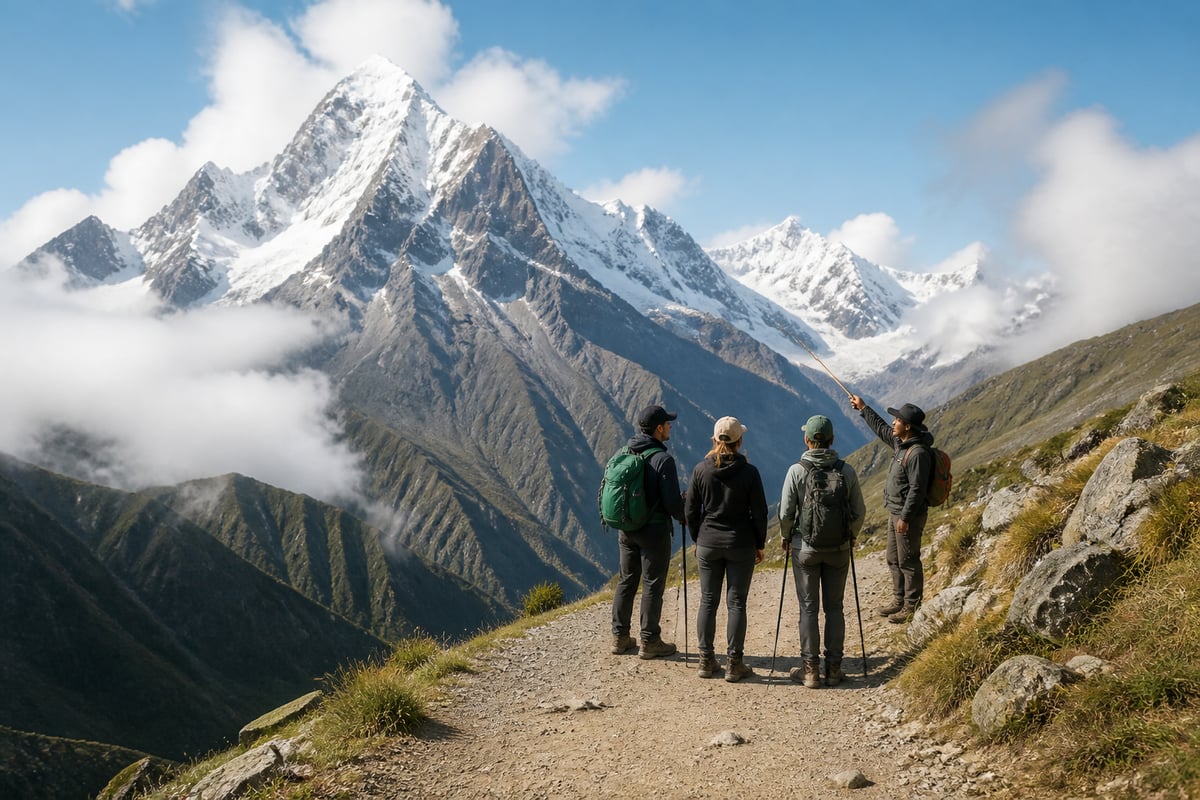
Trekkers should prioritize altitude experience, trail safety training and logistics support over archaeology alone. Hiking routes to Machu Picchu cross high passes, remote campsites and variable weather, so the guide team carries responsibility for your wellbeing.
Look for these trekking-specific signs of quality:
- Wilderness first aid training and a clear emergency plan with evacuation options.
- Acclimatization advice. A good operator recommends spending time in Cusco or the Sacred Valley before a high-altitude trek.
- Porter welfare. Ask how porters and cooks are treated, paid and equipped. Responsible operators publish their standards.
- Pacing. Guides should adjust to the slowest hiker and never rush a tired member of the group.
- Permit handling. Trail permits are limited and tied to dates. The operator should secure them and explain the booking timeline clearly.
The trek's final reward is arriving at the site after days of walking, and a guide who has built the story of the Inca road network along the way makes that arrival far more meaningful.
When a One-Day Guided Visit Makes Sense
A day tour works when you have limited time in Peru and want a guided, efficient visit without overnight stays. The format usually departs from Cusco or the Sacred Valley early in the morning, takes a scenic train to Aguas Calientes, transfers by bus up to the citadel, and returns the same evening.
The Machu Picchu Day Tour from Machupicchu Trips follows this model, pairing the train journey with a professional guide who walks you through the temples and terraces and explains the Andean scenery along the way. It suits travelers who want to see the site at its best within a single, well-paced day.
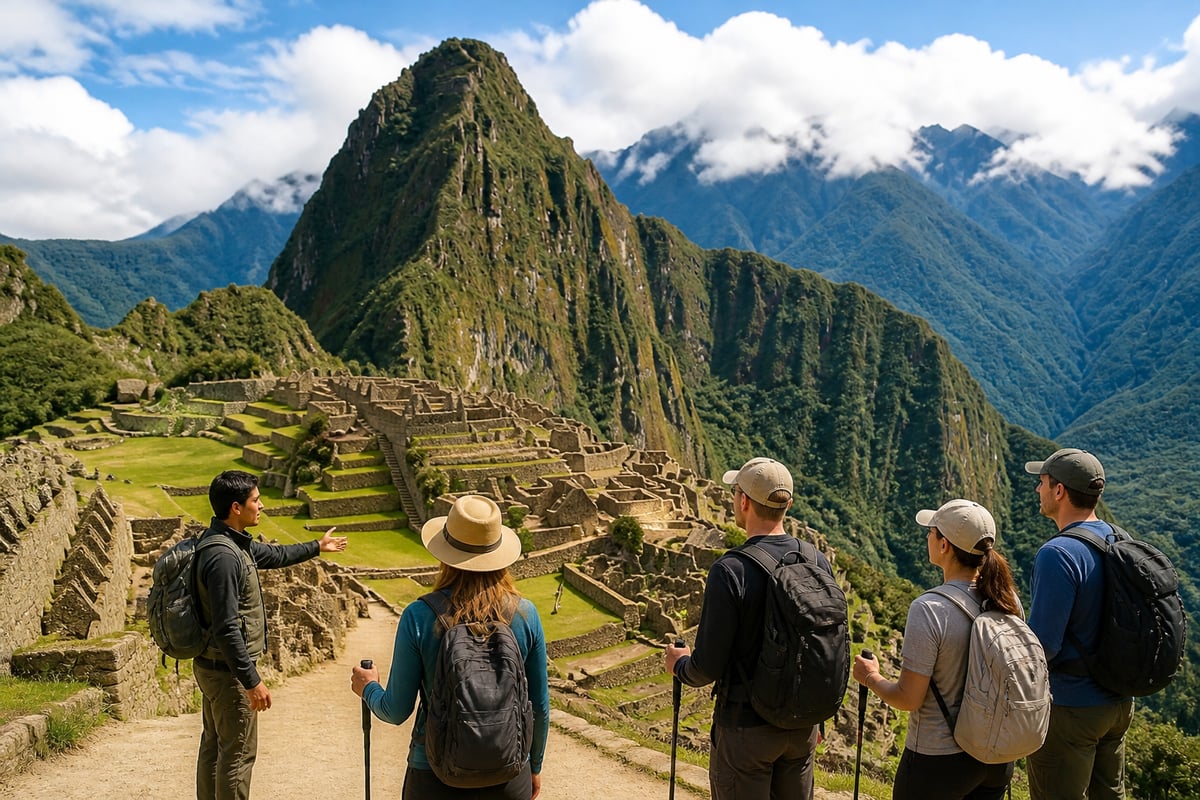
A day trip does involve early starts and a tight schedule, so it rewards good organization. If you prefer a slower rhythm with time to absorb the site, consider an overnight in Aguas Calientes so that you can enter early, before the busiest hours.
Respecting the Site: Conservation and Responsible Guiding
Responsible guiding protects Machu Picchu, and it also improves your visit. The site faces real pressure from visitor numbers, and UNESCO's decision on the property discusses visitor levels, conservation concerns, carrying-capacity assessment, visitor safety and the need for monitoring and dispersal strategies. Timed tickets and fixed circuits exist for this reason.
A conscientious guide reinforces good practice throughout the day:
- Keeping the group on marked paths and off fragile walls and terraces.
- Avoiding single-use plastic and carrying out all waste.
- Explaining why drones, tripods and large bags are restricted.
- Pacing the group so that popular viewpoints do not become bottlenecks.
- Encouraging respect for the site's spiritual significance to Andean communities.
Travelers who ask operators about their environmental and community practices tend to find better-run trips. Local ownership often correlates with stronger relationships with porters, drivers and guesthouse hosts, and that shows in the quality of service.
Why a Locally Led Operator Makes a Difference
A locally owned operator brings destination knowledge that remote booking platforms cannot match. Machupicchu Trips has run Peru travel experiences since 1999 as a Cusco-based company, with trips operated from the destination itself. That means the team that plans your itinerary is the same team that coordinates permits, entrance tickets, trains, transfers, hotels and trekking logistics on the ground.
Several practical advantages follow from this setup:
- Small-group attention. Tours are kept small, so guides can answer individual questions and adjust the pace.
- Professional bilingual guides. Guides explain Inca history and culture in clear, accurate language.
- Tailored packages. Itineraries can be adapted to your dates, group size, interests and travel style, whether that means adventure, luxury or a cultural focus.
- Single point of responsibility. When a train time changes or a ticket needs adjusting, one local team resolves it rather than passing you between intermediaries.
This approach fits first-time visitors who want a smooth introduction to southern Peru, and active travelers who want a supported hiking route.
How to Prepare for Your Guided Day
Good preparation makes a guided visit smoother and more enjoyable. A few simple steps will help you arrive ready and make the most of your guide's knowledge.
- Acclimatize. Spend a day or two in Cusco or the Sacred Valley before heading to higher or more demanding sections of your trip.
- Carry your passport. It is required for ticket verification at the entrance.
- Dress in layers. Mornings can be cool and damp, while midday sun is strong. Bring a light rain jacket year-round.
- Wear broken-in footwear. Stone steps are uneven and often slippery.
- Bring sun protection and water. Shade is limited on the terraces.
- Arrive early for your slot. Entry tolerance is limited, so plan to be at the gate before your time window opens.
- Prepare questions. Tell your guide in advance what interests you most, whether architecture, astronomy or the story of the site's rediscovery.
Sharing your priorities with the guide at the start of the day helps them shape the route and the commentary around what you care about.
Red Flags When Comparing Machu Picchu Guides
Certain warning signs suggest a provider may not deliver a reliable experience. Watch for these patterns:
- Unclear pricing. Quotes that omit entrance fees, bus tickets or train class leave room for hidden costs.
- No named guide or license details. Reluctance to confirm credentials is a concern.
- Pressure to pay immediately. Legitimate operators allow time to review the plan.
- Promises of guaranteed tickets at the last minute. In high season, sold-out slots are sold out, and guarantees are unrealistic.
- Very large groups sold as "small groups." Ask for the actual maximum number.
- No contingency plan. Rail and weather disruptions happen, and organized operators have a clear procedure.
Choosing a provider who answers questions openly and documents the itinerary in writing removes most of these risks before you travel.
Your next step is to decide which format fits your trip, a one-day visit, a small-group tour or a multi-day trek, and to confirm your dates before ticket and train availability tightens. If you want a guided day without overnight stays, the Machu Picchu Day Tour is a straightforward place to start. Machupicchu Trips has operated from Cusco since 1999 and can tailor an itinerary to your dates, group size and interests, so you can plan my Machu Picchu trip with a local team handling the permits, tickets and logistics.