
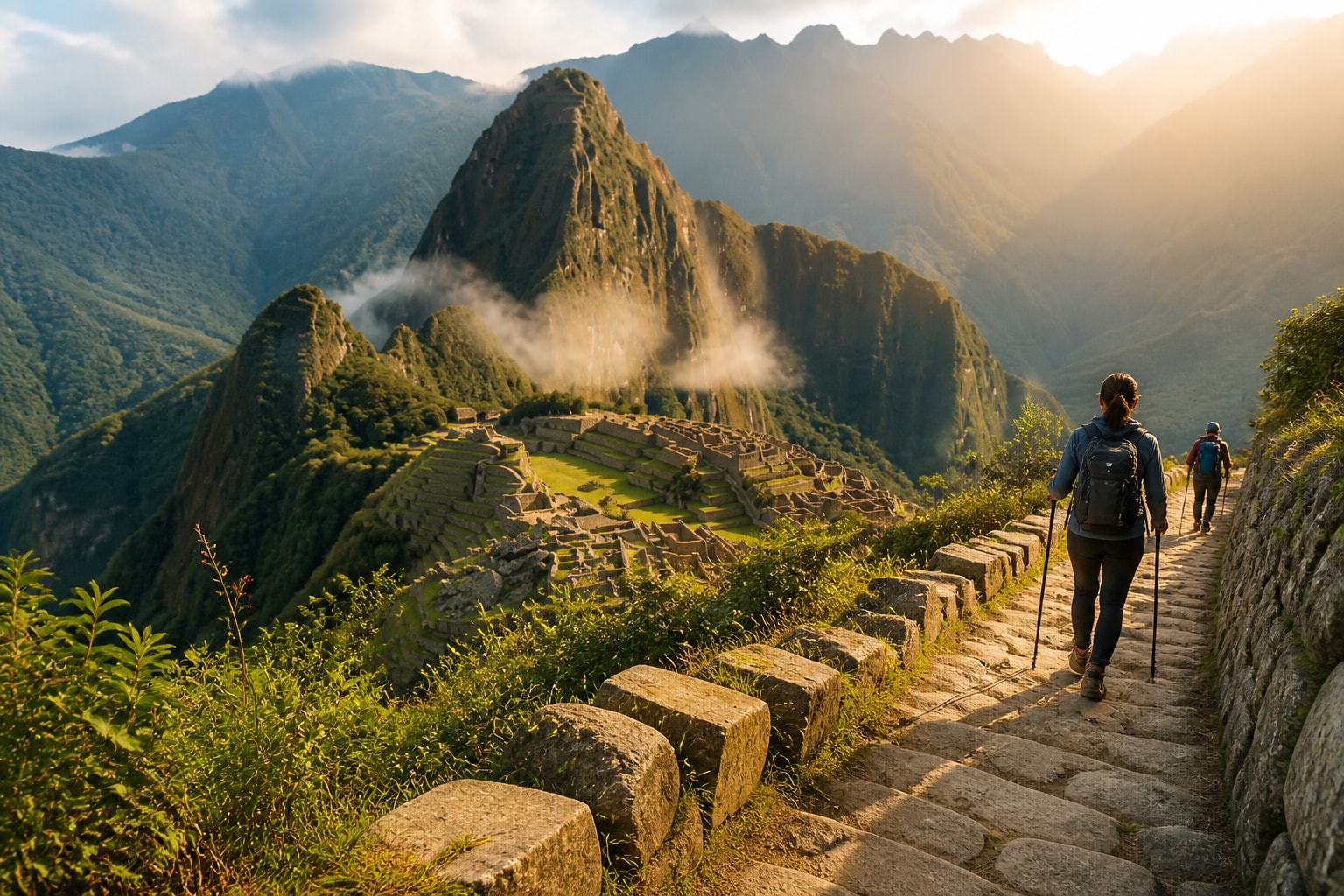
Machu Picchu permits are timed entry tickets that you must buy in advance, and hikers on the Inca Trail need a separate trekking permit that sells out months ahead. For 2026, the most reliable approach is to choose your dates first, then reserve your Inca Trail space or your citadel ticket through a licensed operator before anything else, including flights and hotels.
This guide explains the different permit types, the 2026 capacity limits, how booking works, and what to do when your preferred dates are unavailable.
What Machu Picchu Permits Do You Actually Need?
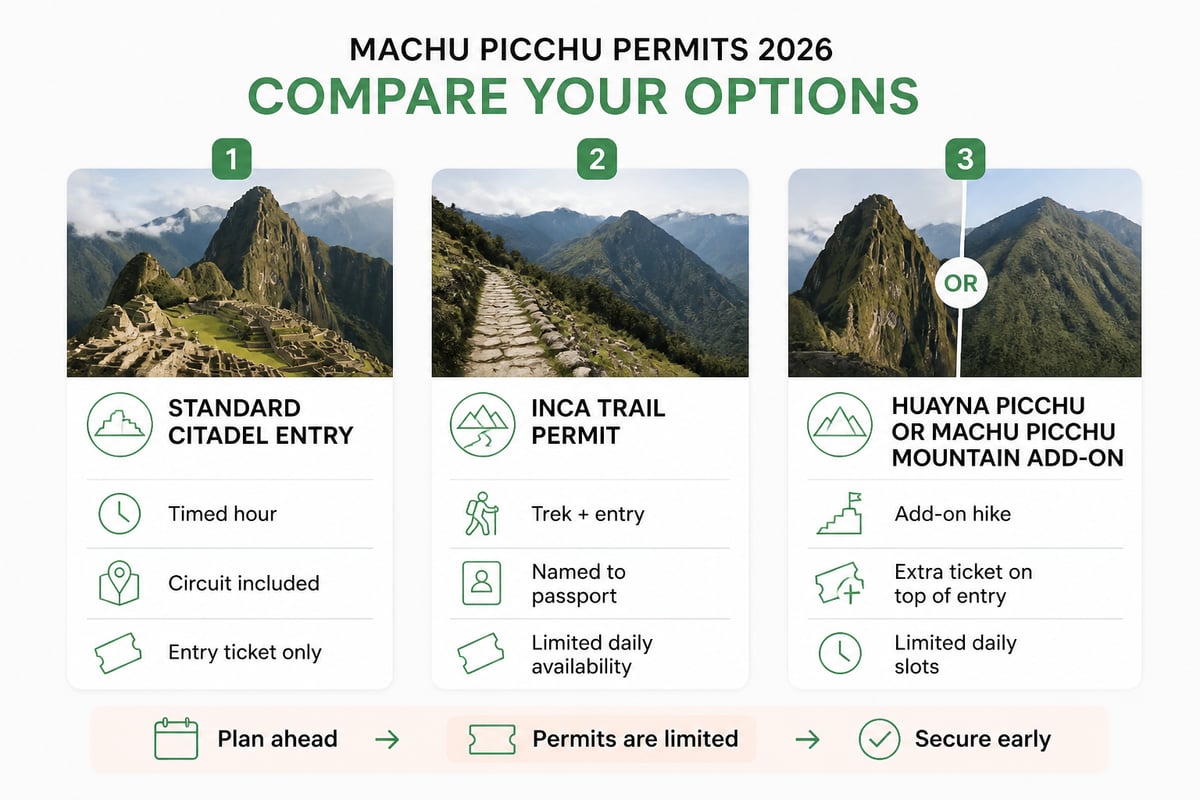
Most visitors need one of two things: a standard entry ticket to the citadel, or an Inca Trail permit that covers the trek and entry on the final morning.
The distinction matters because they are bought differently and sell out on different timelines.
- Citadel entry ticket: Required for everyone. It sets your entry hour and the circuit (route) you must follow inside the site.
- Inca Trail permit: Required for the classic 4-day trek and the 2-day short version. It is issued in your name, matched to your passport, and cannot be transferred.
- Add-on permits: Huayna Picchu and Machu Picchu Mountain require an extra ticket on top of your entry ticket.
Alternative trekking routes such as Salkantay, Lares and Choquequirao do not use the Inca Trail permit system. Your final visit to the citadel on those routes still requires an entry ticket.
How the 2026 Capacity Limits Work
Peru caps daily visitors, and the cap depends on the date. Under Ministerial Resolution No. 000285-2025-MC, the 2026 limit is 5,600 visitors on Jan. 1, Apr. 2 to 5, Jun. 19 to Nov. 2, and Dec. 30 to 31, and 4,500 on all other dates, according to Peru Travel.
In practical terms, the higher cap covers the dry season and the main holiday weeks, which are also the dates when demand is highest. A larger limit does not guarantee availability. Popular morning slots in June, July and August still fill early.
Inside the site, visits are organized into three circuits containing 10 routes, and visitors must follow the route authorized by their ticket, as Yahoo Travel reports. Your circuit is fixed at purchase, so confirm it before paying.
Entry Tickets: Hours, Circuits and Add-On Hikes
Standard entry tickets carry an hourly window, and the 2026 ticket page lists windows from 6:00 a.m. to 4:00 p.m. with a 30-minute grace period, per Yahoo Travel. Arriving after the grace period can mean being refused entry.
Add-on climbs are far more limited than general entry:
| Add-on hike | Daily places (2026) | Notes |
|---|---|---|
| Huayna Picchu | 400 | Split between two time slots |
| Machu Picchu Mountain | 800 | Buy together with your entry ticket |
Source: Yahoo Travel.
For a first visit, an early morning slot gives softer light and thinner crowds around the main terraces. If you want a mountain climb, book it at the same time as your entry. Huayna Picchu spaces are limited and can disappear well before general tickets do.
When to Book Inca Trail Permits for 2026
Book as early as the permit release allows, ideally five to six months ahead for May through September. The Inca Trail is limited to a small number of trekking spaces per day, and that allotment includes guides, porters and cooks.
Some timing points to keep in mind:
- Peak season (May to September): Spaces for June to August can sell out soon after release. Plan around the dry season but expect to commit early.
- Shoulder months (April, October, November): More availability, with a higher chance of rain and fewer people on the trail.
- February: The trail is typically closed for maintenance, so do not plan an Inca Trail trek for that month without confirming with your operator.
- Official ticket sales: Ticket release can lag behind the calendar year. As of Aug. 11, 2025, the Ministry of Culture had not yet enabled sales of 2026 entry tickets, according to Andina. Confirm current status with your operator before you commit to a date.
Because permits are non-transferable and tied to a passport, you need the exact name and passport number as printed. A spelling error can lead to refusal at the checkpoint.
How to Get Your Permit: Step by Step
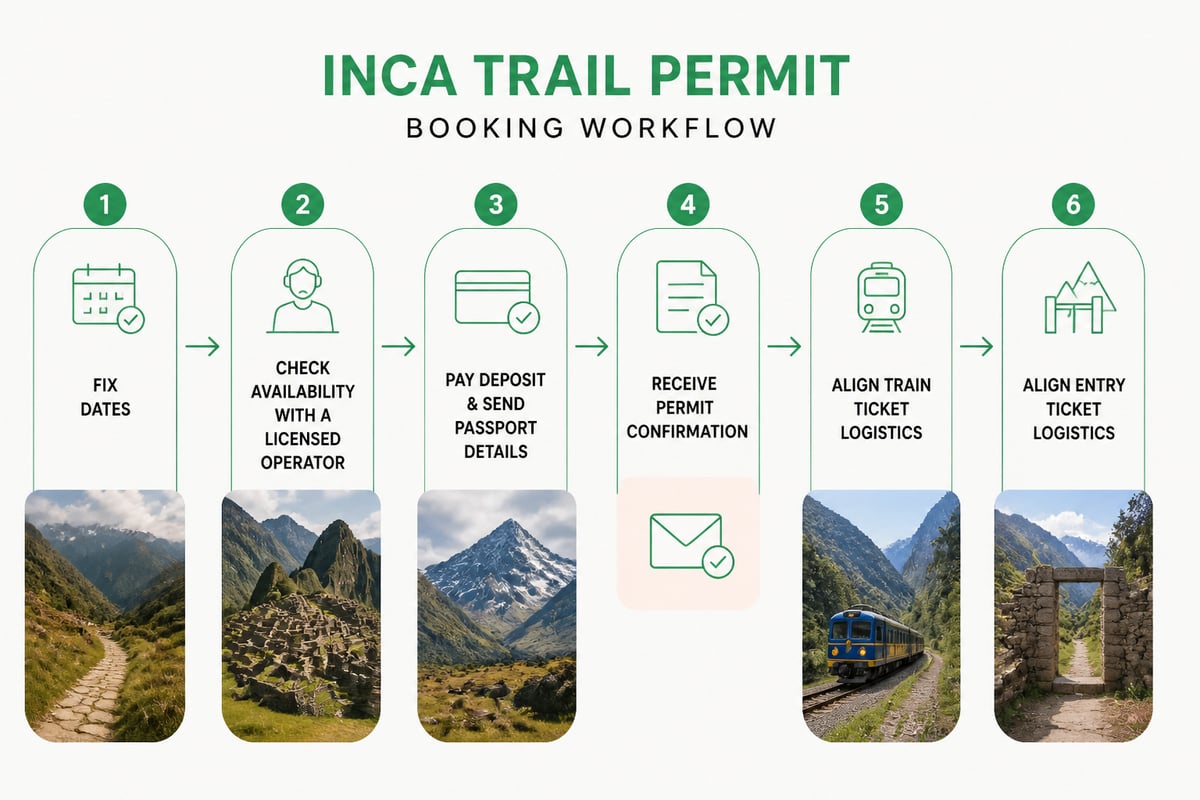
You cannot hike the classic Inca Trail independently. Every trekker must go with a licensed operator, so the permit process runs through the company you choose.
- Fix your dates. Choose a start day and keep a flexible window of a few days either side.
- Check availability with an operator. A reputable company can confirm whether your trail dates are open before you pay anything.
- Pay the deposit and send passport details. The operator purchases the permit in your name. This is typically non-refundable once issued.
- Receive confirmation. You will get proof of the permit and your trek briefing.
- Add your train and entry logistics. The citadel ticket, rail tickets and hotel in Aguas Calientes should align with your trek's final day.
For train planning, PeruRail’s visitor guide summarizes 2026 capacity dates, ticket categories and route information, which helps when matching rail times to your entry window.
What a Permit Costs and What It Includes
The cost to hike to Machu Picchu depends on the route and the operator, and the permit is only one part of the total. The Inca Trail permit fee is typically bundled into your trek price, which also covers guides, porters, cooks, meals, camping equipment and the entry ticket.
When comparing prices, check these inclusions line by line:
- Trekking permit and citadel entry ticket
- Professional guide and porter team, with fair wages
- Meals, tents, sleeping mats and camp equipment
- Return train from Aguas Calientes
- Bus transfer from the trailhead and to the citadel
Costs not usually included are sleeping bags, tips, and an extra Huayna Picchu or Machu Picchu Mountain ticket. Ask for these in writing before you pay. A price that looks unusually low often means the operator has trimmed porter pay or skipped inclusions.
Choosing a Trek Operator for Your Permit
The best Inca Trail company is the one that is licensed, transparent about inclusions, and responsible for the permit from purchase to trailhead. Rather than naming a single winner, use criteria you can verify:
- A current operating license and a clear record of porter welfare
- Small groups, which allow real attention on a steep route
- Bilingual local guides who can explain the Inca history behind Patallacta, Runkurakay and Wiñay Wayna
- Clear terms on name changes, refunds and what happens if a permit is unavailable
A Cusco-based operator that runs trips from the destination itself is usually better placed to handle permit disputes, weather closures and last-minute logistics than a reseller working at a distance.
Inca Trail vs. Kilimanjaro: How Hard Is It?
Kilimanjaro is generally considered the harder trek, because it reaches 5,895 meters, while the Inca Trail's highest point, Dead Woman's Pass, sits at a lower elevation. Kilimanjaro summit night involves extreme cold and thin air, and success depends heavily on acclimatization.
The Inca Trail is shorter than many multi-day treks, but it is steep and includes long stone staircases. Altitude at Cusco affects many first-time visitors, so arriving a few days early is wise. A moderately fit traveler who acclimatizes well can complete it.
The two treks stress the body in different ways. Kilimanjaro's difficulty is concentrated in the altitude: the final push to the summit happens at the highest elevation, when the body has the least oxygen to work with, and a slow, steady pace is what separates those who reach the top from those who turn back. The Inca Trail's difficulty is more mechanical. Day two climbs to Dead Woman's Pass and then drops sharply, and the descent on uneven stone steps tends to tire the knees and thighs more than the ascent tires the lungs. Trekking poles with rubber tips help on those downhill sections. Hikers who train on stairs and hills for several weeks beforehand usually find the trail manageable, and the shorter days leave more time to rest, eat and absorb the scenery than a Kilimanjaro itinerary allows.
Short on Time or Out of Permits? Your Options
If the 4-day trail is sold out for your dates, a shorter version often still has space. The two-day route follows the final section of the Inca Trail, passes Wiñay Wayna, and enters through the Sun Gate for the first view of the citadel.
For travelers who want that experience on a tighter schedule, the Short Inca Trail to Machu Picchu 2 Days / 1 Night combines a guided hike through Andean landscapes with the Sun Gate arrival, with train tickets, entrance permits, hotel accommodation, transportation and local guides included.
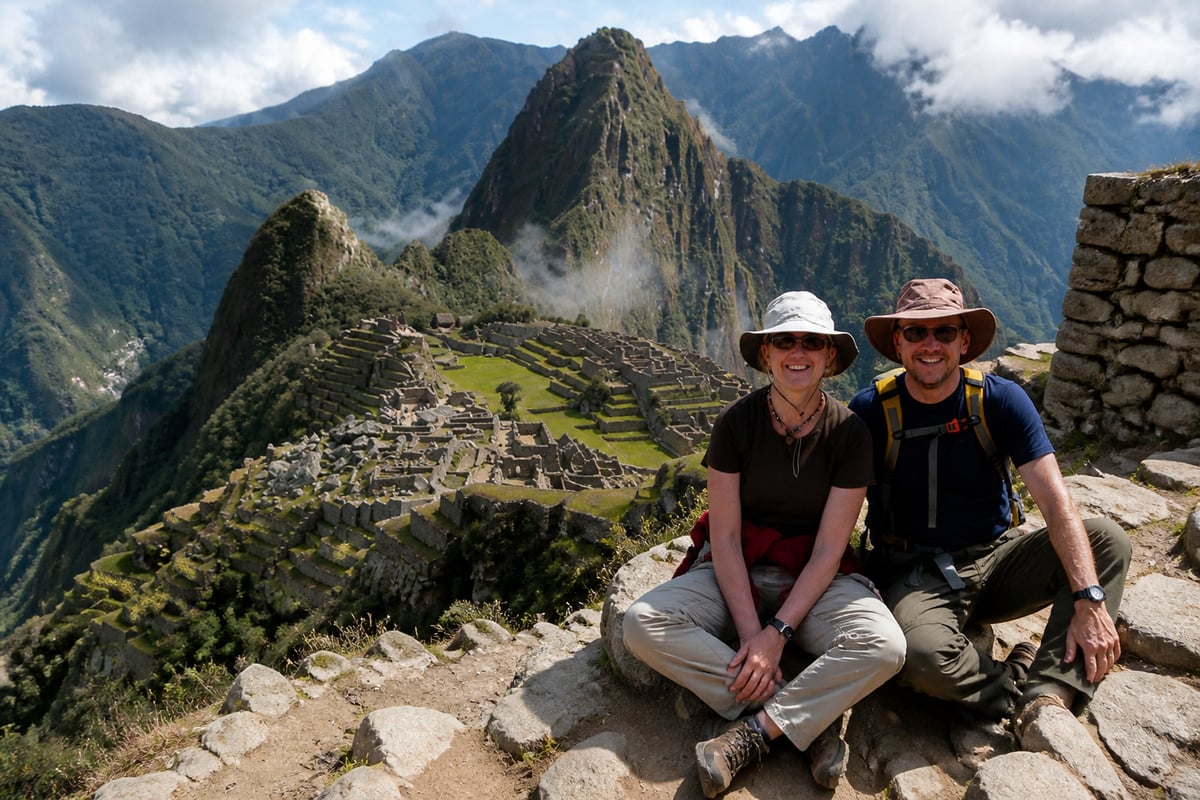
Other routes avoid the Inca Trail permit system entirely:
- Salkantay Trek: A high-altitude alternative through glacial scenery, usually five days.
- Lares Trek: A cultural route passing weaving communities and hot springs.
- Train and bus route: The least demanding path, using timed rail tickets and a citadel entry ticket.
What to Wear and Bring on Entry Day
Yes, you can wear jeans to Machu Picchu, though they are not the best choice. Jeans stay heavy and slow to dry if it rains, and the site involves many stone steps and uneven paths. Lightweight, quick-dry trousers are more comfortable.
Bring your original passport, since it is checked against your name at the gate. Large backpacks, tripods and walking sticks without rubber tips are restricted at the citadel. Carry sunscreen, a hat, a light rain jacket and a refillable bottle, and be ready for rapid weather changes.
Dressing in layers works best, because a cool, misty start can turn into strong sun by late morning. A thin base layer, a light fleece and a packable rain shell cover most conditions and fit in a small daypack. Closed shoes with grippy soles are a better choice than sandals, since stone surfaces turn slick after rain. Keep your printed or digital entry ticket and passport together in an easy-to-reach pocket, as you will present both at the checkpoint and your entry window carries only a 30-minute grace period. If you booked the Huayna Picchu or Machu Picchu Mountain add-on, check that ticket as well, because those climbs run on their own time slots. Pack snacks and water before entering, and plan your layers around the circuit printed on your ticket, since you must follow that route through the site.
FAQ
Can I visit Machu Picchu without a guide?
Entry rules require visitors to follow the route authorized by their ticket, and guides are generally expected on circuits within the site. For the Inca Trail, a licensed operator is mandatory. Confirm current requirements for your circuit when you buy.
Can I change the name or date on my permit?
Inca Trail permits are tied to the passport name and are generally non-transferable. Date changes usually are not possible once the permit is issued. Citadel ticket changes depend on current rules, so ask your operator before purchase.
What happens if my Inca Trail dates are sold out?
Consider a nearby date, the 2-day short Inca Trail, or an alternative trek such as Salkantay or Lares. These routes reach the same citadel and can often be arranged with shorter notice. Booking flexibility is the most useful asset when spaces are tight.
Start by picking two or three possible start dates and checking whether your preferred trail dates are still open. Machupicchu Trips has operated Peru travel experiences since 1999 and, as a locally owned Cusco operator, coordinates permits, entrance tickets, trains, transfers and hotels in one place. If your dates are tight, the Short Inca Trail to Machu Picchu is a practical option to ask about. When you are ready, you can plan your Machu Picchu trip with Machupicchu Trips and have a local team secure your permits and tailor the itinerary to your group.