
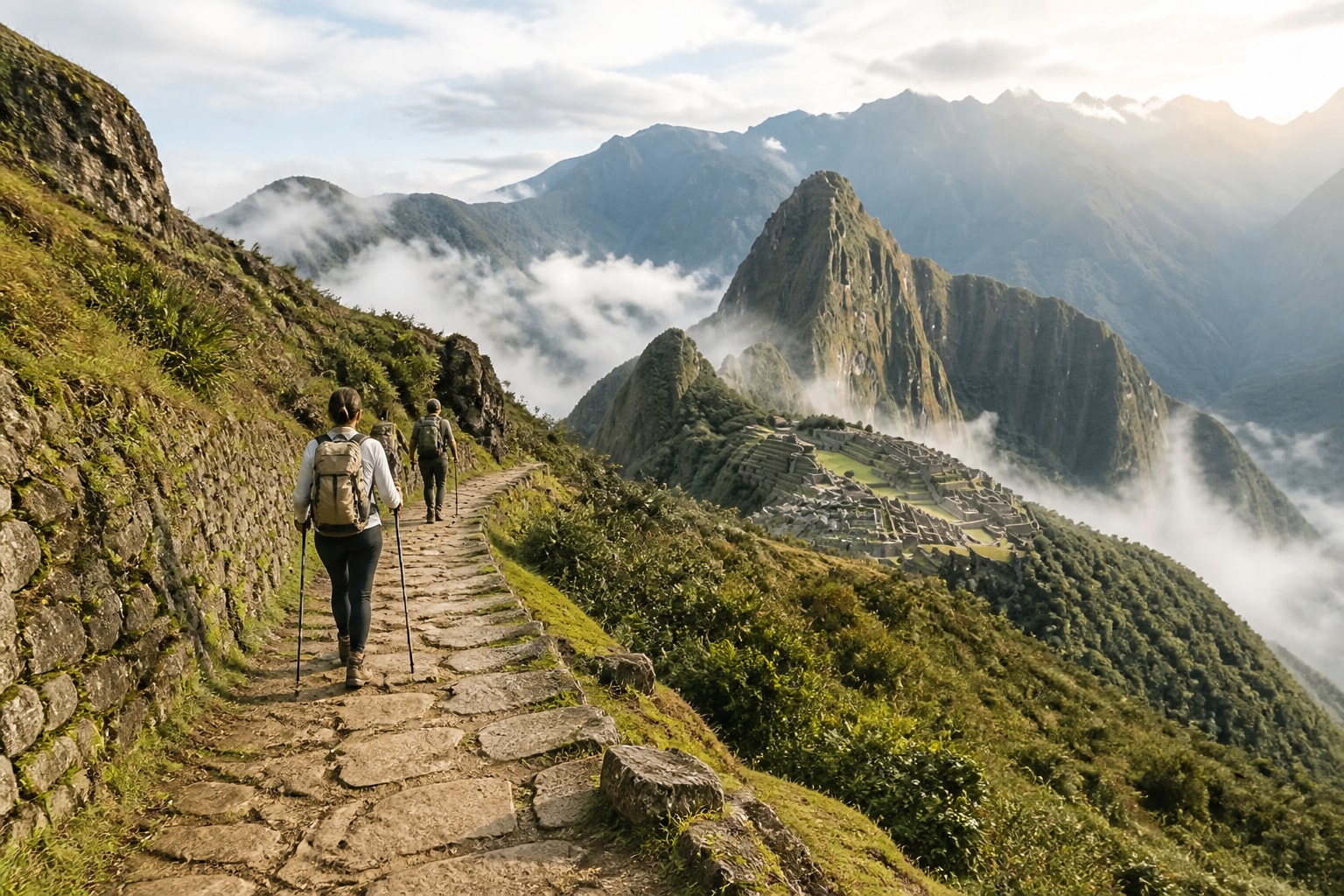
An Inca Trail walk is a guided trek along ancient Inca stone paths through the Andes that ends at Machu Picchu. The classic route takes four days and three nights, a shorter two-day version exists for those with less time, and every walker must book through an authorized agency with an official guide months in advance.
For first-time visitors to southern Peru, the trail offers something a bus ride to the ruins cannot: a gradual approach through cloud forest, high passes and smaller Inca sites, arriving at the Sun Gate with the citadel spread out below. This guide covers the route options, permit rules, difficulty, day-by-day itineraries, costs and preparation.
What the Inca Trail Walk Actually Involves
The Inca Trail is a network of restored Inca roads, and the standard route runs from Piscacucho (Km 82) via Wayllabamba and Wiñay Wayna to Machu Picchu, a four-day, three-night itinerary according to the Inca Trail Reservations regulations page.
You walk the full route over those four days, sleeping in tents at designated campsites while porters carry the group's camping gear and cook meals. Much of the path is original Inca stonework: steps, retaining walls and tunnels cut through rock.
The route passes through several ecosystems. You begin in dry valley terrain near the Urubamba River, climb into high Andean grassland, then descend into humid cloud forest dense with orchids and hummingbirds. Along the way you pass Runkuracay, Sayacmarca, Phuyupatamarca and Wiñay Wayna, each a site that most day visitors to Machu Picchu never see.
Choosing Between the Classic Trail and the Short Inca Trail
The classic four-day trek suits travelers who want full immersion, while the two-day Short Inca Trail suits those with limited time or less trekking experience. Both end at Machu Picchu through the Sun Gate, and both require permits.
| Feature | Classic Inca Trail | Short Inca Trail |
|---|---|---|
| Duration | 4 days, 3 nights | 2 days, 1 night |
| Start point | Piscacucho (Km 82) | Km 104 |
| Camping | Yes, 3 nights | No, hotel in Aguas Calientes |
| Highest point | Dead Woman's Pass | Lower overall elevation gain |
| Best suited to | Experienced walkers, those wanting a full trek | Beginners, families, time-pressed travelers |
The short version visits Wiñay Wayna and reaches the Sun Gate on day one, then gives you a guided morning at Machu Picchu on day two without the rush of a sunrise arrival. Machupicchu Trips offers a Short Inca Trail to Machu Picchu over 2 days and 1 night, with train tickets, entrance permits, hotel accommodation, transportation and local guides included.
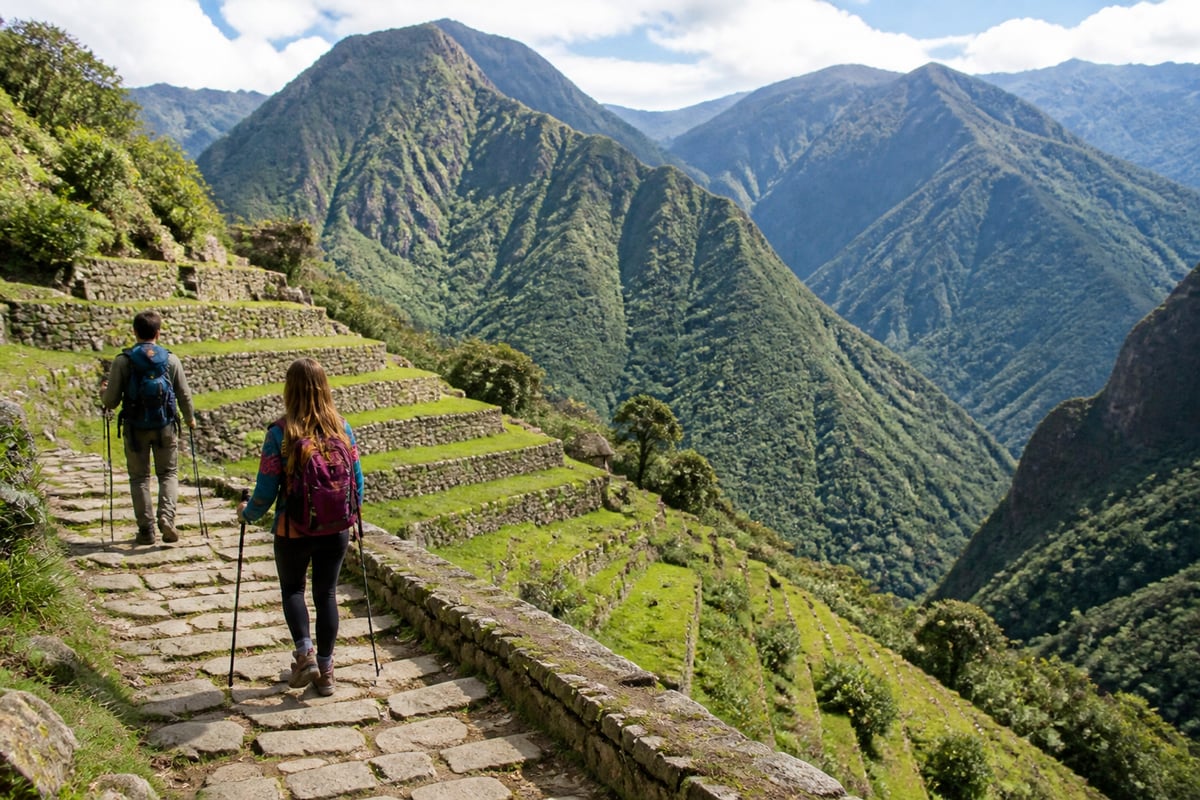
Longer alternatives such as the Salkantay or Lares treks do not use the protected Inca Trail and carry different rules, so confirm which route your itinerary follows before comparing prices.
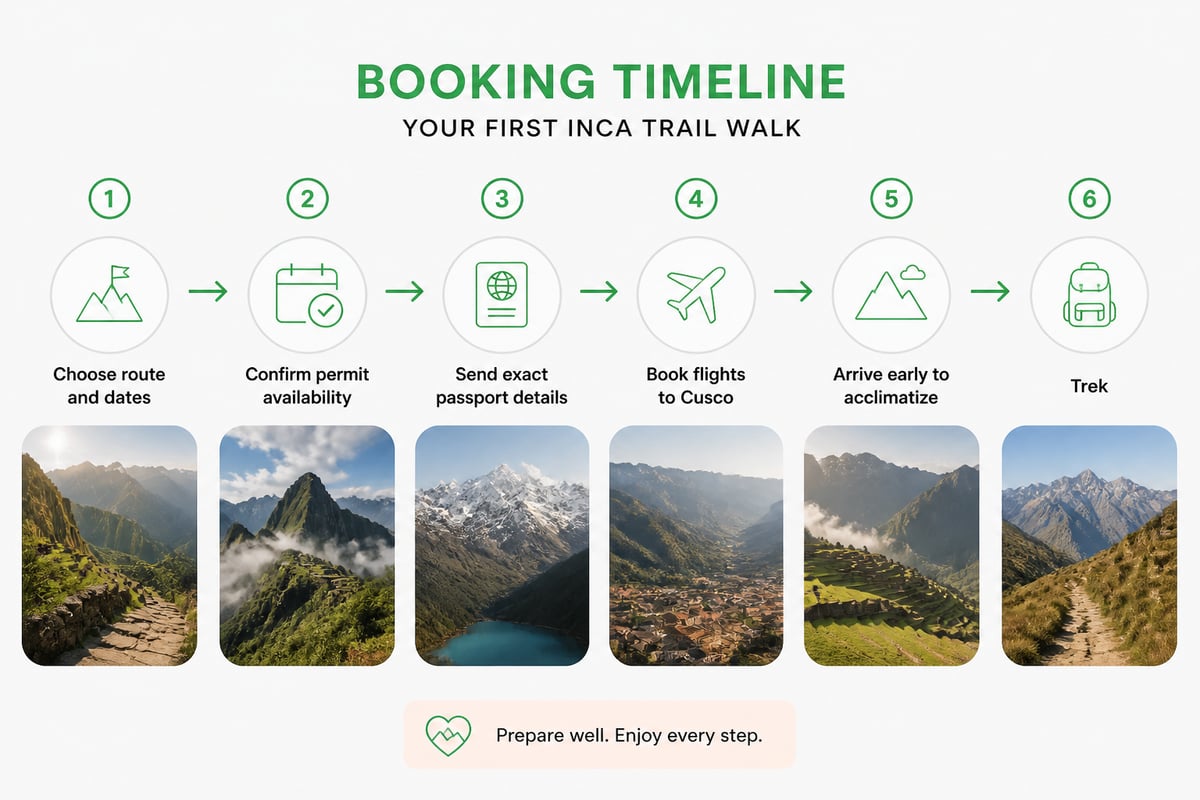
Permits and Booking Rules You Need to Know First
You cannot walk the Inca Trail independently: groups must be organized through an agency and have an official guide, with group size set at 4 to 42 people including trekkers and support staff, per the regulations.
Permits are the main planning constraint. The same page lists daily limits of 500 people, including staff, on routes 1 to 4, 250 on route 5 and 100 on route 6. Because porters and guides count toward that total, the number of spaces available to trekkers is smaller than it sounds. Permits for peak months sell out far in advance, so confirm your dates with an operator before booking flights.
Other rules that affect your plans:
- February closure: the trail network closes every February for ecosystem recovery and maintenance.
- Entry hours: trail entry is permitted between 5:00 a.m. and 2:00 p.m., and walking the trail from 6:00 p.m. to 5:00 a.m. is prohibited.
- Passport match: permits are issued in the name on your passport, so details must be exact when your operator submits them.
A locally owned operator handles this paperwork. Machupicchu Trips, based in Cusco and operating Peru travel experiences since 1999, coordinates permits, entrance tickets, trains, transfers, hotels and trekking logistics, which removes most of the administrative risk for first-time visitors.
Can a Beginner Hike the Inca Trail?
Yes, a beginner can hike the Inca Trail if they are reasonably fit and prepared for altitude, since the trek requires steady walking rather than technical climbing. The challenge comes from elevation and cumulative effort across several days, not from steep rock or exposure.
Most first-timers manage well with a few months of regular walking, stair training or hill hiking beforehand. Daily distances are moderate, and the guide sets a pace suited to the group. What catches people out is the altitude: Cusco sits at high altitude, and the trail's highest pass is well above the city.
If you are unsure about your fitness or have a health condition, the Short Inca Trail is a sensible alternative. It covers the most scenic final section, including Wiñay Wayna and the Sun Gate, without the high passes of days one and two on the classic route.
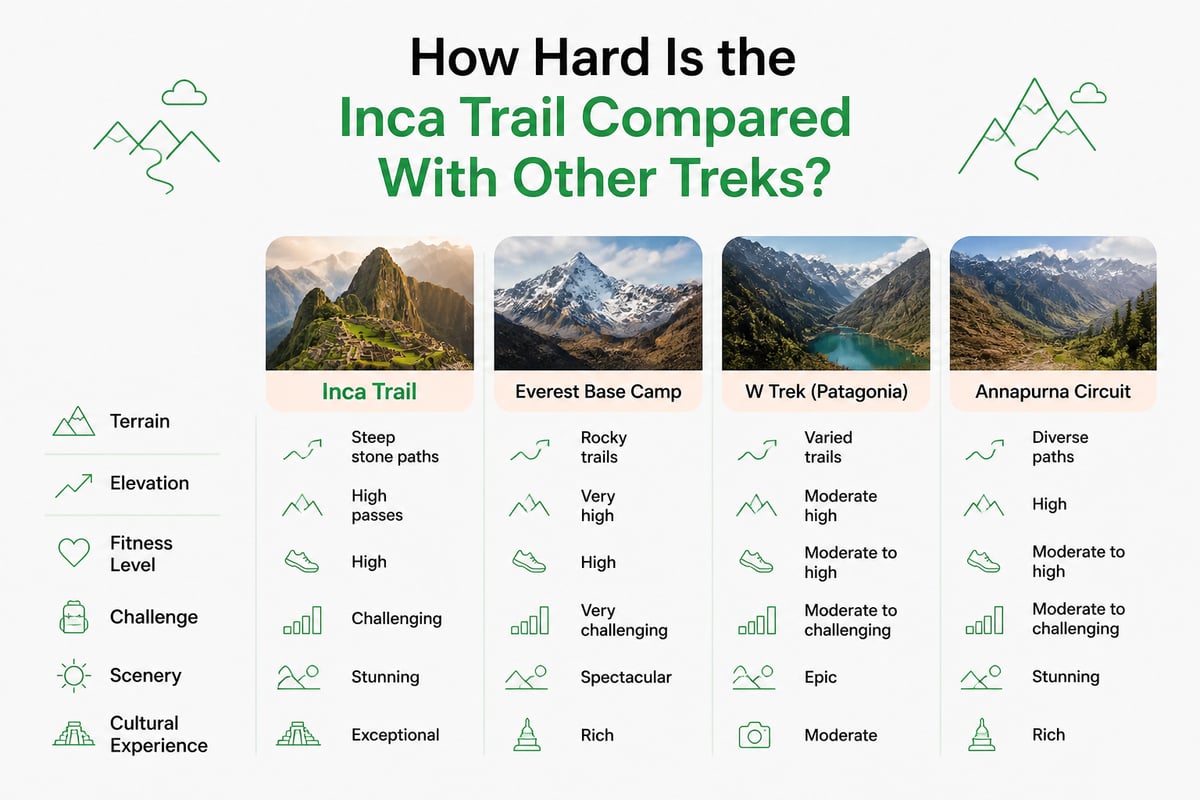
How Hard Is the Inca Trail Compared With Other Treks?
The Inca Trail is moderate in difficulty, noticeably easier than Mount Kilimanjaro. Kilimanjaro's summit is far above anything on the Inca Trail, and its summit night involves extreme cold and thin air. The trek is a walk on maintained paths rather than a mountain ascent.
That said, the trail should not be underestimated. Day two is the hardest stretch, with a long climb of several hours to Dead Woman's Pass followed by a steep, knee-straining descent. Stone steps are uneven, nights are cold, and fatigue builds across four consecutive days of walking.
Many walkers describe the trail as demanding but achievable, and the rewards come at a steady rhythm: ruins appear every few hours, and each camp has mountain views.
The 4-Day Inca Trail, Day by Day
The 4-day Inca Trail follows a consistent pattern: an easy start, a punishing second day, a scenic third day and an early finish at Machu Picchu. Exact campsites vary by operator and permit, but the structure below is typical.
- Day 1: Km 82 to Wayllabamba. A gentle introduction along the Urubamba valley, passing small farming communities and the Llactapata ruins. You camp near Wayllabamba after a morning and afternoon of walking.
- Day 2: Wayllabamba to Pacaymayo. The toughest day, climbing to Dead Woman's Pass before descending into the Pacaymayo valley. Expect cold, wind and strong views back over the ridge.
- Day 3: Pacaymayo to Wiñay Wayna. A long but rewarding day crossing two further passes, visiting Runkuracay, Sayacmarca and Phuyupatamarca, and descending through cloud forest toward your final camp.
- Day 4: Wiñay Wayna to Machu Picchu. An early start for the walk to the Sun Gate, where you first see Machu Picchu from above, followed by a guided tour of the citadel.
Permit rules shape that last morning. Because trail entry hours are fixed and groups begin walking early, plan on a pre-dawn wake-up on day four rather than a leisurely breakfast.
The 2-Day Short Inca Trail Itinerary
The Short Inca Trail compresses the highlights into two days: a half-day hike with hotel comfort at night, then a full guided morning at Machu Picchu.
Day 1: You start at Km 104, cross the Urubamba River and walk uphill to Wiñay Wayna, with its curved agricultural terraces and ritual baths. From there you continue to the Sun Gate, arriving in the afternoon light, then descend to Aguas Calientes for a hotel night.
Day 2: After breakfast you take the early bus up to Machu Picchu and tour the site with your guide, learning how its temples, terraces and water channels were designed. You return by train to the Cusco area.
One practical advantage: because you arrive at the Sun Gate in the afternoon and tour the citadel the next morning, you see Machu Picchu twice rather than once. Travelers who want an unhurried second visit often find this more satisfying than a single sunrise rush.
What an Inca Trail Walk Costs
Costs vary widely by operator, season, group size and service level, and permits are a fixed element within every package. The question "how much does it cost per person to hike the Inca Trail?" has no single answer, because the price depends on what is included.
When comparing quotes, check these items against each other:
- Permit and Machu Picchu entrance fees
- Train tickets back from Aguas Calientes
- Porter and cook wages and equipment (tents, mats, sleeping bags may be extra)
- Pre- and post-trek hotel nights in Cusco or Aguas Calientes
- Guide qualifications and group size limits
Very low prices often signal compromises on porter treatment, food quality or group size. For current rates and what each package covers, check the Machupicchu Trips contact and booking pages, where packages can be tailored to your dates, group size and travel style.
Preparing Your Body for Altitude and Health
Spend at least two days in Cusco or the Sacred Valley before starting the Inca Trail walk, because acclimatization is the single most effective preparation. Arriving from sea level and trekking within 24 hours raises the risk of headaches, nausea and poor sleep.
Practical steps include:
- Drink water steadily and limit alcohol on arrival
- Walk slowly during the first days and avoid heavy meals
- Discuss altitude medication with your doctor before departure
- Tell your guide immediately if symptoms worsen
On vaccinations, the CDC states that yellow fever vaccination is not recommended for travel limited to highland tourist areas including Cusco city, the Inca Trail and Machu Picchu. Check your own requirements with a travel clinic, especially if you plan to visit the Amazon region as well.
For safety context, the U.S. State Department’s Peru travel advisory is worth checking before you travel for current guidance on the country.
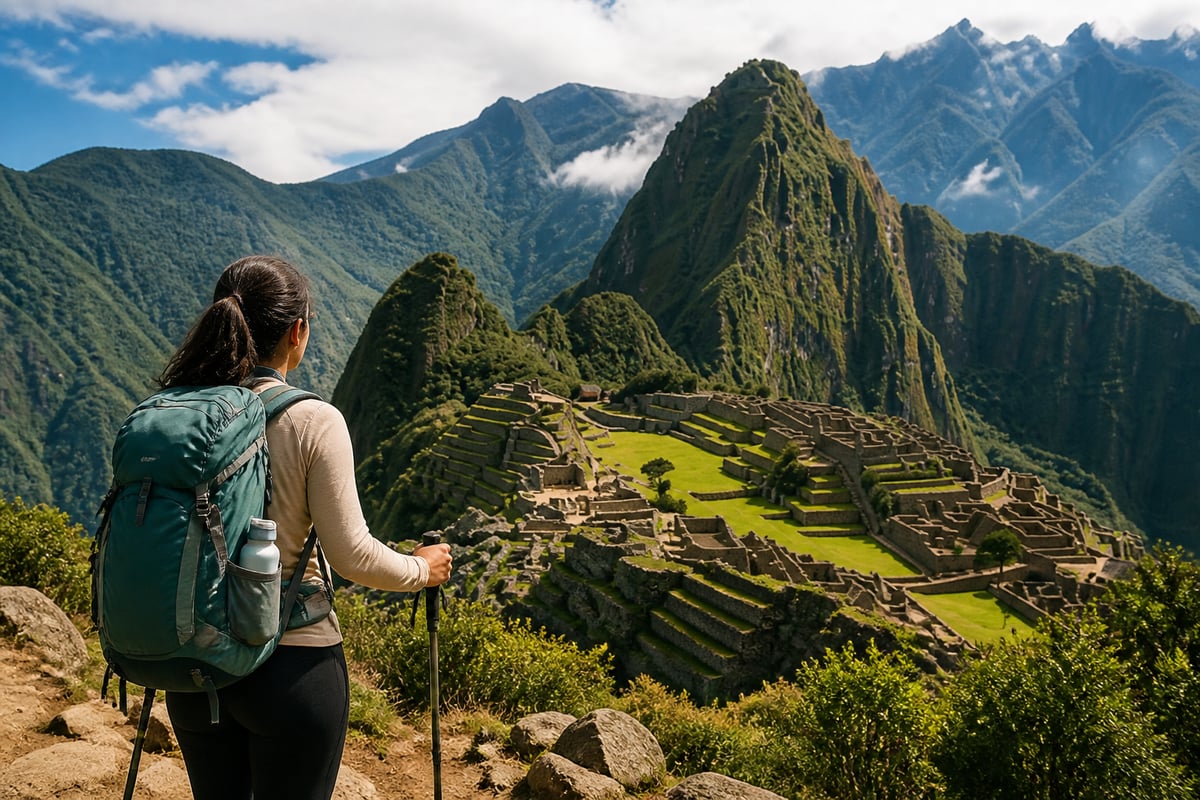
What to Pack and Wear
Pack light but prepare for four seasons in a single day, since temperatures can swing from warm afternoons to near-freezing nights. Your operator typically carries group gear, while you carry a daypack with essentials.
Carry in your daypack:
- Rain jacket or poncho, plus a warm fleece
- Water bottle or hydration bladder
- Sunscreen, sunglasses and a brimmed hat
- Insect repellent
- Snacks and any personal medication
- Passport (required at the checkpoint)
Wear and bring:
- Broken-in waterproof hiking boots with ankle support
- Moisture-wicking base layers and quick-dry trousers
- Trekking poles with rubber tips, which protect both the stone and your knees
- A headlamp with spare batteries for early starts and camp
Test all footwear on long walks before leaving home. Blisters are the most common avoidable problem on the trail.
When to Go and How Long to Plan
The dry season from May through September offers clearer skies and firmer paths but brings the heaviest demand for permits. The wet season is greener and quieter, yet rain and mud are likely, and the trail closes entirely each February.
For a first visit, plan a minimum of six to eight days in southern Peru: two days in Cusco for acclimatization, the Sacred Valley, the trek itself and a buffer day afterward. Local guides can explain the Inca engineering and cultural background that brings each site to life, which adds real value to a first trip.
FAQ
What is the 4 day Inca Trail?
The 4-day Inca Trail is the classic guided trek from Piscacucho (Km 82) to Machu Picchu, passing Wayllabamba, Dead Woman's Pass and Wiñay Wayna over three nights of camping. It ends with an arrival at the Sun Gate and a guided tour of the citadel.
Do I need a guide for the Inca Trail?
Yes. Groups must be organized through an agency and travel with an official guide, so independent, no-guide hiking is not permitted on the trail.
When should I book Inca Trail permits?
Book as early as your dates allow, because daily permit numbers are capped and popular months sell out well ahead of time. Confirm availability with your operator before purchasing flights.
Your next step is to choose your preferred travel month and check permit availability before committing to flights or hotels. If you want a shorter option, the Short Inca Trail to Machu Picchu 2 Days / 1 Night is a good place to start. As a locally owned Cusco operator running small-group tours since 1999, Machupicchu Trips handles permits, trains, hotels and bilingual guides, so you can plan my Machu Picchu trip around your dates and travel style.