
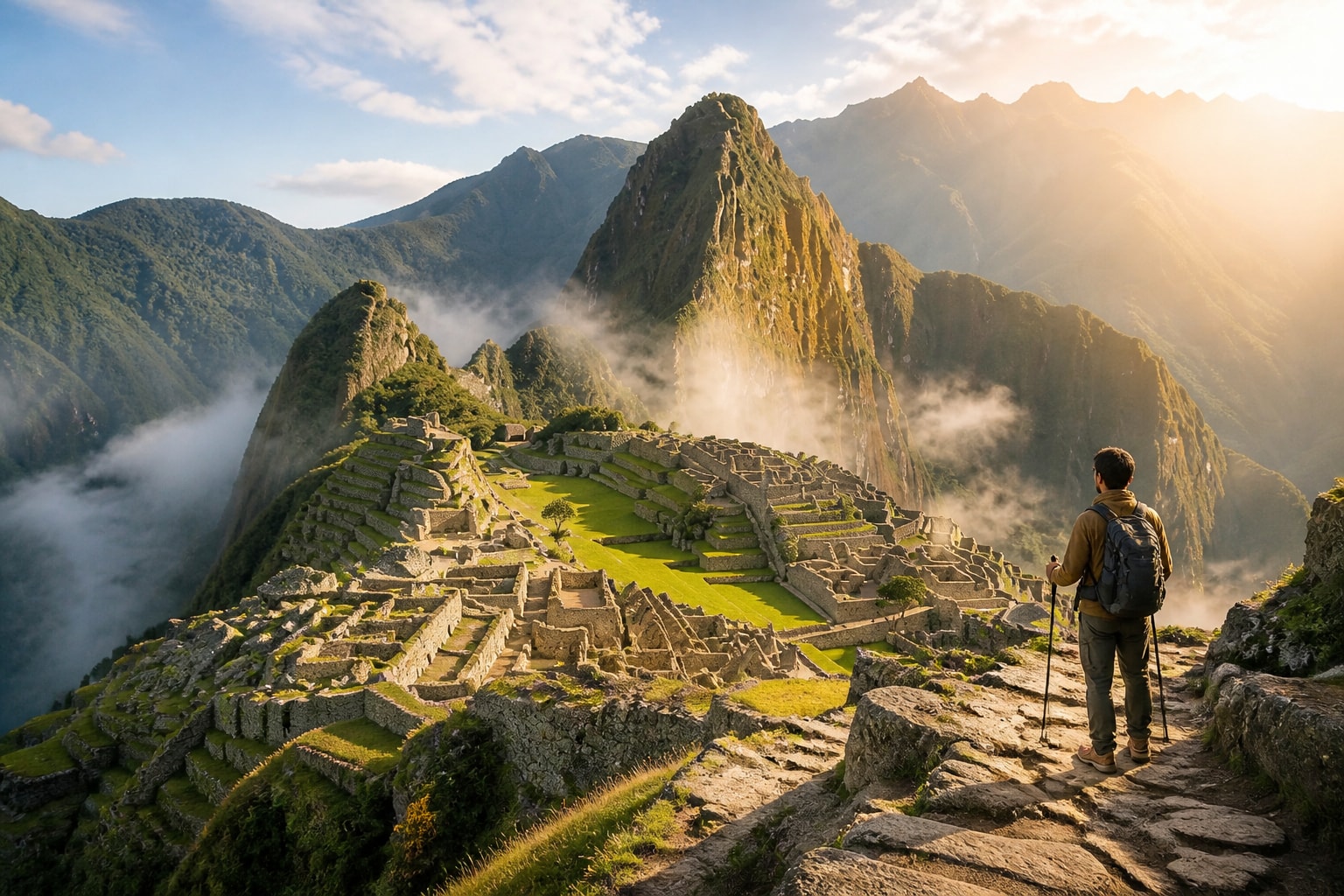
Trips to Machu Picchu typically run from a single long day out of Cusco to a multi-day trek along the Inca Trail, and most first-time visitors should allow several days in southern Peru to adjust to the altitude and secure entry. The essentials are a timed entrance ticket, a train or trek to reach the site, and a licensed guide, all of which must be booked well ahead of travel.
This guide covers how to choose a route, how the 2026 circuits work, when to go, what to budget, and how to stay safe and comfortable, whether you want a comfortable cultural journey or a demanding hiking route.
How Do You Choose the Right Trips to Machu Picchu?
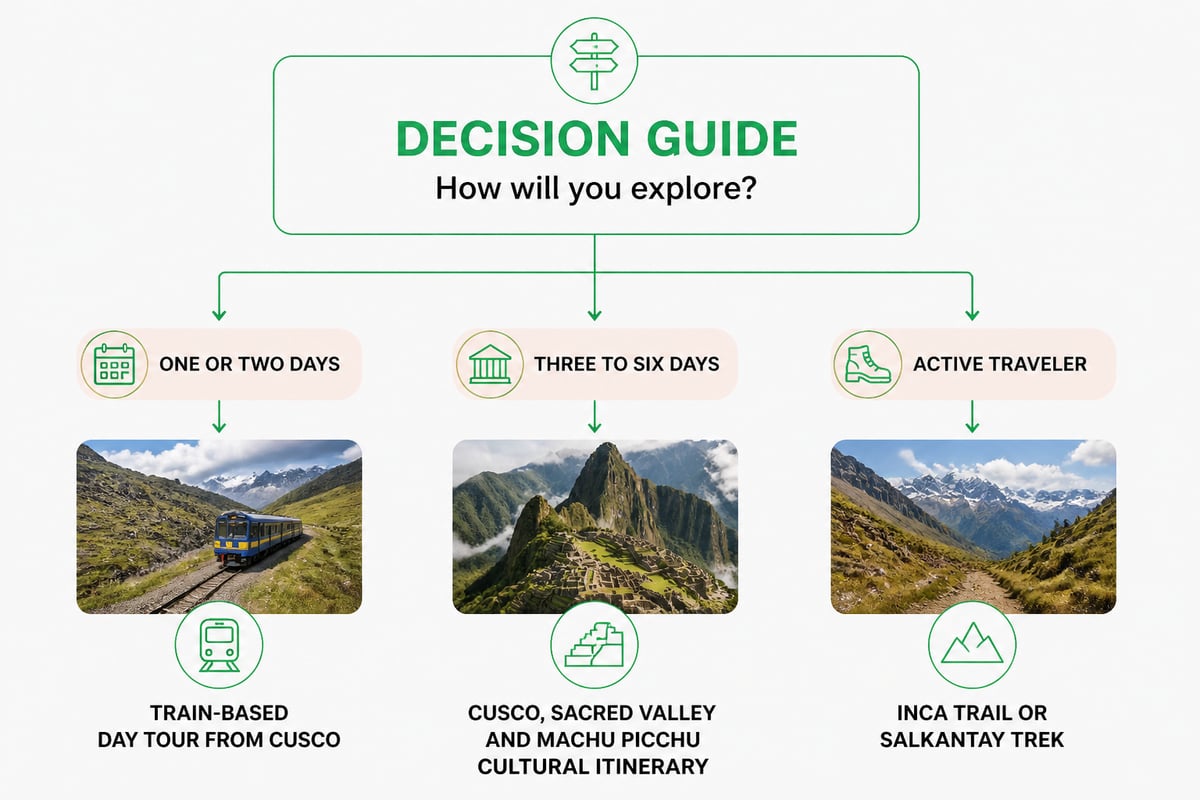
The right trip depends on your time, fitness and appetite for adventure, and most travelers fall into one of three categories: the day visitor, the multi-day cultural traveler, and the trekker.
- Day visitor: You have one or two days in the region. A train-based day tour from Cusco gets you to the citadel and back with minimal logistics.
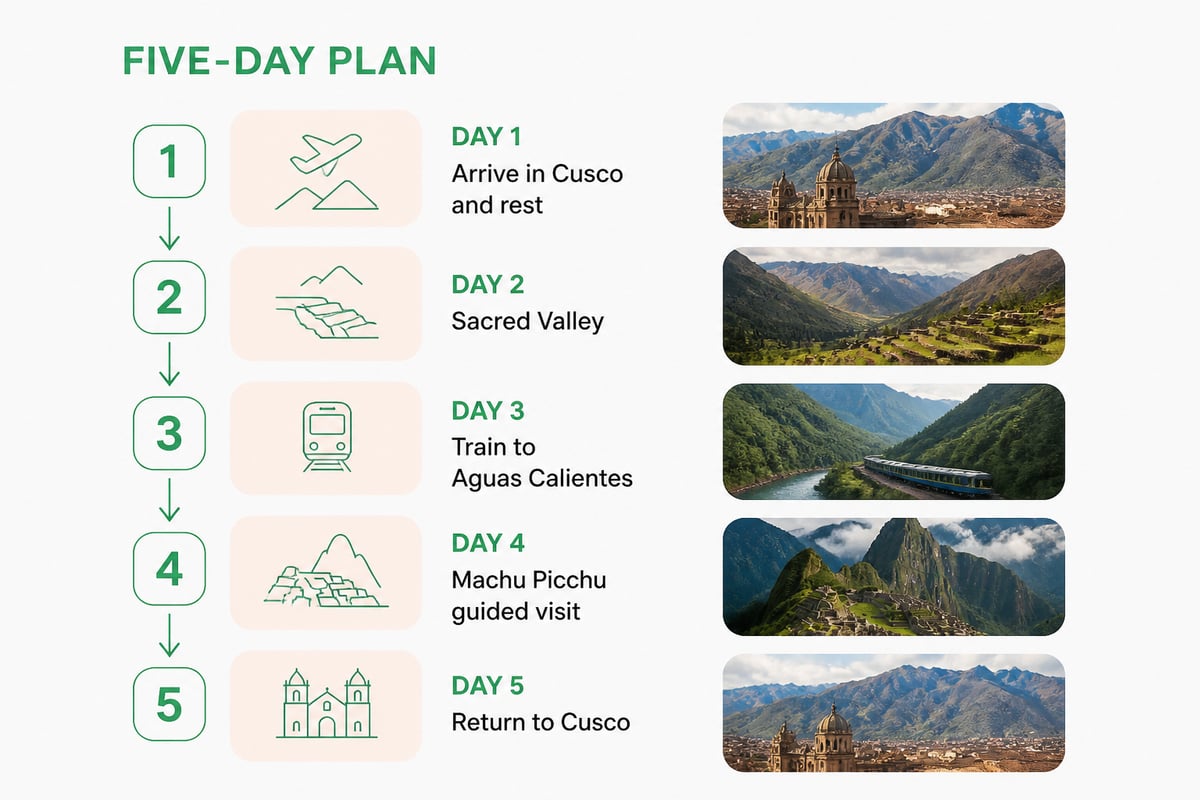
- Cultural traveler: You want three to six days combining Cusco, the Sacred Valley and Machu Picchu, with time to acclimatize and absorb Inca history.
- Trekker: You want to earn the arrival on foot, whether on the classic Inca Trail, the Salkantay route or another path through the Andes.
Time in the region matters more than most itineraries admit. Cusco sits at high altitude, and arriving directly from sea level without a buffer day often leads to headaches and poor sleep. Building in a night or two in the Sacred Valley, which is lower, makes the rest of the trip far more comfortable.
For travelers who prefer a fully arranged experience, a locally owned operator can coordinate permits, entrance tickets, trains, transfers and hotels in one plan. Machupicchu Trips has operated Peru travel experiences since 1999 from Cusco itself, runs small-group tours, and tailors packages to your dates, group size and interests.
How Much Does It Cost to Go to Machu Picchu?
The total cost depends on the style of trip, because the entrance ticket is only one part of a budget that also includes transport, guiding, lodging and meals. A single-day visit is the least expensive format, while a guided trek or a luxury multi-day itinerary costs considerably more.
These are the main cost components to plan around:
- Entrance ticket: Required for every visitor, tied to a specific circuit and time slot.
- Transport to the site: The train to Aguas Calientes, plus the shuttle bus up to the citadel, unless you trek.
- Guide: Mandatory for entry, and well worth it for the context it provides on Inca engineering and religion.
- Accommodation: Ranges from simple lodging in Cusco to boutique and luxury hotels in the Sacred Valley.
- Trek costs: Permits, porters, cooks, camping gear and food are bundled into trekking packages.
Prices shift by season, train class and group size, so a quoted figure from a year ago may no longer apply. Because Machupicchu Trips tailors packages to dates and travel style, the most reliable way to get a current number is to request a quote through its contact and booking page.
Which Machu Picchu Circuit Is Better: 2A or 2B?
Circuit 2A or 2B is a matter of preference rather than quality, since both sit within Circuit 2, which includes the urban sector and sites such as the Temple Plaza, Sacred Rock and the Water Mirrors complex, according to Peru Travel. The new system, introduced on June 1, 2024, organizes the sanctuary into three circuits with 10 visit routes in total.
The practical differences come down to how the route flows:
| Circuit | What it covers | Best suited to |
|---|---|---|
| Circuit 1 | Panoramic viewpoints, no access to the urban sector | Travelers focused on the classic postcard view |
| Circuit 2 | The urban sector, including the Temple Plaza, Sacred Rock and Water Mirrors | Most first-time visitors who want to walk among the buildings |
| Circuit 3 | Lower and alternative routes within the sanctuary | Visitors adding variety or a second visit |
Most first-time visitors choose Circuit 2 because it combines the photographic overlook with a walk through the temples, terraces and residential areas. Within it, the 2A and 2B variants differ mainly in the order and direction in which you move through the site, so the better pick is usually the one that fits the time slot available and your guide's recommended flow. Circuit 1 on its own is a poor choice if you want to enter the ruins, since it excludes the urban sector.
When Is the Best Time for Trips to Machu Picchu?
The best time is the dry season, from roughly May to September, when skies are clearer and trails are firmer, but this is also when the sanctuary is busiest and tickets sell out first.
Peru's official 2026 high-season dates are January 1, April 2 to 5, June 19 to November 2, and December 30 and 31, per Peru Travel. The daily visitor limit is 5,600 during designated high-season dates and 4,500 during low season, so there is more capacity at the peak than in the low season.
Consider these trade-offs:
- Dry season (May to September): Reliable weather and excellent views, with higher demand and higher prices.
- Shoulder months (April, October, November): Fewer crowds, mixed weather, and a good balance for flexible travelers.
- Wet season (December to March): Green landscapes and thinner crowds, with frequent afternoon rain and mist that can hide the citadel for hours.
Early morning entry slots tend to offer softer light and cooler temperatures, while late slots can be quieter once tour groups have moved on. If you have any flexibility, midweek visits are generally less congested than weekends.
How Do Tickets, Permits and Timing Work?
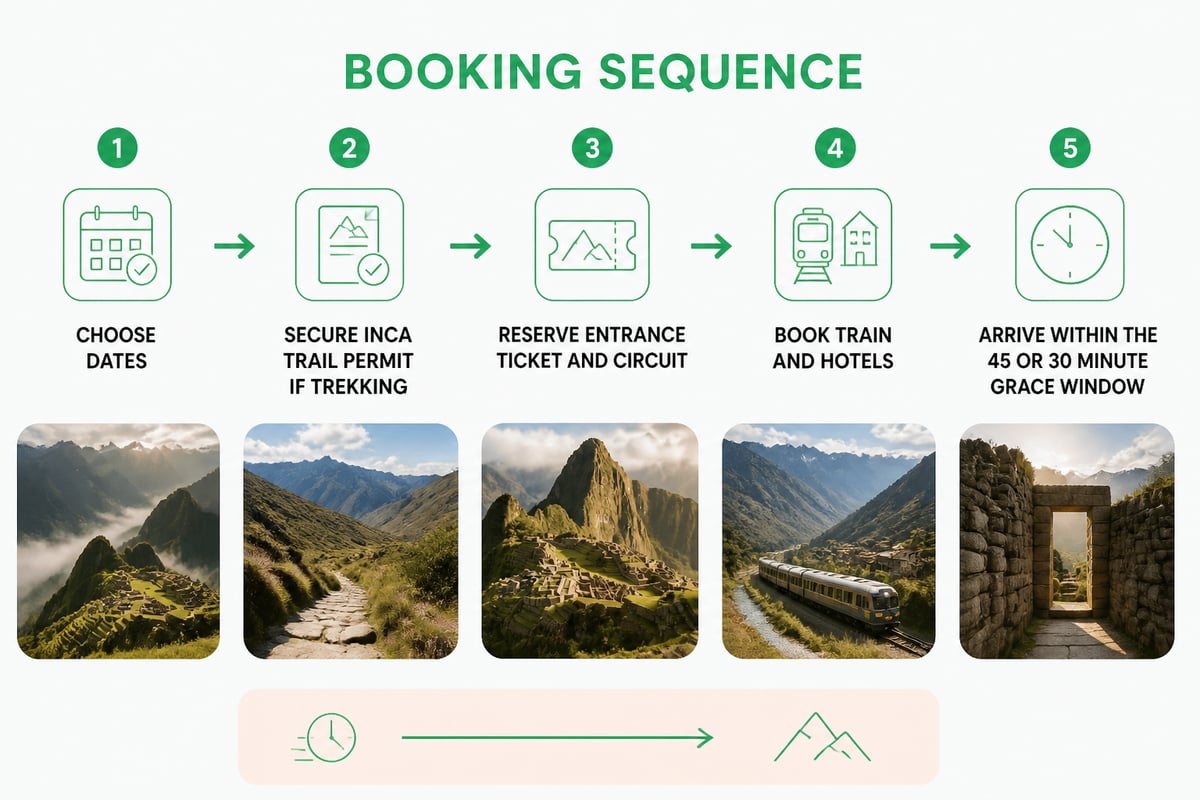
Tickets for Machu Picchu are issued for a specific circuit and entry time, and they sell out, so booking early is the single most useful step you can take.
Only 1,000 of the 5,600 daily tickets are released on the day itself, and National Geographic recommends buying well in advance. Treat any plan that depends on buying a ticket on arrival as a risk rather than a strategy.
Timing at the gate is strict. Arrival grace periods are 45 minutes in high season and 30 minutes in low season, and entry may be denied after that window, per the same Peru Travel notice. Allow buffer time for the bus ride up from Aguas Calientes and for queues.
Inca Trail travelers face an additional requirement. Inca Trail travelers need a permit, and these are limited and can sell out well ahead of time. A local operator that coordinates permits, entrance tickets, trains, transfers, hotels and trekking logistics removes much of the coordination risk, which is one reason many visitors book through a Cusco-based team.
What Is the Best Option for a Short Visit?
If you have only a day or two, a guided day tour from Cusco is the most efficient way to see the citadel without managing logistics yourself.
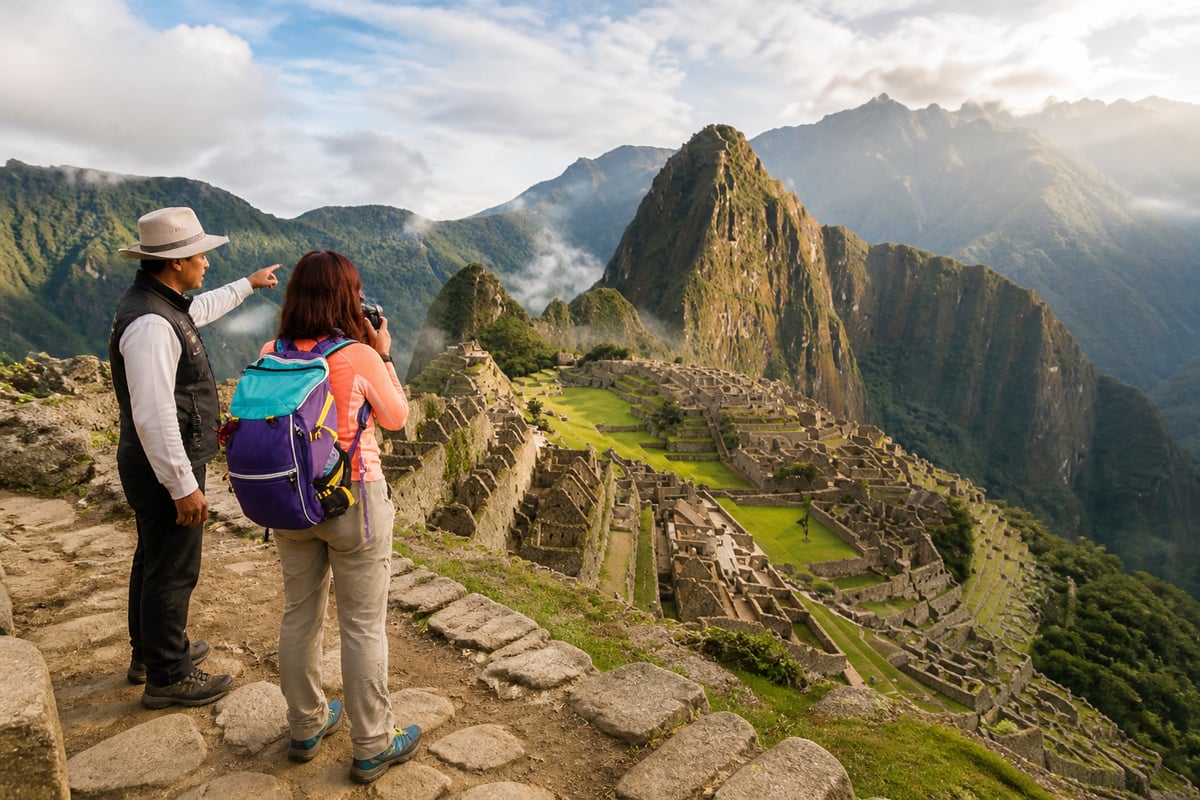
The Machu Picchu Day Tour takes you from Cusco to the Inca citadel, where a professional guide leads you through the temples and ancient terraces, with Andean scenery along the way. It suits travelers with limited time who still want a meaningful, well-explained visit rather than a rushed photo stop.
A day trip is demanding, since it involves early starts and a long travel day. If your schedule allows, adding a night in Aguas Calientes lets you reach the site at opening and leave after the crowds thin, which changes the quality of the experience considerably.
Which Hiking Routes Lead to Machu Picchu?
Several trekking routes reach Machu Picchu on foot, and each suits a different level of fitness, time and desire for solitude.
- Classic Inca Trail: The most historic route, passing Inca ruins, cloud forest and high passes over about four days. It requires an advance permit and is the most sought-after trek.
- Salkantay Trek: A high-mountain route beneath glaciated peaks, with varied ecosystems and a more rugged feel. It is a popular alternative when Inca Trail permits are unavailable.
- Short Inca Trail: A two-day option that finishes at the Sun Gate, suited to those with less time but who still want to arrive on foot.
- Cultural and lodge-supported treks: Routes that combine hiking with community visits and comfortable accommodation, for active travelers who prefer more comfort at night.
Fitness preparation pays off. Walk uphill with a loaded pack in the weeks before departure, and build in a day or two of acclimatization in Cusco before starting. Trekking packages typically involve porters, cooks and camping or lodge-based support, so confirm exactly what your operator provides.
If you are asking where to pee on the Inca Trail, the practical answer is that designated toilet facilities exist at most campsites and some rest points, while on the trail itself you should step well away from the path and water sources, carry out used tissue and follow your guide's instructions. Your trek leader will brief the group on these points, and carrying a small waste bag keeps the route clean.
How Do You Prepare for the Altitude and Weather?
Preparing for altitude and changeable weather is largely a matter of pacing yourself and packing in layers.
Spend at least one night in Cusco or, better, the lower Sacred Valley before any strenuous activity. Drink water steadily, eat lightly on arrival, limit alcohol the first night, and ask your doctor about altitude medication before you travel if you are concerned.
A sensible packing list for the Andes includes:
- A lightweight waterproof jacket, since showers can arrive quickly even in the dry season.
- Layers that can be added or removed, as mornings are cold and midday sun is strong.
- Broken-in walking shoes with good grip for uneven stone steps.
- Sun protection: a hat, sunscreen and sunglasses, because UV exposure is high at altitude.
- A refillable water bottle and a small daypack within the site's allowed size.
- Your passport, which is checked alongside your entrance ticket.
Machu Picchu's steps are steep and often uneven, so take your time on terraces and stairways, especially after rain.
Is It Safe for US Citizens to Travel to Peru Right Now?
Peru is a widely visited destination, and the Machu Picchu corridor is among its most established tourism areas, but safety conditions can change, so check current official guidance before you book.
Government advisories are the best source. The UK government’s Peru travel advice and the Government of Canada’s Peru page both provide current safety and security guidance, and US travelers should also review their own State Department advisory for the latest alerts. Protests and road blockades have occasionally disrupted transport in southern Peru, so a flexible schedule and travel insurance that covers disruption are sensible protections.
Everyday precautions help:
- Use licensed guides and reputable operators.
- Keep valuables secured and avoid displaying expensive items in crowded markets.
- Arrange airport and station transfers in advance rather than hailing unmarked vehicles.
- Share your itinerary with someone at home.
Travelers who book with a Cusco-based operator benefit from on-the-ground staff who monitor road, rail and weather conditions and can adjust plans quickly.
What Else Is Worth Adding to a Machu Picchu Itinerary?
The surrounding region offers some of the best experiences of the trip, and pairing them with the citadel makes the journey richer and more comfortable.
- Cusco: The former Inca capital blends Inca stonework with Spanish colonial architecture, with plazas, markets and museums that reward a full day.
- Sacred Valley: Terraced hillsides, weaving communities and ruins such as Ollantaytambo and Pisac make an ideal acclimatization base.
- Rainbow Mountain and Humantay Lake: Active add-ons for travelers who want high-altitude scenery.
- Lake Titicaca or the Amazon basin: Extensions for those with additional days to spend in southern Peru.
A second day at the site is also worth considering. Arriving once for the classic circuit and returning at another time lets you see the citadel in different light and walk a route you missed the first time. A guide who explains Inca history and culture turns this from sightseeing into understanding, which is where small-group tours with bilingual local guides add the most value.
FAQ
Do I need a guide to visit Machu Picchu?
Yes, visitors are required to enter with a licensed guide under current rules, and a guide also adds substantial context on the architecture, astronomy and religion of the Inca. Confirm the current requirement with your operator when you book.
How many days do I need for a trip to Machu Picchu?
Three to five days is a comfortable minimum for a first visit, allowing time to acclimatize in Cusco or the Sacred Valley before the citadel. A day tour is possible for tight schedules, though it is a long and tiring day.
Can I visit Machu Picchu without hiking?
Yes, the train from Cusco or the Sacred Valley to Aguas Calientes, followed by a shuttle bus to the entrance, makes the site accessible without a trek. Hiking is optional and suits those who want an active arrival.
Your next step is to choose your travel dates and confirm entrance ticket and permit availability, since these are the first things to sell out. Machupicchu Trips, a locally owned Cusco operator since 1999, can match you with a route and handle the logistics, whether you prefer the Machu Picchu Day Tour or a longer trek. Talk to the team about your dates and interests and plan my Machu Picchu trip with a small-group itinerary built around you.