
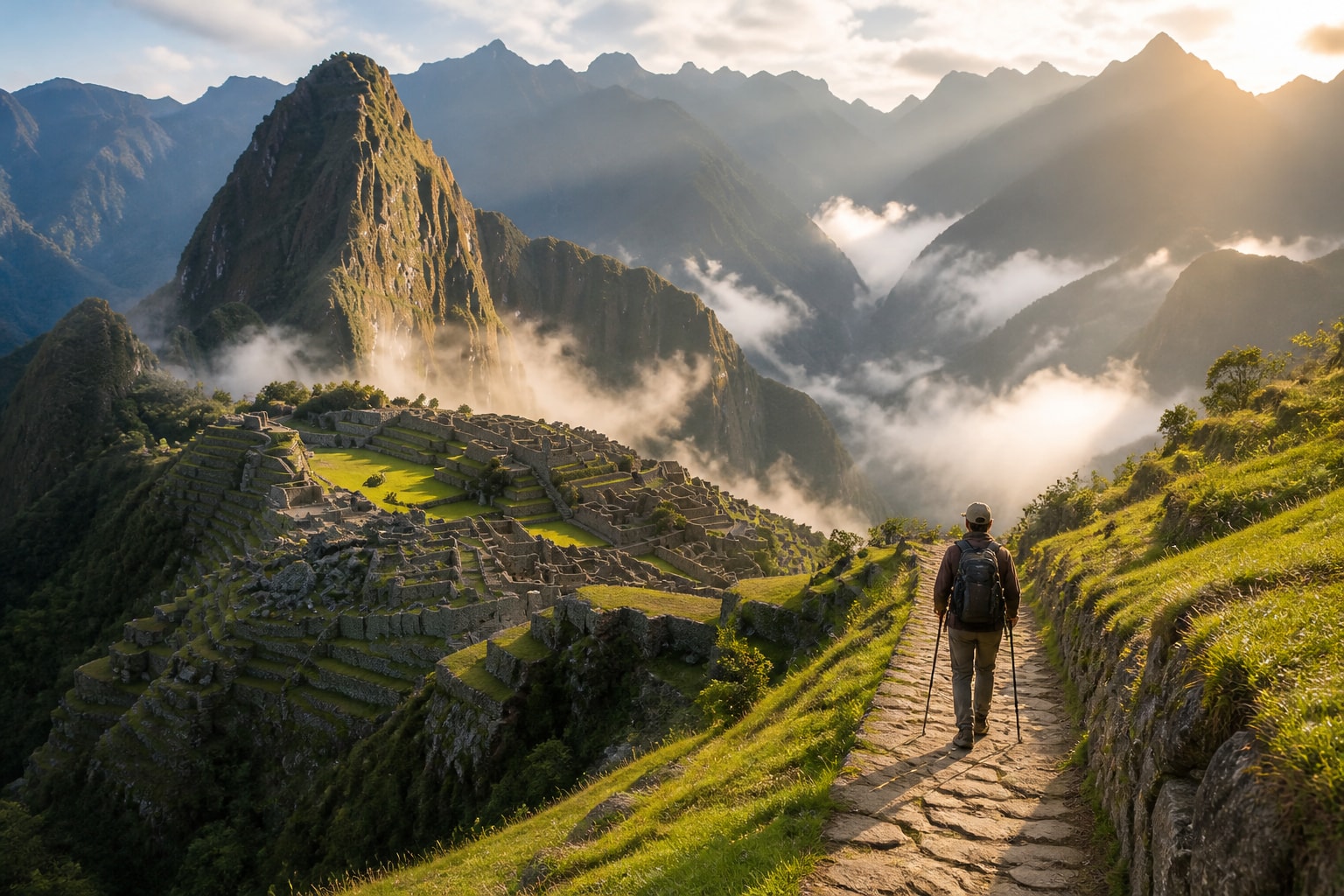
A good Machu Picchu tour package bundles the entry ticket, train or trail, hotels, transfers and a licensed guide into one itinerary, and the right choice depends on how many days you have, how active you want to be and when you travel. Most first-time visitors are well served by a package of several days that includes Cusco and the Sacred Valley, while trekkers should pick a hiking route and book it well ahead. This guide explains what packages typically include, how the main formats compare and what to check before you pay.
What a Machu Picchu Tour Package Usually Includes
A typical package covers the pieces that are hardest to arrange on your own: permits, tickets, rail seats, lodging and guiding. Knowing the standard components helps you spot what is missing from a quote.
- Machu Picchu entry ticket and guided visit. Admission is sold through the Ministry of Culture's official platform, where a date, circuit and time slot are selected. A package operator books these for you.
- Transport to the site. Usually a train from the Sacred Valley or Ollantaytambo to Aguas Calientes, then a bus up to the citadel. Trekking packages replace the train with a hiking route.
- Hotels. Cusco, the Sacred Valley and Aguas Calientes are the common bases. Trekking packages use camps or lodges.
- Airport and station transfers. Often included, and worth confirming.
- A bilingual guide. Inca history is hard to read from stone alone, so a guide changes the quality of the visit.
- Meals. Breakfast is common; other meals vary widely by package.
Always ask what is excluded. International flights, flights into Cusco, tips, travel insurance and some meals are frequently separate.
Which Package Format Fits Your Trip
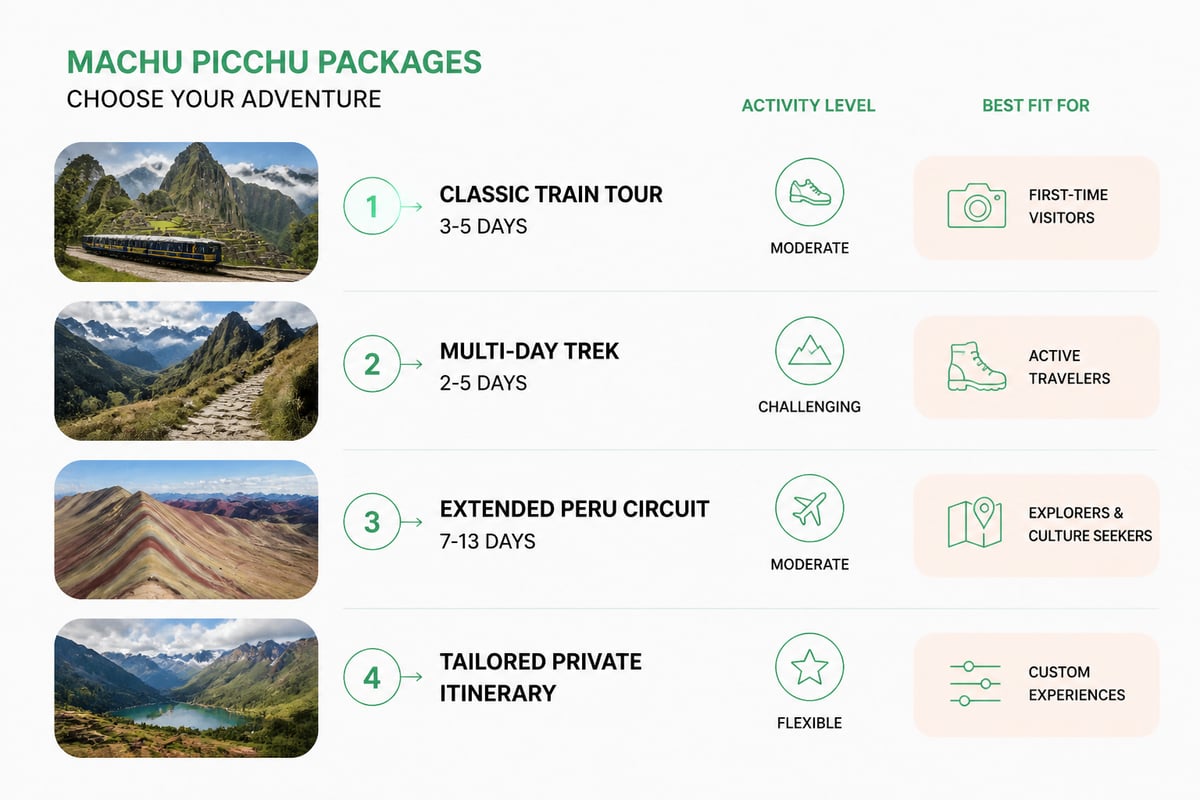
The best format is the one that matches your time, energy and tolerance for logistics. Peru packages generally fall into four groups.
| Format | Typical length | Best for | Main trade-off |
|---|---|---|---|
| Classic train-based tour | Several days | First-time visitors who want culture and comfort | Less time on foot, more time with a group |
| Multi-day trek | 2 to 5 days | Active travelers who want to earn the arrival | Permits sell out; physical effort required |
| Extended Peru circuit | 7 to 13 days | Travelers adding Lima, Paracas or other regions | Higher total cost, more transfers |
| Private or tailored itinerary | Flexible | Couples, families, special interests | Needs earlier planning and a clear brief |
Classic Train-Based Packages
These are the most common option for a first visit. You spend time in Cusco for acclimatization, tour the Sacred Valley, then take the train to Aguas Calientes and visit the citadel the next morning. A 4-day, 3-night structure is a comfortable minimum because it leaves one full day for Machu Picchu without rushing the Cusco and Sacred Valley portion.
Machupicchu Trips, a locally owned Cusco operator running trips since 1999, offers the MACHU PICCHU CLASSIC TOUR: 4 Days 3 Nights, which combines Cusco, the Sacred Valley, a train journey and a guided visit to the citadel.
Trekking Packages
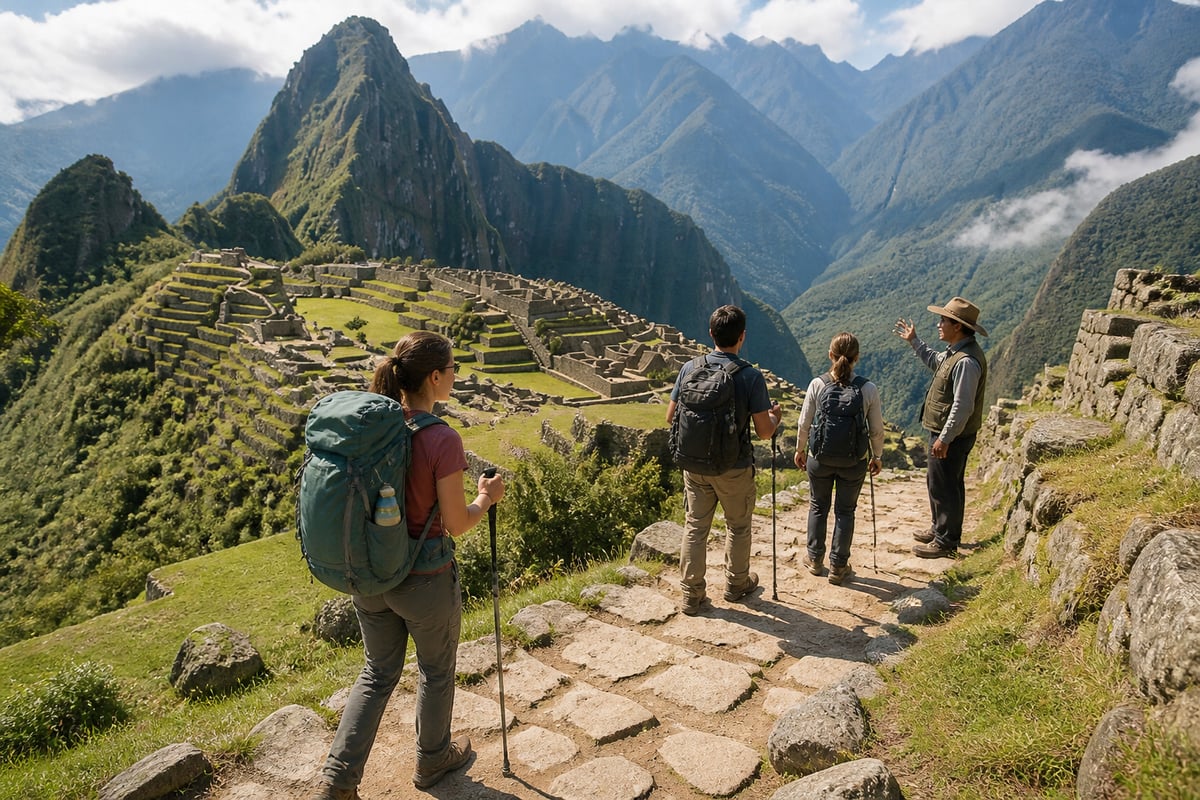
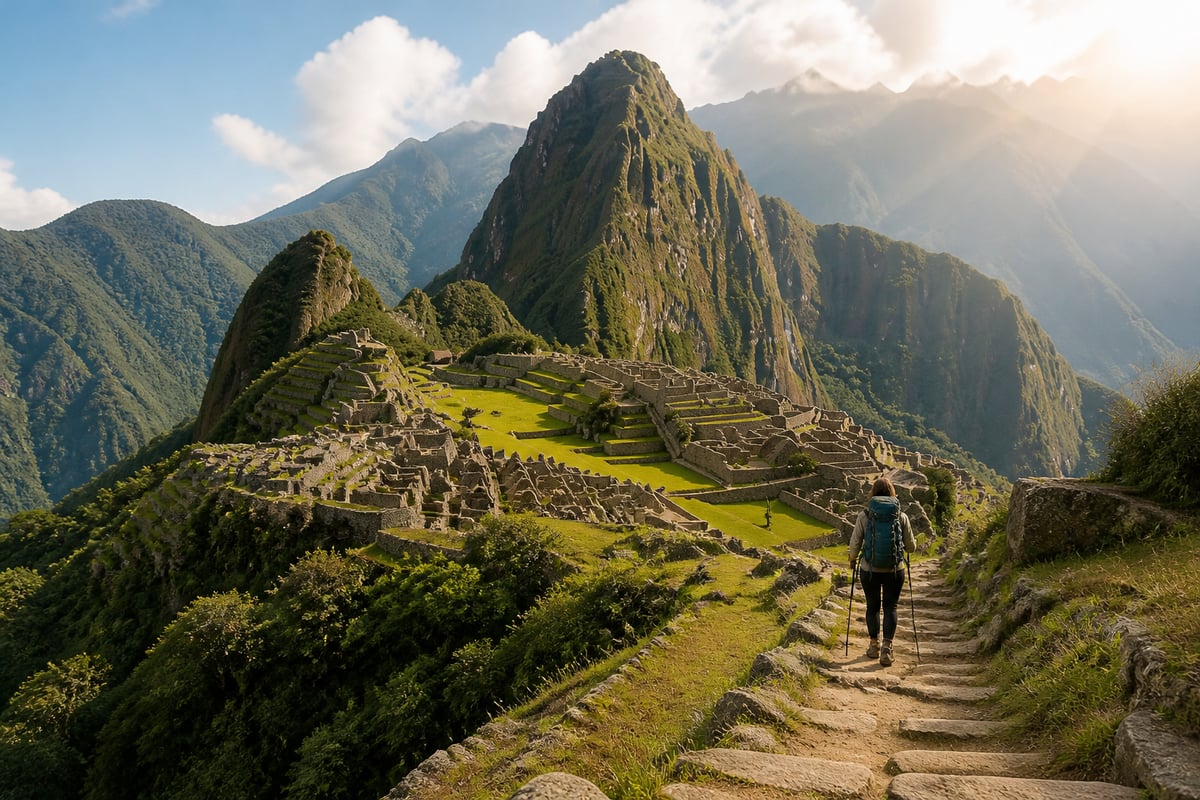
If you want to arrive on foot, the main routes are the Inca Trail and the Salkantay Trek, both typically sold as 4-day, 3-night itineraries, plus shorter options such as a 2-day Inca Trail with a hotel night in Aguas Calientes. Trekking packages include a camping or lodge setup, cooks, porters and a guide, and the operator coordinates permits and trekking logistics.
Choose a trek if you are comfortable walking several hours a day at altitude. Choose a shorter variant if you want the experience of the trail without four days of camping.
Extended Peru Circuits
Longer packages from 7 to 13 days add Lima, Paracas, Arequipa or the Amazon. These suit travelers using one long trip to see southern Peru broadly. Machu Picchu becomes the centerpiece rather than the entire itinerary, so check how many nights the package actually allots to Cusco and the Sacred Valley.
How Many Days Do You Need?
Four days is the practical minimum for a relaxed first visit, and five or six days gives you altitude buffer and extra sites. Cusco sits at roughly 3,400 meters, and arriving straight from sea level can affect sleep and energy for the first day or two.
A sensible day-by-day logic looks like this:
- Day 1: Arrive in Cusco, rest, and walk the historic center at an easy pace.
- Day 2: Tour the Sacred Valley, whose lower elevation helps you adjust.
- Day 3: Train to Aguas Calientes, then visit Machu Picchu with your guide.
- Day 4: Return by train and transfer to your Cusco hotel or flight.
A full-day trip from Cusco is possible, but it compresses a long train ride, a bus and the site visit into one tiring day. It suits travelers with very little time, not those hoping to absorb the place.
Permits, Tickets and Capacity: Why Booking Early Matters
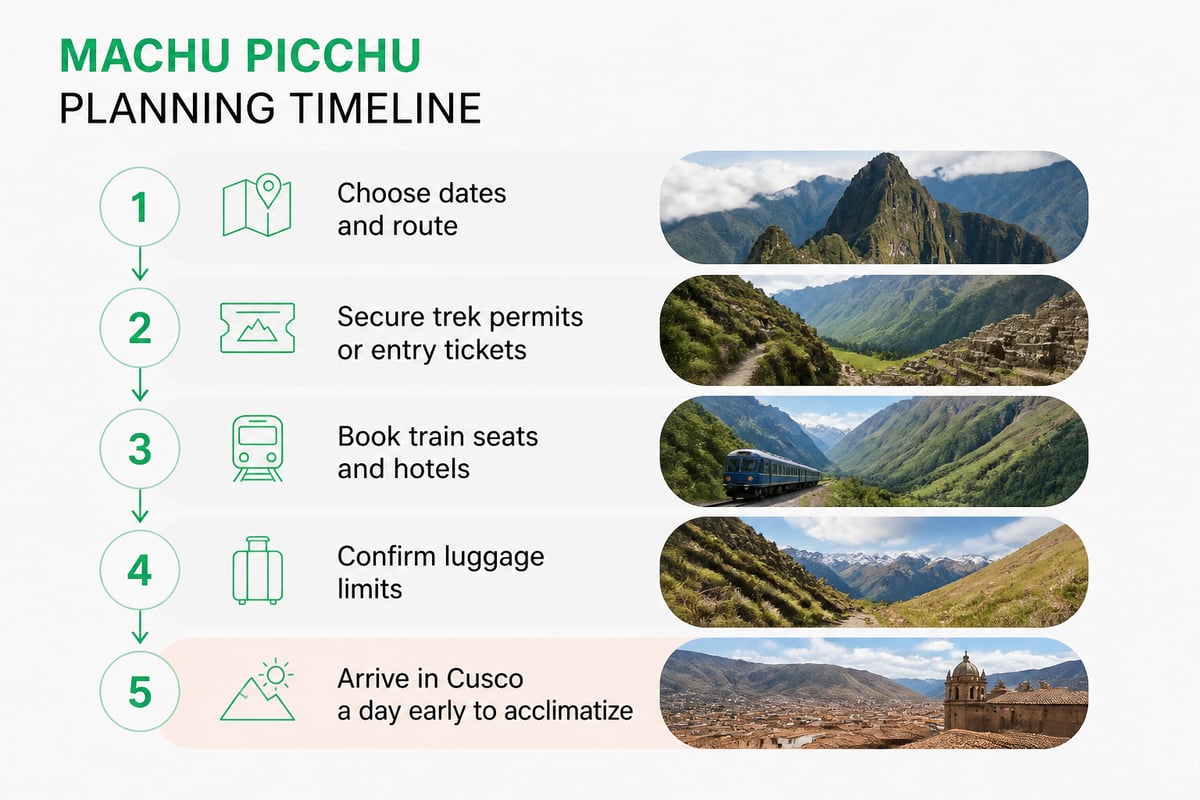
Entry to Machu Picchu is capped, so dates can sell out well before you travel. Daily visitor limits exist for conservation reasons, and high-season days allow more visitors than regular days.
For your planning, three points follow:
- Tickets are tied to a date, circuit and time slot, so your package dates must be set before the ticket can be secured.
- Inca Trail permits are limited separately and are the first thing to sell out, so trekkers should secure dates as early as possible.
- The dry season, roughly May to September, is the busiest period. Shoulder months are quieter but bring more rain.
A package operator handles these bookings together. That coordination is the main reason many international travelers choose a package over assembling everything alone.
Train Details That Affect Your Package
The train is the most common way to reach Aguas Calientes, and its rules shape what you can pack. PeruRail lists an included allowance of one backpack up to 8 kg or one carry-on bag up to 12 kg for travel to Machu Picchu. Most travelers leave larger suitcases at their Cusco hotel and bring a small bag for the overnight. A practical overnight kit is one change of clothes, a light rain layer, toiletries, medication, a charger and your passport, since the passport must match the name on your entry ticket. Ask your hotel in Cusco whether it stores luggage free of charge and for how long, because you will be away for at least one night.
The journey itself takes time. PeruRail describes its San Pedro to Machu Picchu route as about four hours, while departures from the Sacred Valley are shorter. Where your package starts the train leg affects how much of your day it consumes, so ask which station and which service class are included. If the quote starts the train in Cusco, plan for an early departure and a long travel day. If it starts in the Sacred Valley, you gain extra hours for sightseeing before boarding. Also confirm that the train departure time matches your Machu Picchu entry slot, so the two bookings do not leave you waiting or rushing.
Choosing Between Group, Small-Group and Private Tours
Group size changes the experience more than most listings suggest. Large groups are cheaper per person but move at a fixed pace, with less room for questions. Small-group tours keep the guide's attention personal, and private tours let you set the pace, the start time and the emphasis.
Consider these questions:
- Do you want to linger at photographic or archaeological stops, or follow a set schedule?
- Are you traveling with children, older relatives or a mixed fitness level?
- Do you want to add interests such as textiles, photography or Inca engineering?
Machupicchu Trips runs small-group tours with professional bilingual local guides, and packages can be tailored to your dates, group size, interests and travel style. For specific group limits or pricing, the best route is to ask through their contact page, since those details depend on the itinerary.
A Checklist for Comparing Quotes
Two packages that look similar can differ in what they actually cover. Compare quotes line by line using this list:
- Number of nights in Cusco, the Sacred Valley and Aguas Calientes
- Train service and departure station
- Whether the Machu Picchu entry ticket and bus are included
- Guide language and whether guiding is shared or private
- Meals included, especially during trekking days
- Airport and station transfers
- Trek permits and equipment, if hiking
- What is excluded: flights, insurance, tips
- Cancellation and date-change terms
A few of these items deserve a closer read. Under item 1, a quote that lists four days but spends only one night in the Sacred Valley and Cusco combined leaves little room to acclimatize, so count nights rather than days. Under item 3, the bus between Aguas Calientes and the citadel is a separate purchase on some quotes, and the entry ticket is tied to a specific circuit and time slot, so ask which ones are booked. Under item 7, find out whether sleeping bags, mats and duffel porterage are included or rented at extra cost. For item 9, ask what happens if a ticket or permit date cannot be changed once issued, since those are often fixed.
If an operator cannot answer these clearly, treat that as a warning. A local operator based in Cusco is typically better placed to explain permit status and logistics directly than a reseller several steps removed.
Matching a Package to Your Travel Style
Your priorities usually point to one clear option.
- First visit, moderate pace: A 4 to 5 day classic package with train and hotels.
- Active and adventurous: A multi-day Inca Trail or Salkantay trek, booked well ahead.
- Short on time: A 2-day option or a tightly planned full-day visit, accepting the trade-offs.
- Combining regions: A 7 to 13 day circuit that places Machu Picchu within a wider Peru route.
- Wanting something specific: A tailored itinerary built around your interests and dates.
Some situations make the choice clearer. A family with young children or grandparents is usually better off with a train-based package or a private guide, since a private tour lets the group stop when someone tires. A traveler with only a long weekend in Cusco should consider the 2-day format instead of forcing a trek into too little time. Someone who loves photography or textiles can ask a tailored itinerary to add a weaving community visit or an early start for softer light. Trekkers should also plan a spare day in Cusco before the hike begins, so the altitude does not compete with the trail.
Altitude, season and fitness should weigh as heavily as price. A well-matched mid-range package will serve you better than a cheaper one that rushes your acclimatization or leaves out the guide.
Start by writing down your travel dates, group size and whether you want to hike or take the train, since those three answers decide which package fits. From there, Machupicchu Trips can build around them: as a locally owned Cusco operator running trips since 1999, it handles the permits, tickets, trains, transfers and hotels, and you can look at the MACHU PICCHU CLASSIC TOUR: 4 Days 3 Nights as a reference point for a first visit. When you are ready to turn your dates into an itinerary, Machupicchu Trips can help you plan my Machu Picchu trip with a guide-led route built around how you like to travel.